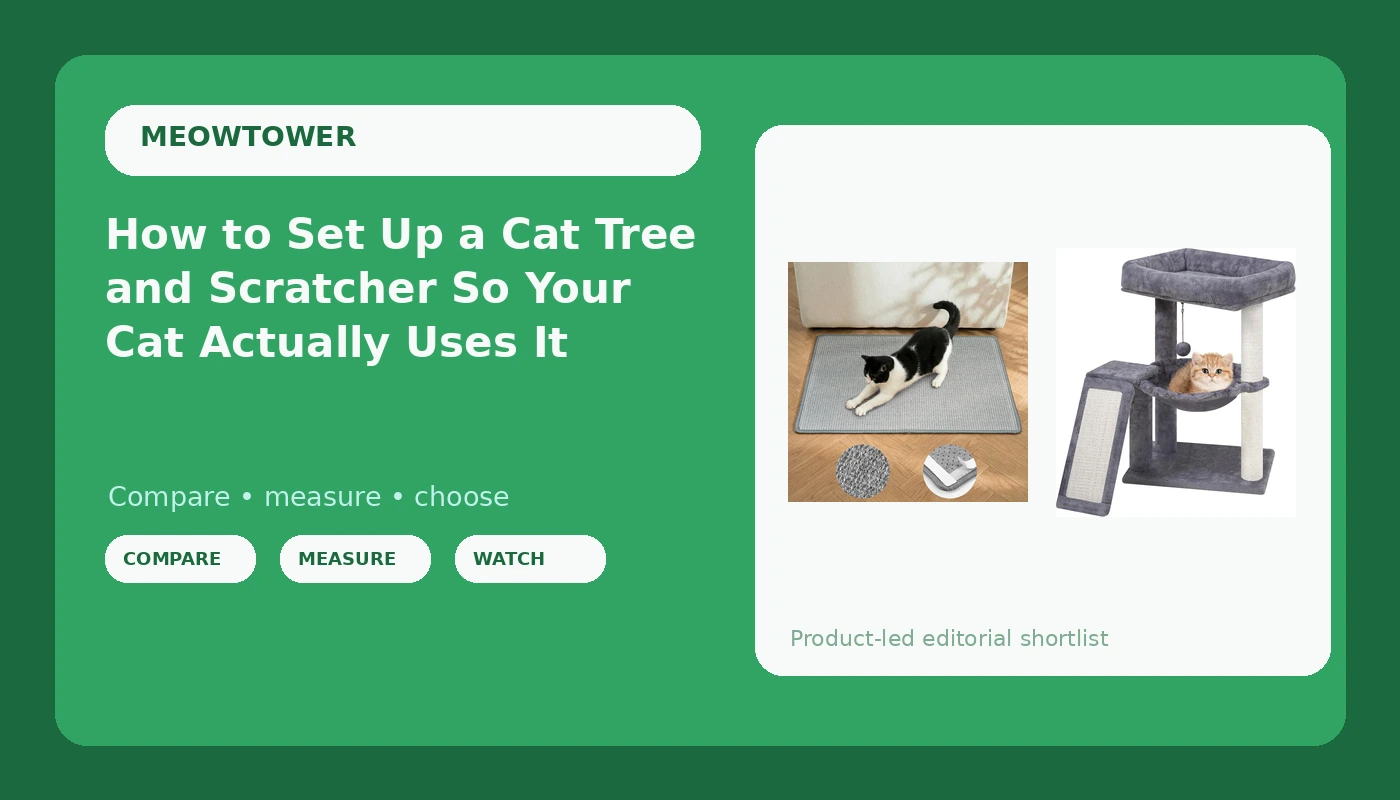
Most cat tree setup advice ends at "assemble the tower and park it by a window." Then the cat ignores it for three weeks, the posts sit untouched, and the couch keeps absorbing the damage. I have watched that exact sequence play out in my foster room more times than I want to count, and it is almost never the cat's fault.
I am a veterinary technician in Tampa, eight years in, and I have fostered more than 60 cats. My current crew of five is working through a 60-day stress test on new cat furniture, scoring every post and perch for how much punishment it takes. The pattern never changes. A cat tree setup fails for two reasons. The base moves when a cat lands on it, and the scratching surface is the wrong material.
Fix those two things and a cat claims a new tower in about a week. Here is the whole process, from unboxing to the first full-speed launch onto the top perch.
Why you should trust me
Eight years as a vet tech and 60-plus foster cats means I have assembled, repaired, and watched cats destroy more cat trees than I can count, from carpet-wrapped disasters to solid wood condos. I know why cats scratch, why they perch, and why a tree that does not clear your waist is a rug with legs.
My rule set is boring and it does not change: a tree needs height, a wide and heavy base, and sisal instead of carpet. If it wobbles when a 12-pound cat jumps onto the top perch, it is a tipped-tower injury waiting to happen. I have patched enough cheap trees in my own bedroom to know which corners get cut and where they fail first.
How I picked and how I tested
This is not a buying guide for the fanciest tower on the market. It is a setup guide, so the gear below is what you need in hand before the cat ever sees the furniture: one structure with a real scratching surface, and one flat scratcher you can move to wherever the damage is happening.
Both pieces get the same treatment in my foster room. I check the base plate for width and weight, press down on the posts to feel for flex, watch which surface the cats actually dig into, and track how long a post stays usable before it shreds. A 12-pound cat launching onto the top perch is the pass or fail test for stability. Sisal that holds up to daily use is the pass or fail test for scratching.
The results I care about are simple. If the base slides on carpet, the tree gets anchored or returned. If the cats scratch the couch instead of the post, the post is in the wrong place or made of the wrong material.
What you need before you start
You cannot break in a tower that walks across the floor every time a cat lands. Get the base situation right first, then teach the cat what the furniture is for.
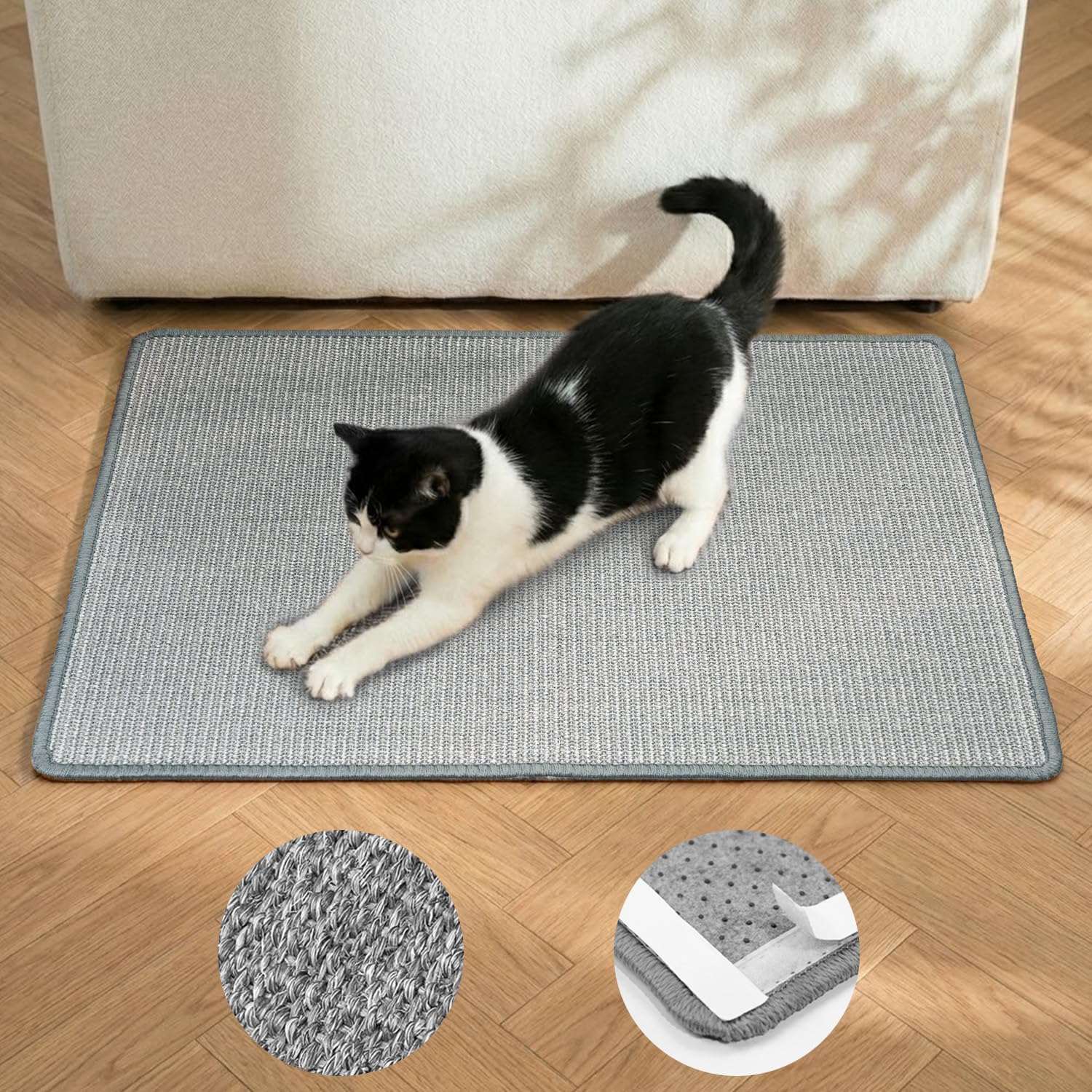
Budget pick: Conlun Cat Scratcher Mat,Natural Sisal Cat Scratch Pad,Horizontal Floor Cat Scratching Pads Rug for Indoor Cats Grinding Claws Nails,Cat Furniture Protector for Couch & Carpets & Sofas
 Visit on Amazon →
This is the piece that saves your couch. Cats scratch horizontally as often as they scratch vertically, and most people only buy the vertical option. A natural sisal mat lies flat on the floor, so a cat that likes to stretch out and rake its claws has a legal place to do it. Put it next to the corner of the sofa your cat has already chosen, and you are redirecting an existing habit instead of asking the cat to invent a new one.
Because it is flat, it is also the easiest piece to relocate. If your cat starts working on a rug, slide the mat over that spot. If it moves to the couch arm, move the mat there. That flexibility is why I keep several in rotation in the foster room.
Flaws but not dealbreakers: A flat mat does not give a cat the vertical stretch a post does, so it is a partner for a tower, not a replacement. It also slides on hard flooring unless you tuck it against a wall or under a furniture leg.
Anyone whose cat has already picked a horizontal target, a couch, a rug, or a carpet edge, should start here.
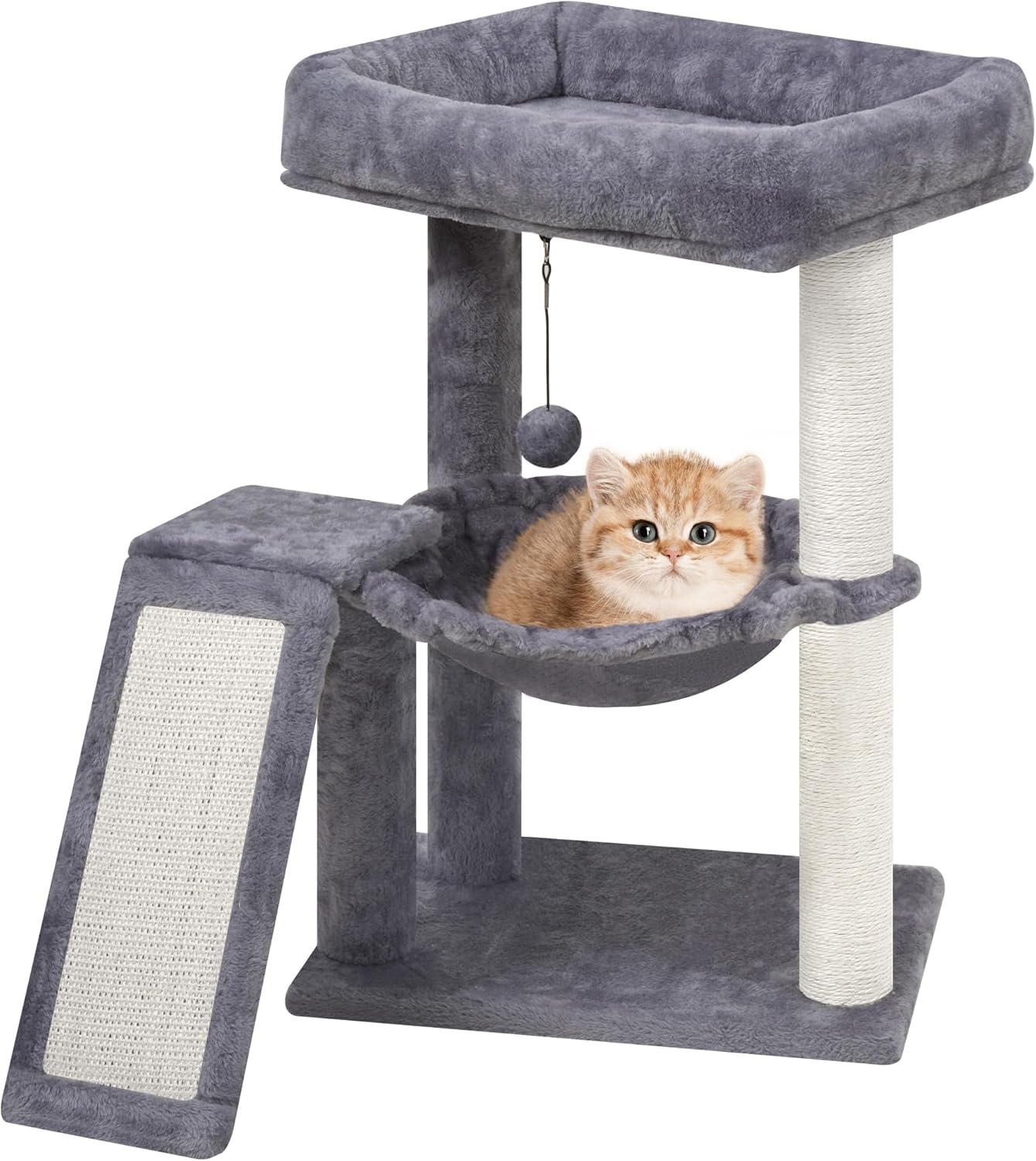
Our pick: YOUPET Cat Tree with Cat Scratching Post for Indoor Cats, Cat Tower with Scratching Board and Playful Toy Balls, Cat Tree Tower with Cozy Hammock,Grey
 Visit on Amazon →
This is the structure. It gives you the vertical territory a cat needs, with a scratching post, a scratching board, a hammock, and toy balls on the same footprint. The hammock matters more than it sounds. Cats want a high, soft spot where they can watch a room without being watched back, and a hammock that hangs low and stable is where a nervous foster cat usually lands first.
Before you let a cat near it, do the press test. Put one hand on the top of the post and push sideways. If the whole thing leans more than an inch or two, the base needs help, and I cover that below.
Flaws but not dealbreakers: A tree at this level is built for kittens and average adult cats, not a 15-pound Maine Coon. If your cat is large, plan to anchor the base and keep the heaviest cat off the top perch until you have checked stability yourself.
Anyone setting up a first tree for a kitten or a single adult cat will get the most out of this one.
The actual setup workflow
This works for any tree and any flat scratcher. The order matters.
Step one: pick the spot before you build. Cats want vertical territory with a view of the room they live in, not a corner behind a door. Put the tree where your cat already spends time, ideally near a window or against a wall in the room where you sit. Cats like to be near the action without being in it, so a spot at the edge of the living room beats dead center.
Step two: check the base on the floor you actually have. Carpet and hard flooring behave differently. A wide base plate grips carpet better than tile, and it slides on hardwood. Before you load the tree with cats, press the base with your foot. If it shifts, fix it now.
Step three: anchor it. Options, in order of how much I like them: push the base into a corner so two walls stop it from moving, put a non-slip rug pad or a flat sisal mat under the base plate, or secure the top of the tree to the wall with a strap or bracket. If a tree comes with a wall strap, use it. It is there for a reason.
Step four: put the flat scratcher where the damage already is. Do not put it next to the tree. Put it next to the thing your cat is currently destroying. Scratching is communication and territory marking, so a cat scratches where it wants to make a statement. Give it a legal surface at that exact spot.
Step five: break the surface in. New sisal is stiff and smells like a warehouse. Rub the post with catnip, or drag a wand toy across it so the claws catch during play. Scratching is often a byproduct of a good stretch, so get the cat stretching on the post and the rest follows. Most cats just need to see you scratch it once.
Step six: introduce the cat to the base, not the top perch. Set the cat down near the base. Put a treat on the first level. Feed a meal on the base platform for a few days. A cat that associates the base with food will climb the rest on its own schedule.
Step seven: run the jump test. Once your cat is using the lower levels, watch a real landing. A 12-pound cat coming down from a perch is the load the tree has to survive. If the base walks, or the whole thing tips, go back to step three. Do not wait for an injury to prove the point.
Step eight: give it a week before you judge it. Cats are slow adopters. A tree that gets sniffed and ignored on day one is often occupied by day seven, especially if you keep feeding near it and playing on it. Do not move the tree around looking for a magic spot. Pick a good spot and leave it.
Mistakes that make cats ignore a new tree
Putting it in a dead corner. Cats want to see the room. A tree facing a blank wall gets used as a shelf.
Buying carpet-wrapped posts. Carpet teaches a cat that carpet is a scratching surface, which is exactly the lesson you do not want. Sisal or nothing.
Skipping the anchor. A tree that wobbles once gets avoided forever. Cats remember.
Putting the flat scratcher in the wrong room. If the couch is in the living room, the mat goes in the living room.
Cleaning the tree with the wrong product. Strong citrus or ammonia cleaners make the furniture smell like a threat. Warm water and a mild soap, then let it dry.
The competition and why it lost
Most of what I see in stores falls into two buckets that are not worth your setup time. Carpet-wrapped trees with thin cardboard-core posts are the first bucket. The posts shred in weeks, the carpet trains bad scratching habits, and the base is usually too small to hold an adult cat. The second bucket is anything short: towers that top out below your waist. Those are rugs with legs, and they do not give a cat the vertical territory it is looking for.
There is also the "I already have a tree" problem. If your existing tree is solid but the posts are shredded, you do not need a new tower. You need a replacement scratching surface, which is exactly what a flat sisal mat solves. Fix the surface before you replace the furniture.
What this all costs
The whole setup is small money. The flat sisal mat is the cheapest piece and the one that does the most immediate work, because it redirects damage that is already happening. Check current Amazon price for the exact number today, since these listings move.
The math I actually care about is cost per year of use. A cheap carpet-wrapped tower that shreds in a season costs more per year than a stable structure that lasts, even if the sticker looks bigger up front. Add a wall strap or a rug pad and you have spent a few dollars to protect a piece of furniture that would cost far more to replace.
The real cost of skipping this is the couch. A cat that never gets a legal scratching surface will keep using yours, and no amount of yelling changes that. Scratching is not destruction. It is communication. Give the cat a better place to say it.