Cat furniture is one of those purchases where the wrong choice announces itself fast. You spend an evening assembling something, and three weeks later the couch corner is shredded and the tower is leaning against the wall like a tired prop. The problem usually is not the cat. It is a mismatch between what the furniture offers and what the cat actually needs: a surface worth scratching, a perch that matters, and a base steady enough to survive a launch from the floor.
This guide looks at six pieces of cat furniture for indoor cats that solve different problems rather than one problem six ways. There is a solid wood tower, a sisal scratcher built like a small couch, a self-adhesive scratch mat, a corner side table with a replaceable sisal pad, a set of farmhouse wall shelves, and a hidden litter box cabinet. Each one earns its place in a different room and a different routine, and the trade-offs are worth understanding before you click.
Related: Why Your Cat Scratches the Sofa and What to Do Instead
Quick answer
The Solid Wood Cat Tree for Kitten & Munchkin is the strongest fit for homes with kittens, seniors, or short-legged breeds because it pairs solid wood construction with low-rise steps and a multi-level layout that includes a space capsule, a condo, and a hand-woven bed. Choose the Cat Corner Side Table Scratcher instead when the real problem is a sofa arm taking daily claw damage and you want a scratching surface that also works as furniture.
Cat furniture and scratchers worth comparing
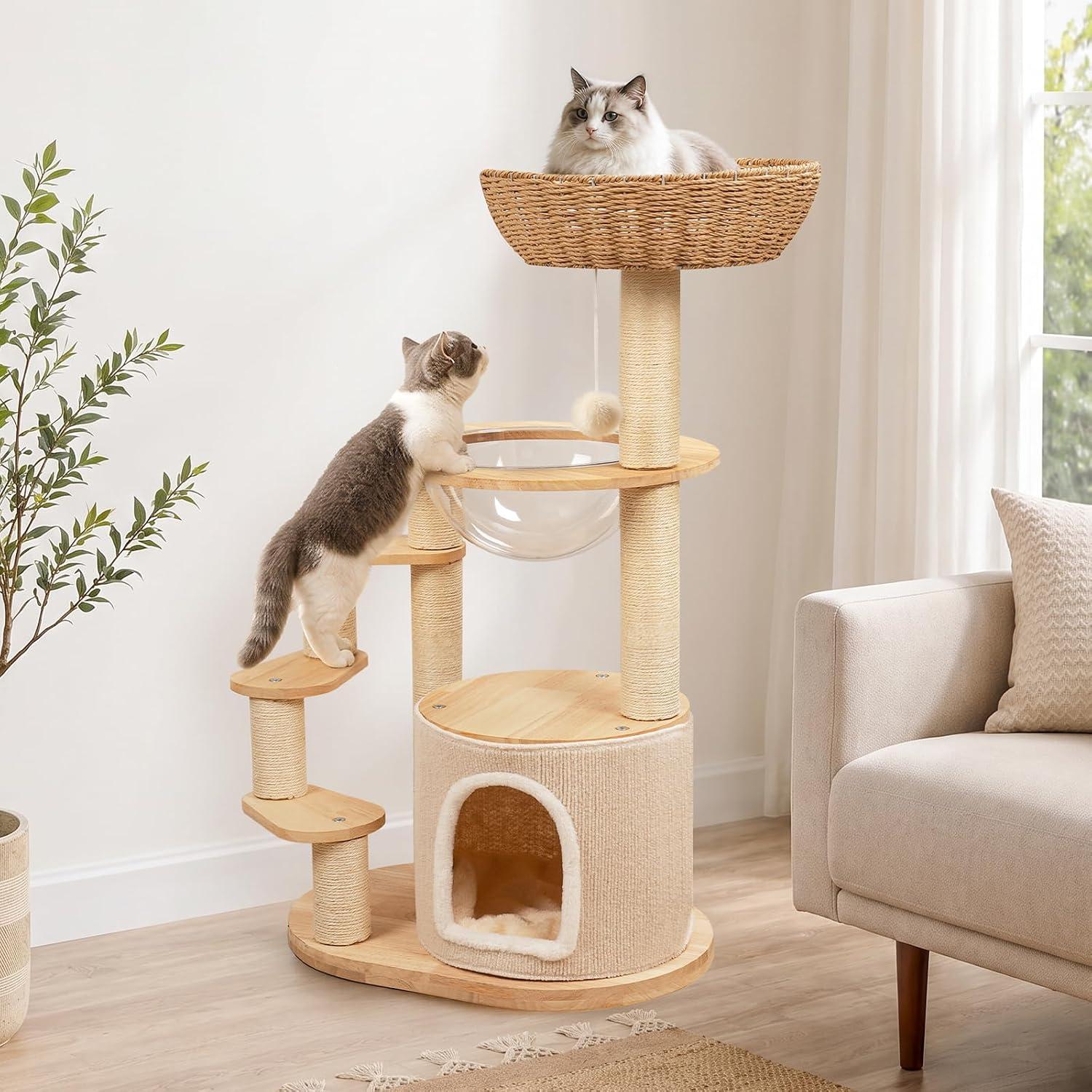
Solid Wood Cat Tree for Kitten & Munchkin, Modern Cat Tower with Low-Rise Steps, Indoor Multi-Level Aesthetic Boho Cat Furniture with Space Capsule, Condo, Hand-Woven Bed,for Minuet & Napoleon
A solid wood multi-level tower with low-rise steps, aimed at kittens, seniors, and short-legged breeds, and outfitted with a space capsule, a condo, and a hand-woven bed.
Visit on Amazon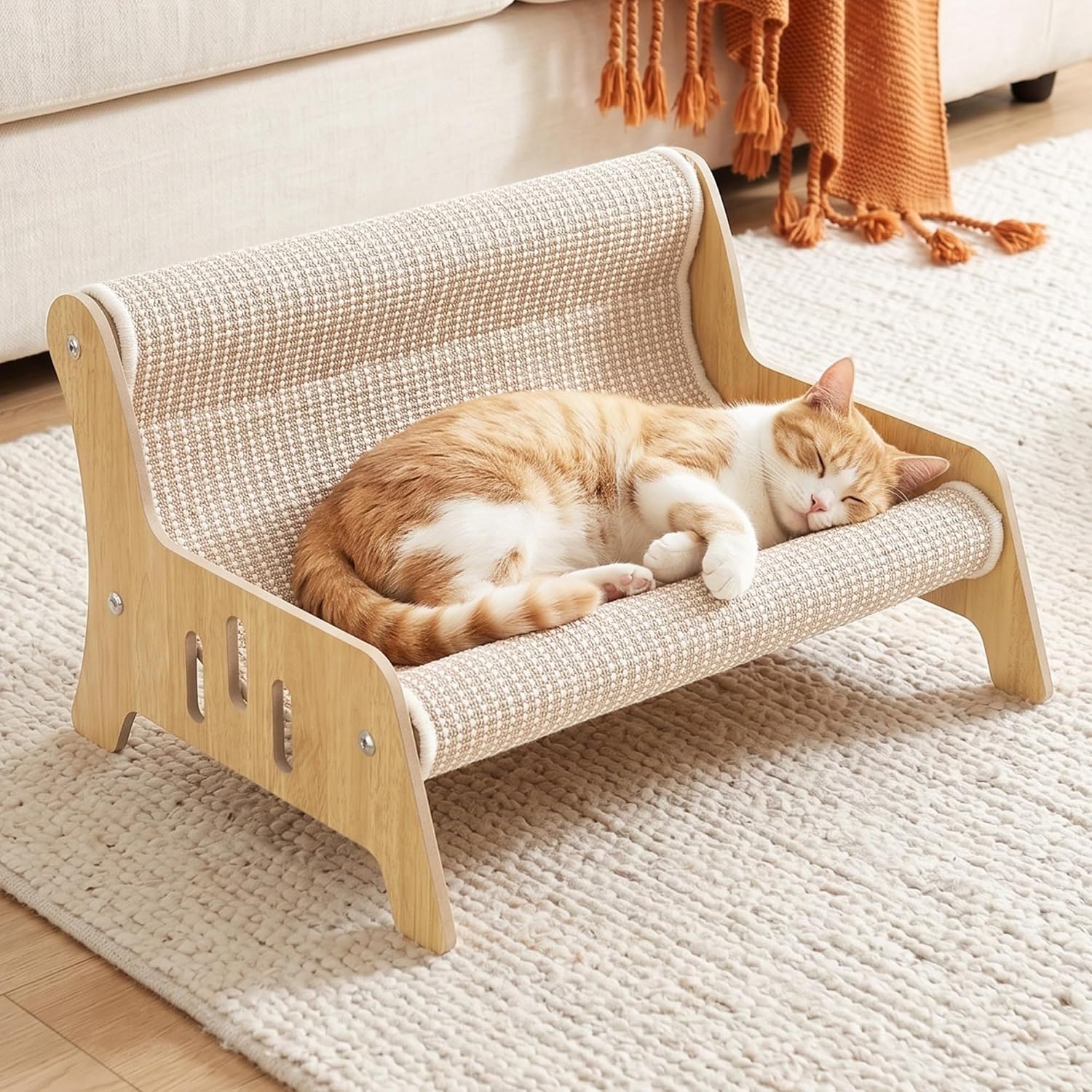
Large Sisal Cat Scratcher Couch for Indoor Cats, Scratching Board Furniture
A large sisal scratching surface built in a low couch shape, which suits cats who scratch along the floor rather than stretching up a post.
Visit on Amazon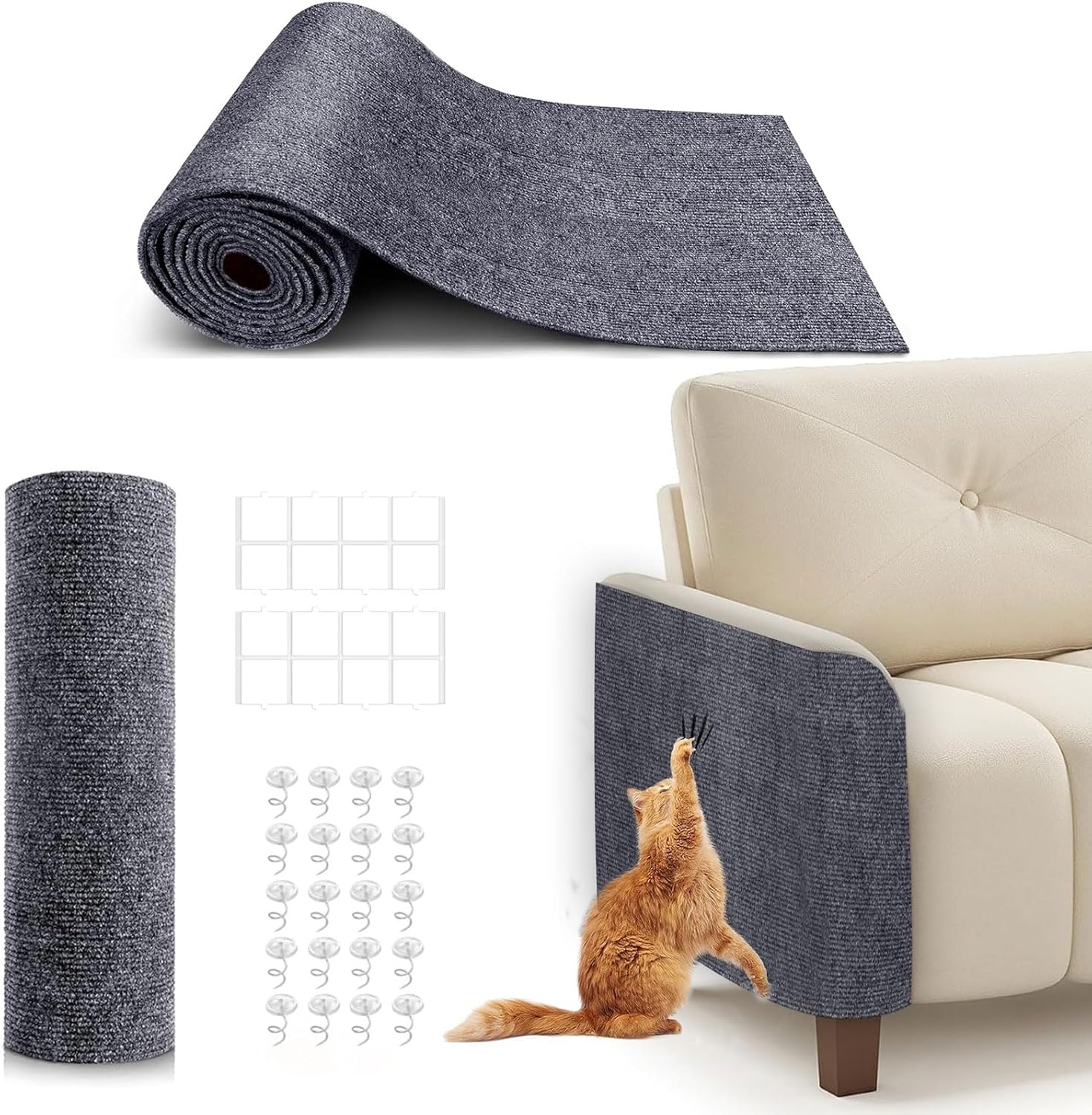
78.7"x15.8" Self-Adhesive Cat Scratch Mat, Cat Scratch Furniture Protector
A self-adhesive protective mat listed at 78.7 by 15.8 inches, made to sit directly on the upholstered surface your cat has already chosen.
Visit on Amazon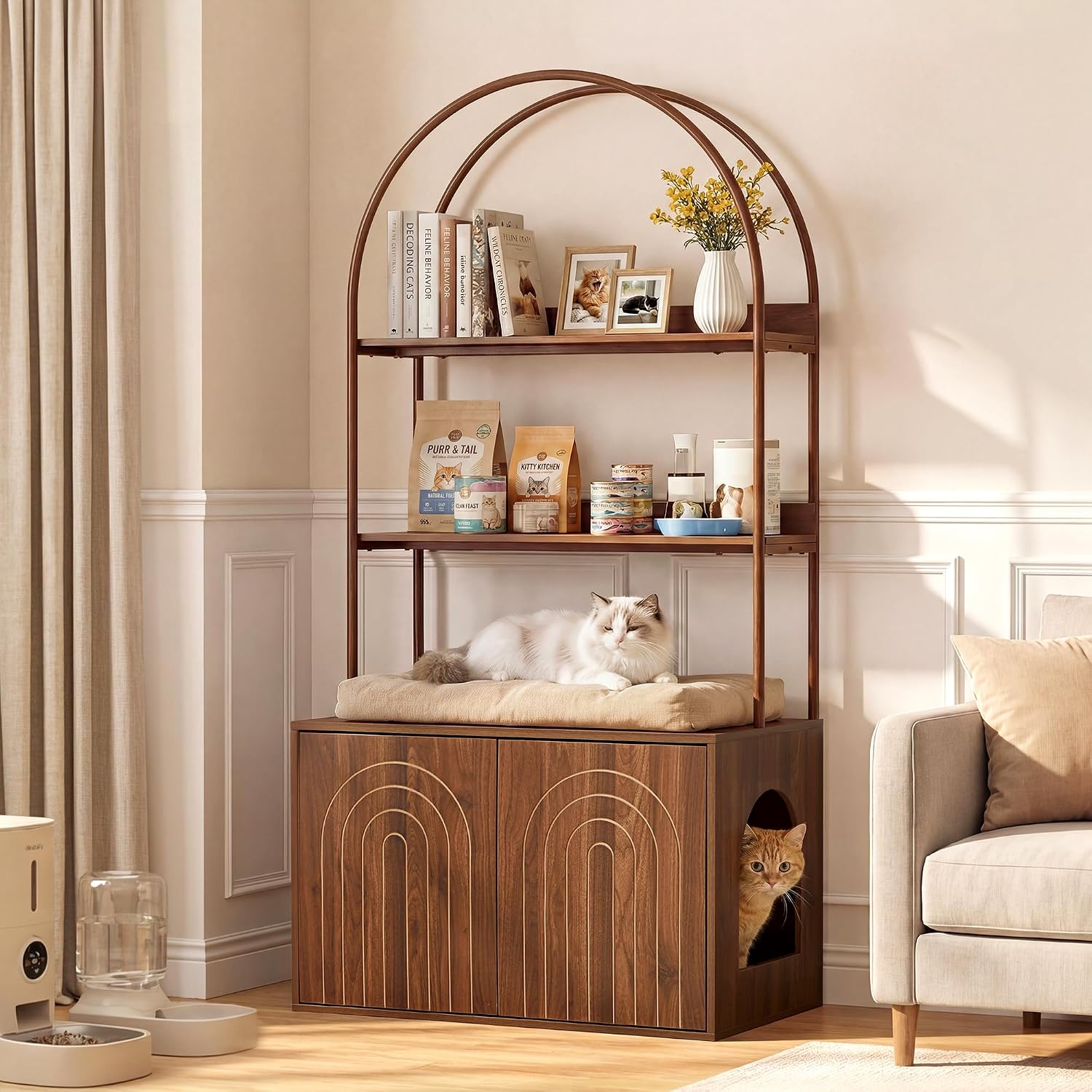
Arched Cat Litter Box Enclosure with 2-Tier Shelves, 63" Tall Hidden Litter Box Furniture with Reversible Entry, Wood Grain Metal Frame Large Cabinet Cat House Washroom with Hooks & Anti-Tipping Kit
A 63-inch tall litter box cabinet with two tiers of shelves, a reversible entry, a wood grain metal frame, hooks, and an anti-tipping kit.
Visit on Amazon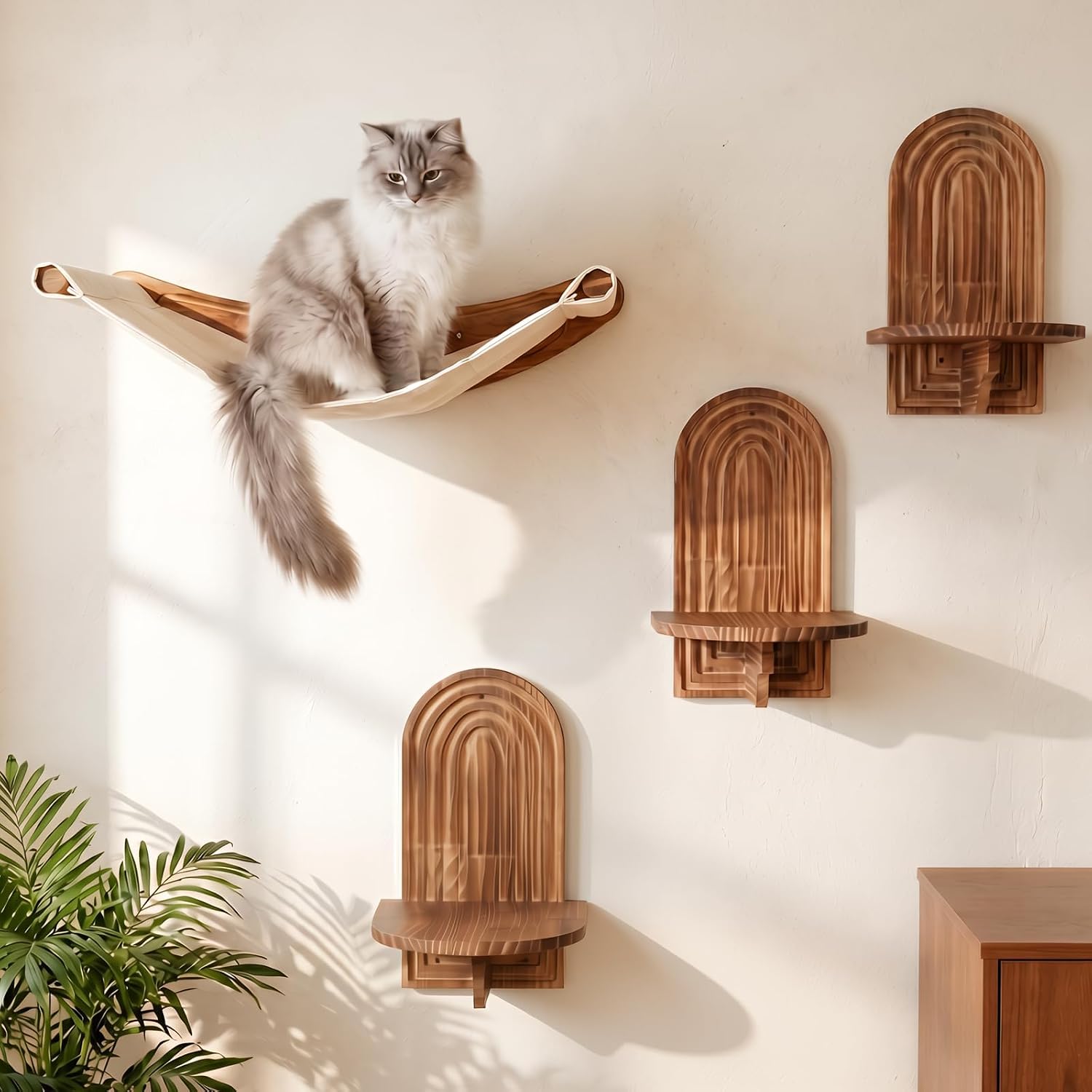
Cat Wall Shelves, Farmhouse Cat Wall Mounted Furniture for Indoor Cats
Wall-mounted farmhouse-style shelves that add climbing and perching territory without giving up any floor space.
Visit on Amazon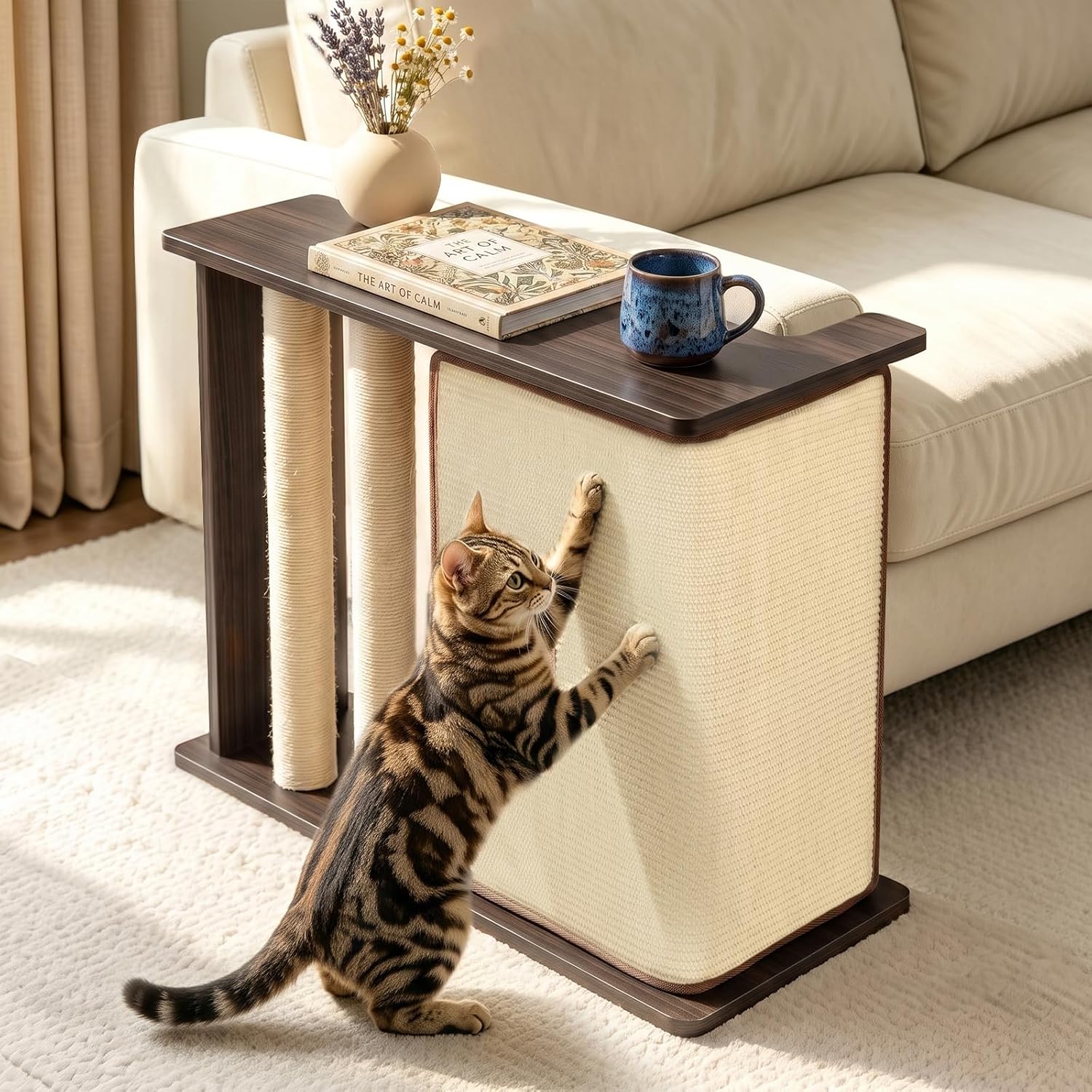
Cat Corner Side Table Scratcher, 3-in-1 Sofa Protector from Cat Claws with Scratching Post, Replaceable Sisal Pad, Sturdy Wood Frame, Fits Left/Right Sofa Arm, Odor-Free, Black Walnut, 23.5"
A three-in-one corner side table with a scratching post, a replaceable sisal pad, and a sturdy wood frame, designed to fit either the left or right sofa arm.
Visit on AmazonPrices and availability may change. Check the retailer for current details.
How these products were compared
This guide compares scratching surface and material, footprint and placement, climbing height and vertical territory, stability features such as frame construction and anti-tipping hardware, and how well each piece fits a household with more than one cat. Product names, images, and retailer links are matched by product identifier so that every card points to the product shown.
The comparison is built from the listed specifications and materials of each item, not from laboratory testing or measured performance numbers. Where a claim depends on how your own cat behaves, this guide says so instead of pretending otherwise.
One thing this list deliberately mixes is category. A scratcher, a wall shelf, a litter box cabinet, and a cat tower are not competitors. They are answers to different questions, and the most common buying mistake is choosing the shape you like in a photo rather than the one that addresses the behavior happening in your living room right now.
Prices and availability move around. Use the link on any card to confirm current price, color options, and shipping details at the retailer rather than relying on a number printed in a guide.
How to choose the right piece of cat furniture
Start with the behavior you are trying to change, not the shape you like. Scratching is communication, and cats pick a surface based on texture and stability. A sisal surface mounted firmly is the one most cats return to; a loose post or a carpet-wrapped one gets abandoned and the couch goes back to being the target. If the damage is already happening on upholstery, a scratching surface or an adhesive protective mat addresses it directly. If the issue is a cat with nowhere to go and nothing to climb, vertical territory does the work instead.
Then match the piece to the room. A corner side table scratcher earns its space in a living room where a full tower would feel crowded. Wall shelves turn an empty stretch of wall into a climbing route without taking up any floor area, which matters in apartments. A litter box cabinet is a different kind of purchase entirely: it is about hiding the box and adding storage, not about climbing, and it should be judged on ventilation, entry clearance, and cleaning access.
Stability is the part people skip. Look for a wide base, solid wood or metal frame construction, and anti-tipping hardware on anything tall. Wall-mounted products need proper anchoring into studs, because a shelf that pulls out of drywall is worse than no shelf at all. In a multi-cat home, that math gets stricter: more cats means more landings, more weight on the same hardware, and less tolerance for wobble.
If you are still deciding how much height you need, our guide to choosing cat tree height walks through the measurements.
Solid Wood Cat Tree for Kitten & Munchkin
This tower is built from solid wood and designed around low-rise steps, which changes who it suits. Kittens, senior cats, and short-legged breeds such as Munchkins, Minuets, and Napoleons can move through it without a jump that lands badly. The layout is multi-level and includes a space capsule, a condo, and a hand-woven bed, so there are three distinct resting spots inside one footprint. The look leans modern boho, which is a polite way of saying it reads as furniture rather than a beige carpet monument.
The trade-off is height and audience. Because the steps are low, this is not the towering top-perch setup a large, athletic adult cat would use to survey a room. If you have a 15-pound cat who insists on the highest point in the house, this is not that tree, and no amount of repositioning will change it. It is also a piece you assemble, so budget an evening, sort the hardware, and read the instructions before you start rather than halfway through.
Alternatives to consider
The Large Sisal Cat Scratcher Couch is better suited to a cat who scratches horizontally along the floor, since it is a sisal scratching surface built in a low couch shape rather than a vertical post. The 78.7"x15.8" Self-Adhesive Cat Scratch Mat is a stronger fit when the damage is already concentrated on one piece of furniture, because it applies directly to the surface you want to protect.
The Cat Corner Side Table Scratcher, Cat Wall Shelves, and Arched Cat Litter Box Enclosure cover the rest of the house. The corner table is a three-in-one piece with a scratching post, a replaceable sisal pad, and a sturdy wood frame, and it fits either the left or right sofa arm. The wall shelves add farmhouse-style mounted territory without floor footprint. The litter box enclosure is a 63-inch cabinet with two tiers of shelves, a reversible entry, a wood grain metal frame, hooks, and an anti-tipping kit, for households that want the box out of sight and the supplies stored above it.
Day-to-day use and maintenance
Sisal is the surface that wears, and it wears in one spot: wherever your cat's claws land most often. Rotate a freestanding scratcher a quarter turn every few weeks so the wear spreads, and replace pads on pieces that offer replaceable ones rather than waiting for the rope to fray into loose strings. A replaceable sisal pad is the single most useful maintenance feature on this list, because it turns a worn-out scratching surface into a small parts order instead of a new piece of furniture.
Adhesive mats work the opposite way. They protect a surface, so check the adhesive edge periodically and follow the manufacturer's removal instructions when you take one off. Wall shelves should be re-checked for tightness a few weeks after installation, since hardware settles into drywall and wood. Litter box cabinets need the interior wiped on the same schedule you would use for a standalone box, and the shelves above are a sensible place for scoops, litter, and bags so the whole routine stays in one spot.
One safety note that applies to everything here: if a piece is tall, install the anti-tipping hardware that comes with it, and anchor wall-mounted products into studs rather than relying on drywall anchors alone. That is true whether you have one cat or five.
Buying checklist
- Measure the floor or wall space you actually have, including door swing clearance and the litter cabinet's entry side.
- Choose the scratching surface based on how your cat scratches now: vertical posts for cats who stretch up, horizontal surfaces for cats who scratch along the floor.
- Confirm that the exact model includes the feature you need, whether that is a replaceable sisal pad, low-rise steps, or an anti-tipping kit.
- Check height against your cat's size. A low-rise tower suits kittens, seniors, and short-legged breeds; a tall tower suits athletic adults.
- Read the cleaning and maintenance instructions before assembly, especially for adhesive mats and enclosed litter furniture.
- Verify the current retailer price, availability, color options, and return terms through the product link.
Final recommendation
Choose the Solid Wood Cat Tree for Kitten & Munchkin when you want a solid wood climbing structure for a kitten, a senior cat, or a short-legged breed, and you would rather have three resting spots in a compact footprint than one very tall perch. Choose the Cat Corner Side Table Scratcher when the priority is redirecting claws away from a sofa arm and you want the fix to look like a side table instead of a scratching post.
If neither fits the problem in front of you, the honest answer is to match the piece to the behavior. A cat shredding a couch needs a surface. A cat with nowhere to perch needs height. A household tired of tripping over a litter box needs a cabinet. Buy for the problem you actually have, confirm the current price through the link, and give the new piece a few weeks before you decide it did not work.