Eight years as a veterinary technician and more than 60 foster cats have taught me one thing about cat furniture: the piece that actually gets used is rarely the piece that looked best in the listing photo. My current foster crew is five cats, from a seven-pound teenager to a fifteen-pound chunk who believes every perch is his personal throne, and they are unforgiving critics. So this comparison of cat scratching and climbing furniture covers four pieces with four different jobs: a self-adhesive scratch mat, a wall-mounted climbing system, a 54-inch tower, and a litter box enclosure that doubles as real furniture. Different budgets, different problems, same question underneath all of it. Does it hold up to real cats?
Related: Sisal vs Carpet Scratching Posts: What Cats Actually Use
If you want one purchase that does the most work for the most cats, the 54-inch cat tree tower is the safest starting point, because height plus sisal posts is the combination that changes behavior fastest. If your floor space is already gone, the wall shelf climbing system is the better answer, and the scratch mat is the cheap fix for the one couch your cats have already claimed.
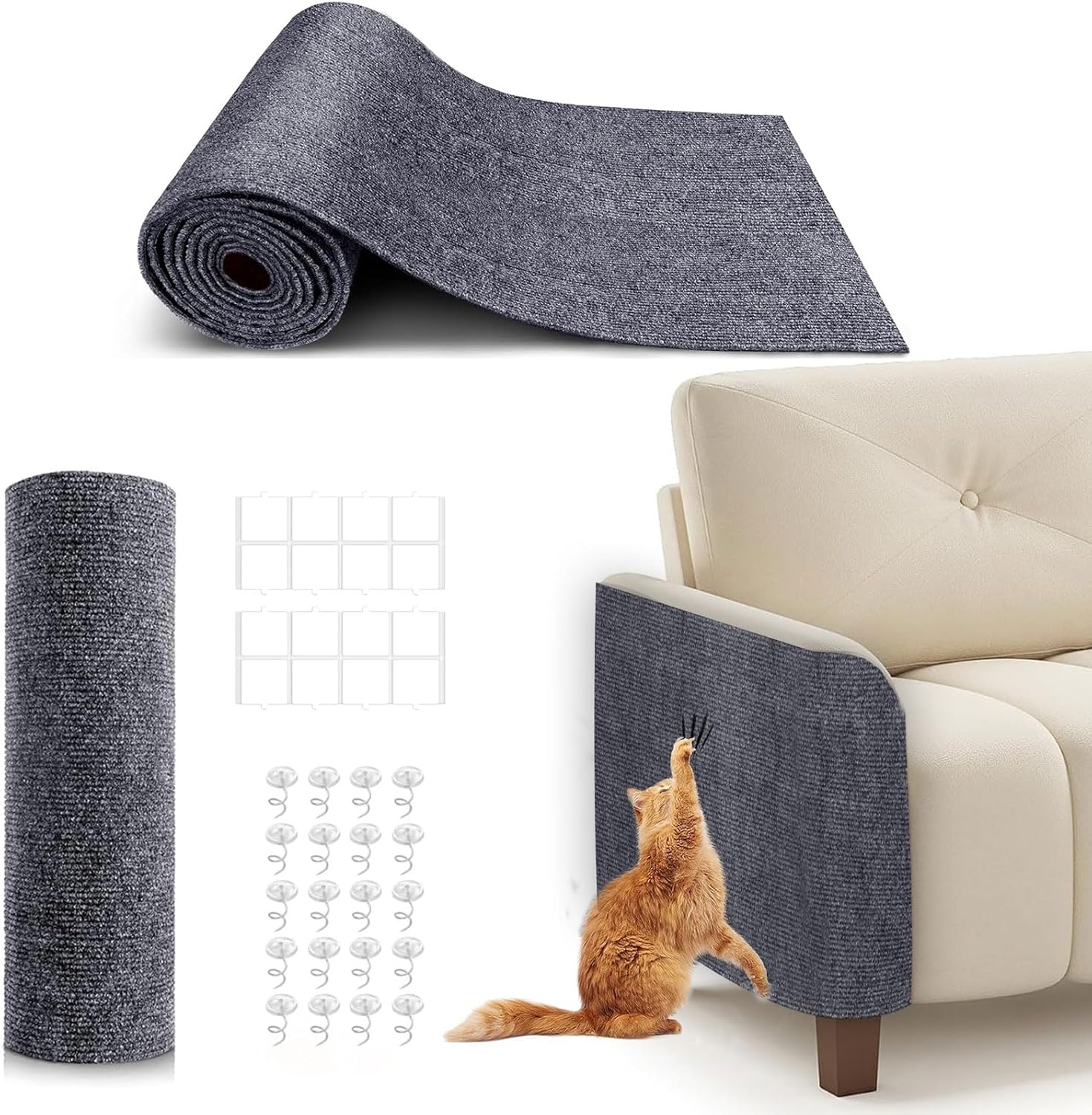
78.7"x15.8" Self-Adhesive Cat Scratch Mat, Cat Scratch Furniture Protector
Protects the furniture you already own, and the 78.7-inch length covers a whole sofa arm or door frame in one strip
Adds zero vertical territory and the adhesive makes it a commitment once it is down
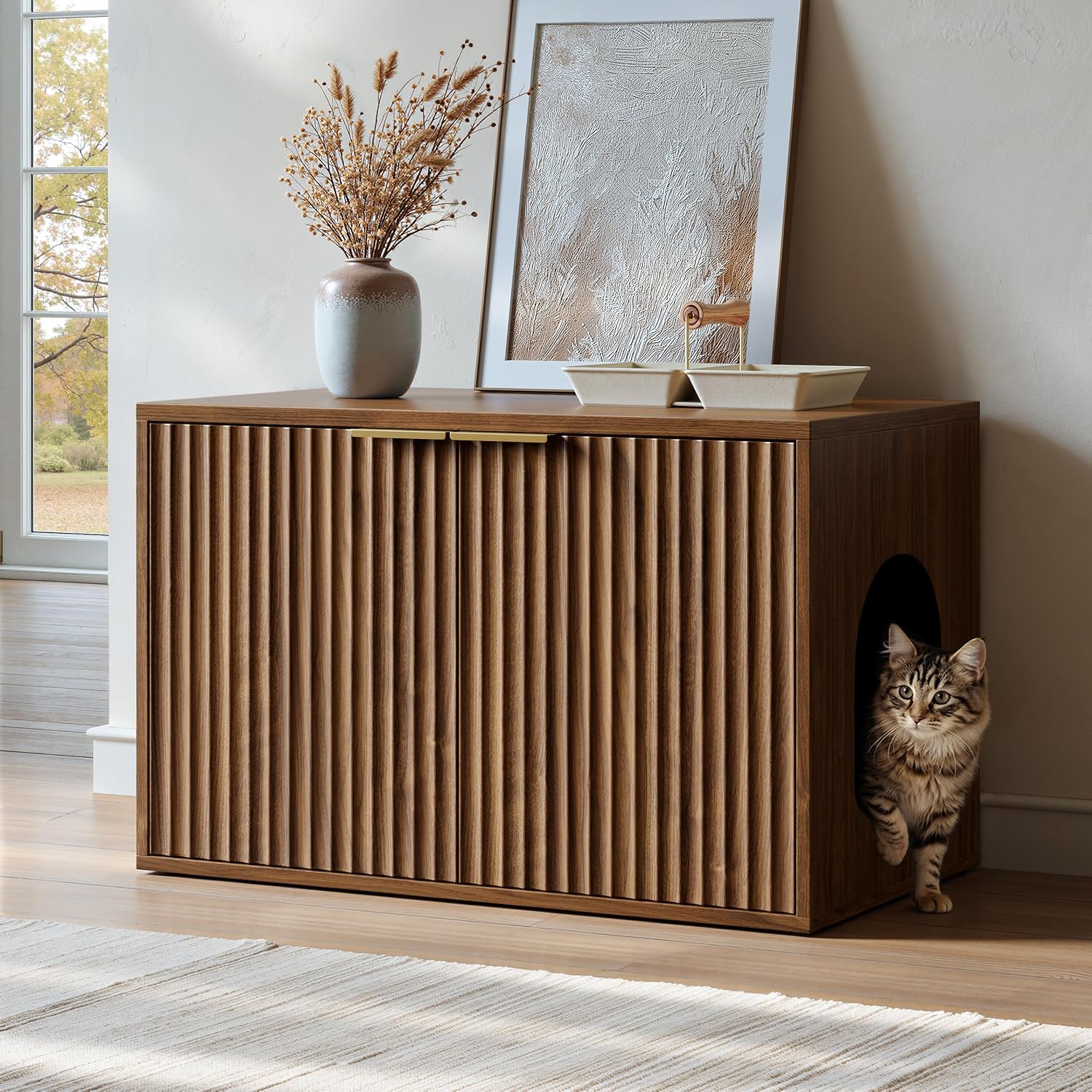
Evermagin 31.5" Cat Litter Box Enclosure Furniture
Hides the box in plain sight and gives you a usable surface on top, which is a real win in a one-bedroom
It is a litter solution first and a climbing solution second, so the top is a shelf, not a perch
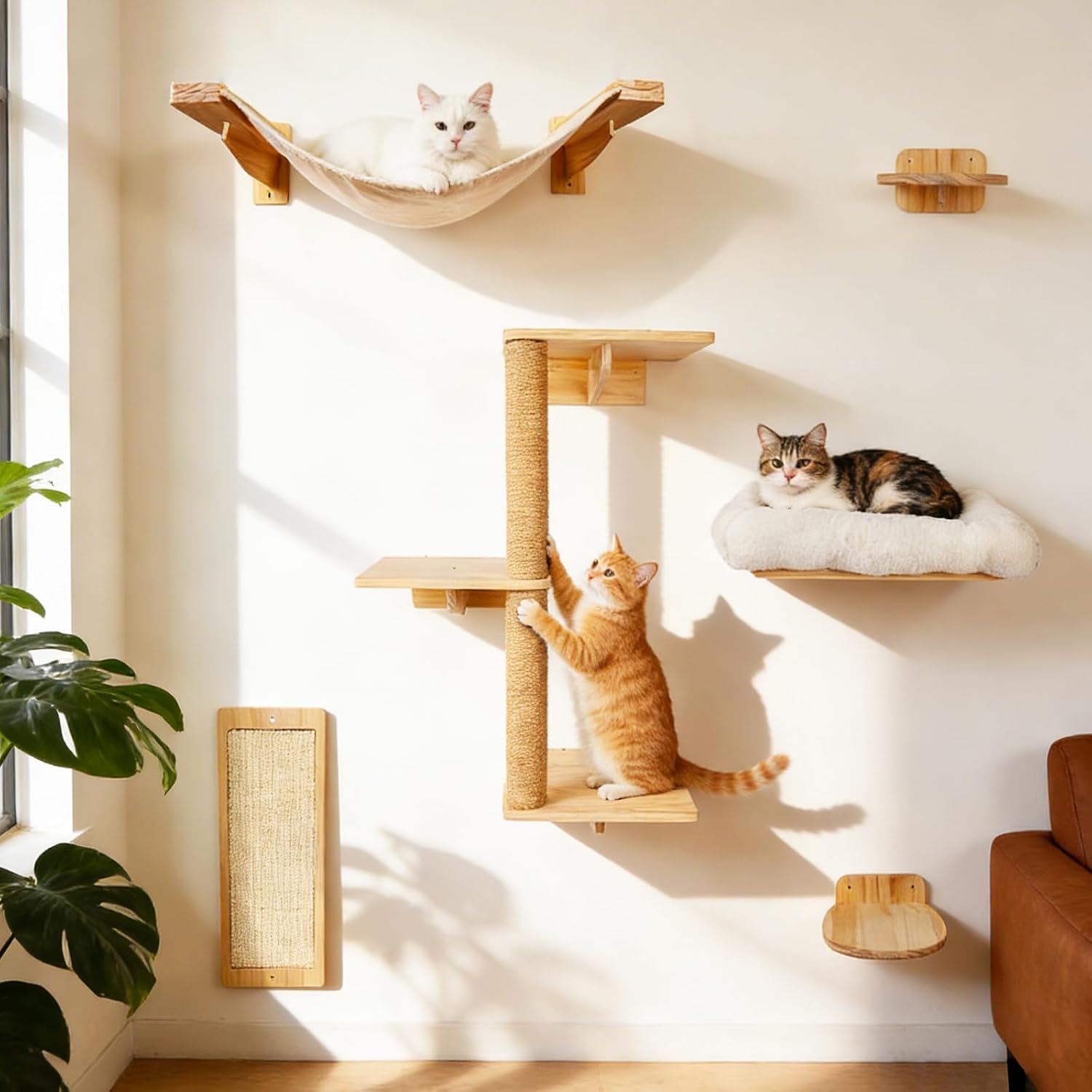
6 in 1 Cat Wall Shelves Climbing System with Sisal Scratching Perch
Six pieces of vertical territory that use no floor space at all, with a sisal perch built into the run
You need wall studs, a drill, and a landlord who says yes
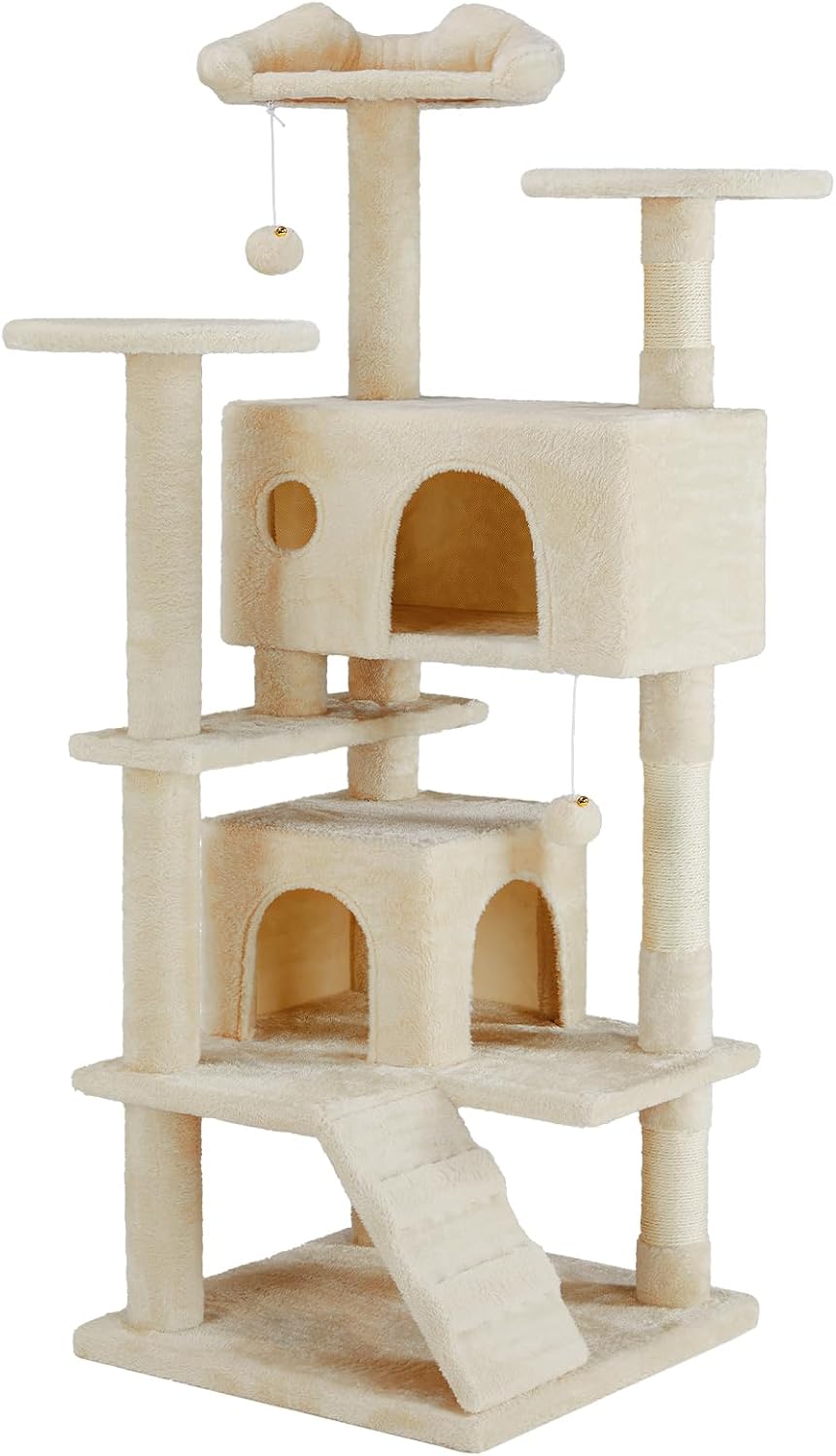
Sweetcrispy 54-inch Cat Tree Tower with Scratching Posts, Indoor Use
54 inches of height with scratching posts, the classic vertical territory starter at low commitment
54 inches is a starting height, not a destination, so top-perch sprawlers will want more
Prices and availability were captured from Amazon Creators API and may change.
How I judge a piece of cat furniture
Scratching is communication, not destruction. A cat is marking territory, stretching, and shedding the outer sheath of the claw, and if you do not give them a legal surface, they will choose your couch and they will win. So before anything earns floor space in my house, it runs through five questions.
First, does the base match the height? A tall unit with a small, light base is a tipped-tower problem waiting for a twelve-pound cat to launch onto the top perch. Wide and heavy beats tall and pretty, every single time.
Second, is the scratching surface sisal or carpet? Carpet-wrapped posts teach bad habits, and they shred into confetti. Sisal rope is the material cats prefer to sink claws into, and it lasts.
Third, is the top perch sized for an adult cat? A perch built for a kitten is a perch your adult cat will abandon, usually right after they outgrow it.
Fourth, does it reach above your waist? Cats want to be high. A tree that tops out below your belt line is a rug with legs.
Fifth, can the worn parts be replaced? Posts and platforms take abuse, and a unit you can refresh is a unit that lasts years instead of months.
One thing I will not do in this article: pretend a wall shelf, a litter box enclosure, and a scratch mat are competing for the same spot in your living room. They are not. They solve different problems, and the right answer depends on which problem you actually have.
The scratch mat: protection, not territory
The 78.7"x15.8" Self-Adhesive Cat Scratch Mat is the piece I recommend to people who have already lost the couch argument. It is a long strip of scratchable material with adhesive backing, so it goes directly onto the furniture your cats have been working over. At 78.7 inches long and 15.8 inches wide, it covers a sofa arm, a door frame, or the side of an upholstered chair in one piece rather than a patchwork of small pads.
Where it wins is the target problem. If one specific corner of your couch is the designated scratching zone in your house, this redirects the claws without asking the cat to move to a different room. It is also the cheapest entry point in this comparison by a wide margin, and it works on vertical surfaces where no post will fit.
Where it loses is everything else. It does not add vertical territory, it does not give a cat a high perch, and once the adhesive is down you are committed to that spot. It is a repair and prevention tool, not furniture. If your cats are scratching because they are bored and under-elevated, a mat will not fix that, and the post they ignore will keep being ignored.
The wall system: vertical territory when the floor is full
The 6 in 1 Cat Wall Shelves Climbing System with Sisal Scratching Perch is the pick for apartments and small rooms, and it is the one I get most excited about, because it solves the actual bottleneck in most cat homes. Floor space is finite. Wall space is not. Six separate pieces let you build a climbing route up and across a wall, and the sisal scratching perch means a cat can climb, scratch, and settle without a single square foot of your floor being spent.
For a foster room, this matters. Cats who live in a multi-cat space need escape routes and elevation to avoid conflict, and a wall route gives a nervous cat somewhere to go that is not the floor. The perch at the top of a run becomes the high spot that a shy cat claims and a confident cat respects.
The honest downsides are installation and commitment. This is a wall-mounted system, so it needs studs or proper anchors, a drill, and a landlord who is on board. Get the mounting wrong and you will not have a climbing system, you will have a shelf that dropped a cat, which is exactly the outcome I spend my workday telling people to avoid. Measure, find the studs, and if you rent, have the conversation before you drill.
The tower: the classic starter
The Sweetcrispy 54-inch Cat Tree Tower with Scratching Posts is the traditional answer, and for a first piece of cat furniture it is a sensible one. Fifty-four inches puts the top perch well above my waist, which is the height threshold where cats start treating a structure as real territory instead of a piece of floor clutter. It has scratching posts, it is built for indoor use, and it does the thing a wall system cannot do: it stands on its own, no drilling, no permission, no stud finder.
If you are bringing home a kitten or a young cat, this is the shape of furniture that gets used immediately. Kittens climb everything, and giving them a legal tower early is how you keep them off the bookshelf and the curtain rod later.
The honest criticism is the height ceiling. Fifty-four inches is a starter, not a destination. A fifteen-pound cat who wants to sprawl on a top perch is going to find a 54-inch tower's upper platform tight, and once a cat outgrows the top, they will start looking at your furniture again. It also means the base plate has to be doing its job, because a 54-inch tower with a narrow base is exactly the wobble problem I warn people about. Set it on a level, carpeted surface, check that the base is wide relative to the height, and if it moves when a cat jumps, that is not a cat problem, that is an assembly or a design problem.
The litter box enclosure: furniture with a different job
The Evermagin 31.5" Cat Litter Box Enclosure Furniture belongs in this conversation for one reason: in a small home, the box and the cat furniture are competing for the same real estate, and this merges them. It is a 31.5-inch enclosure that hides a litter box inside a piece of furniture, which is the difference between a litter box in your living room and a piece of furniture in your living room.
For foster homes, the practical value is behavioral. A box inside an enclosure gives a cat more privacy, and privacy matters when five cats share a house. A cat who feels exposed at the box is a cat who starts eliminating elsewhere, and that is one of the most common problems I get asked about. Hiding the box also reduces the tracking and the visual chaos, which sounds cosmetic until you are the person scooping twice a day in a studio apartment.
What it is not is a climbing structure. The top of the enclosure is a shelf, not a perch. It can hold a folded blanket, a basket, or a cat who decided it is a bed anyway, but it will not satisfy a cat who needs to be above your head. Buy it to solve the box problem, and buy something else to solve the height problem.
The trade-offs, laid out honestly
If you only buy one thing, buy the tower. Height and sisal scratching posts fix the most behavior problems per dollar, and it requires nothing from your walls or your landlord.
If you have no floor left, buy the wall system. It is the highest-value purchase for a small apartment or a multi-cat home, provided you install it properly.
If your cats have already chosen a piece of your furniture, buy the scratch mat. It is a defensive move, not an upgrade, and it works best as part of a plan that also includes a real scratching post.
If your problem is the litter box, buy the enclosure. It is furniture solving a logistics problem, and it earns its place in a small home even though it adds no climbing value.
Two of these four can live in the same room without overlapping. A wall system plus an enclosure covers climbing and hiding in a room with almost no free floor. A tower plus a scratch mat covers height and furniture protection for someone who is not ready to drill into a wall.
The three questions I ask before buying
Would I put it in a foster room with five cats? That is the test I run on everything. A piece that only works for one confident cat in a quiet house is not a piece I recommend to a multi-cat home, because five cats will find every weak point in a week.
Does it survive a twelve-pound cat launching onto the top? Any structure with a high perch and a light base is a risk, and the base plate is the whole game. Wide and heavy beats tall and pretty.
Are the scratching surfaces going to be used, or just advertised? Sisal rope gets used. Carpet-wrapped posts get ignored and then shred. If a product's main selling point is a carpet post, that is not a feature, that is a warning label.
What I'm testing next
The 54-inch tower is the piece I most want to see assembled in person, because the spec that matters is not the height, it is how the base plate is sized against it, and that is not something a listing photo tells you. I am also watching how the wall system's sisal perch holds up under a cat who scratches daily rather than occasionally, because sisal quality varies more than the material name suggests.
The four pieces here are not a ranking so much as a map of the four problems cat owners actually have: the couch that is being destroyed, the floor that is full, the cat that needs height, and the box that is in the way. Figure out which one is yours, and the decision gets a lot shorter.
Whichever way you go, buy for the cat you have, not the kitten in the photo. Adult cats need adult-sized perches, a base that does not move, and a scratching surface worth using. Everything else is decoration.