I have fostered more than 60 cats, and I have watched nearly every one of them ignore a carpet-wrapped tower and go straight for the arm of my couch. That is not a cat problem. That is a shopping problem. When I compare cat scratching posts and wall shelves for a foster room, colorways do not enter the conversation. What matters is whether the scratching surface is sisal, whether the base plate stays put when a 12-pound cat launches onto the top perch, and whether the thing is still standing after 60 days with five cats using it.
The best overall pick in this comparison is the FUKUMARU wall shelf set, because vertical territory anchored to the wall cannot wobble and the cushioned perch is wide enough for a full-grown cat to sprawl. That said, wall shelves are the wrong answer for renters who cannot drill, and they are the wrong answer for a kitten that has not learned to land yet. The table below has four rows because the honest answer depends on which problem you actually have.
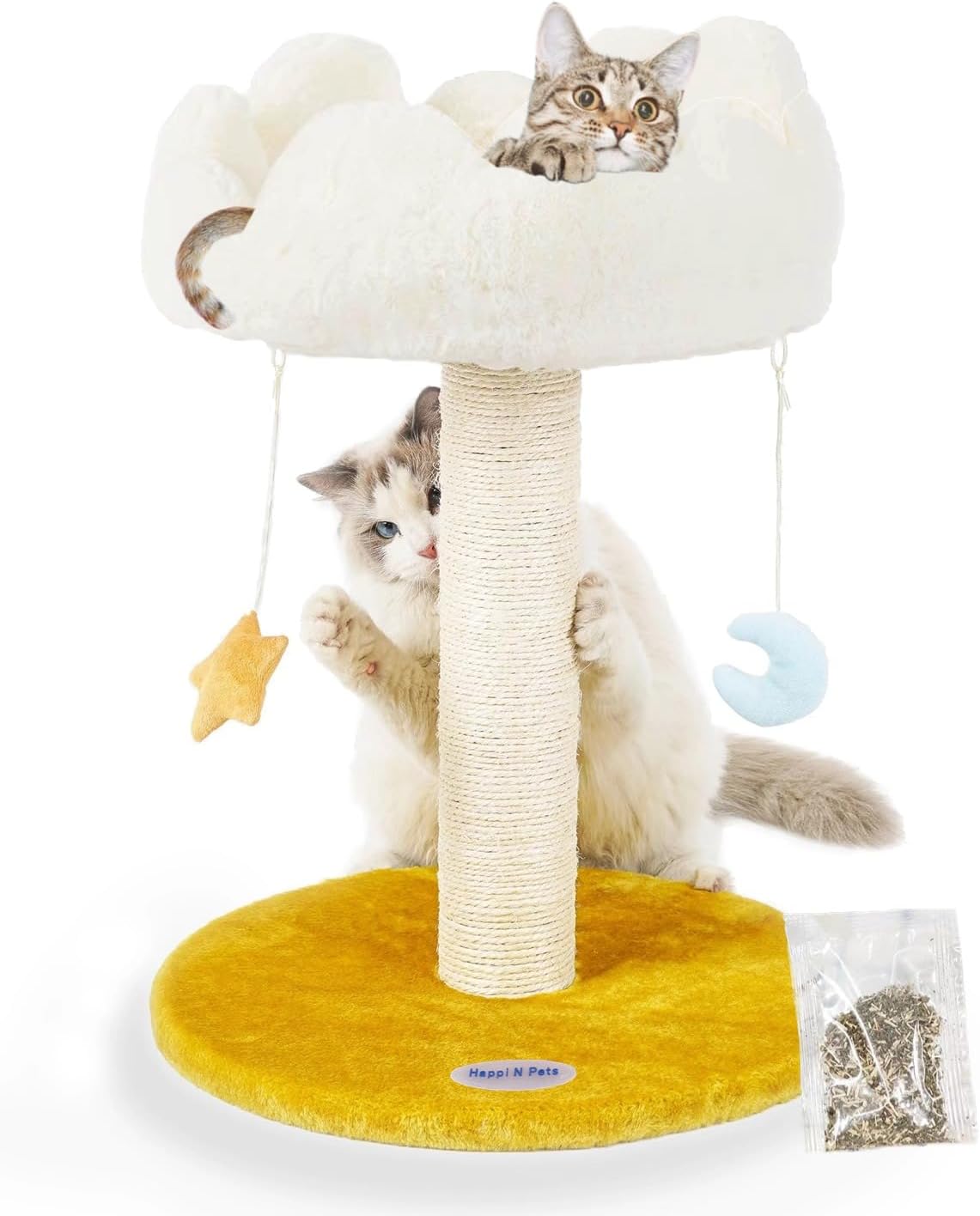
Happi N Pets Cloud Cat Tree
Cheapest way to give a kitten its own scratching post and sleeping spot, small footprint, genuinely soft bed
It is a kitten tree: light base, short post, and an adult cat on the top perch makes the whole unit lean
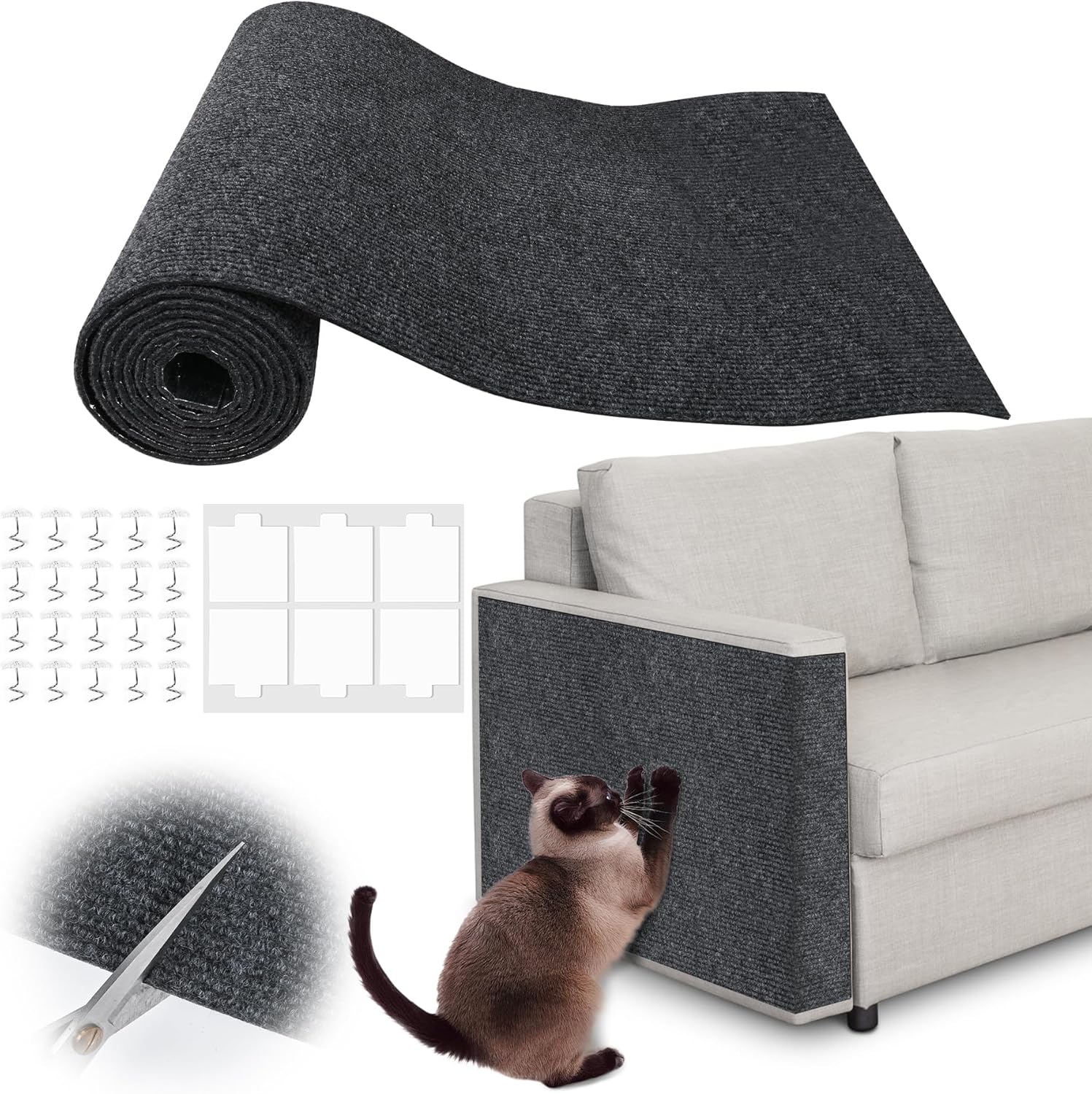
Couch Protector from Cat Claws Scratch Pads
Trimmable, self-adhesive, and it covers the exact couch panel your cat already chose, no drilling required
It is a patch, not a tree: no height, no perch, and adhesive struggles on textured fabric or loose slipcovers
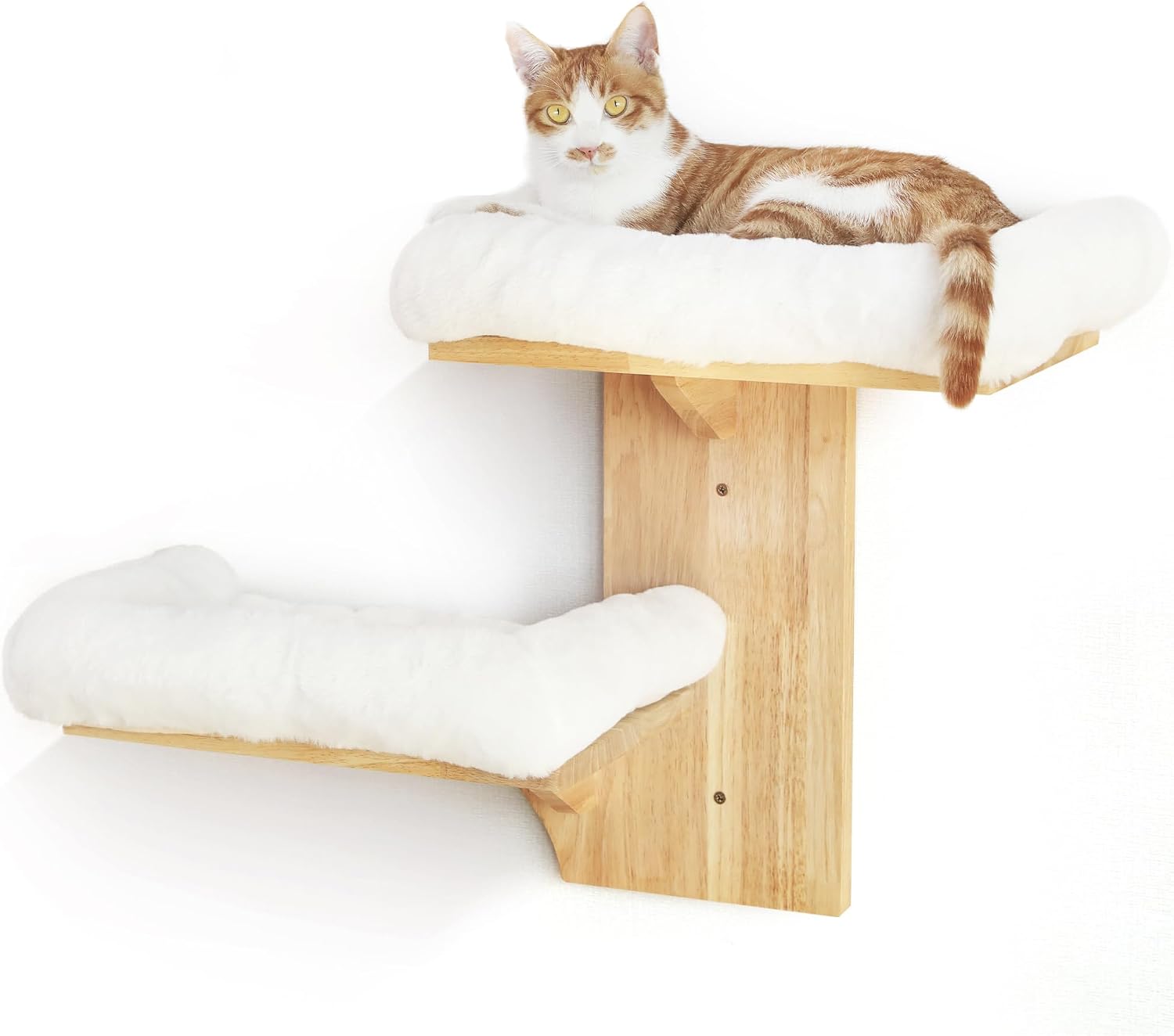
FUKUMARU Cat Wall Shelves
Real vertical territory bolted to studs, no wobble possible, cushion perch fits an adult cat
Needs a drill and a landlord who says yes, highest cost here, and it is not a scratching surface on its own
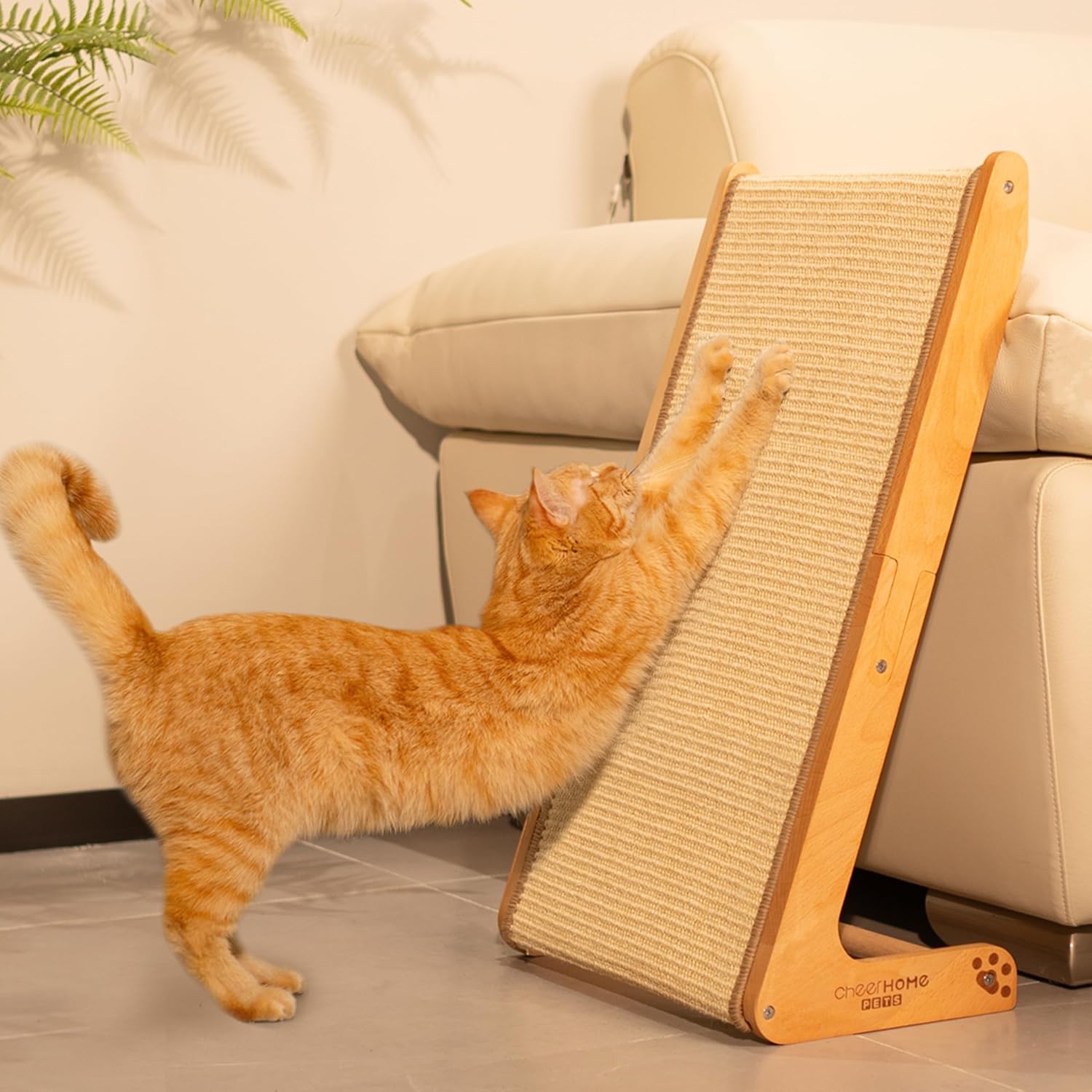
CHEERHOME PETS Sisal Cat Scratcher Ramp
Solid wood frame with a sisal incline, angled for cats who scratch downhill, freestanding and stable
Does one job only: no perch, no bed, and the L shape claims floor space along a wall
Prices and availability were captured from Amazon Creators API and may change.
How I stress test cat furniture
Every piece that comes into my house gets the same 60-day treatment with my current foster crew of five. I am not scoring how it looks on day one. I am scoring what is left of it on day 60, and how many times I had to tighten a bolt or peel a cat off the back of the couch.
Three questions decide almost everything:
- Does the base plate hold? Wide and heavy is the whole game. If a cat can tip it on carpet, it is not furniture, it is a hazard.
- Is the scratching surface sisal? Carpet-wrapped posts teach a cat that carpet is a scratching surface, and then your actual carpet pays for that lesson.
- Does the perch fit an adult cat? A perch that fits a kitten is a shelf. A perch that fits a sprawled 12-pound cat is vertical territory.
I also watch which pieces get used without a bribe. A scratching post that needs catnip sprinkled on it every week is a scratching post that is failing, and no amount of enthusiasm from me fixes that.
The kitten pick: Happi N Pets Cloud Cat Tree
This is the one I point people toward when they are bringing home a kitten and do not want to spend real money on furniture the cat will outgrow. It is a small scratching post with a soft bed on top, sized for a young cat. For a kitten, that top bed is a legitimate sleeping spot, and the post gives them a surface that belongs to them instead of to your sofa.
What it is not is a tree for an adult cat. The base is sized for a kitten's landing, not a full-grown cat's launch, and the whole unit is light. My rule for adult cats is that a tree should be taller than your waist and heavy enough that you would not enjoy carrying it up a flight of stairs. This one is neither, and that is fine, because it is not pretending to be.
Buy it if you have a kitten, a small apartment, and no interest in a six-foot tower dominating a corner. Skip it if you have an adult cat, more than one cat, or a cat that already launches off the back of the couch. That cat needs height, and height is the one thing this product does not sell.
The scratching specialist: CHEERHOME PETS Sisal Cat Scratcher Ramp
An L-shape sisal ramp in solid wood is a specific tool for a specific cat. Some cats scratch horizontally on the floor. Some scratch vertically on a post. Some want an incline, because a slope lets them dig in and pull, which is the motion scratching is actually for.
The solid wood frame is the part that matters. A wooden ramp does not flex or scoot when a cat puts real weight into it, which is exactly how lightweight scratchers fail on hardwood. The sisal surface is the right material, and sisal is the difference between a scratcher that gets used and a couch that gets used instead.
The limitation is that it does one job. There is no perch, no bed, no height. It is a scratching station, and if your cat's complaint is that they have nowhere to be, this does not answer it. Pair it with a perch, or buy it knowing you are getting a scratcher and not a tree.
Buy it if your cat scratches the floor, the side of the couch, or ignores posts because they slide. Skip it if you need vertical territory.
The vertical territory pick: FUKUMARU Cat Wall Shelves
Wall shelves are the most underrated category in cat furniture, and this two-platform set with soft cushions shows why. Because the platforms are anchored to the wall, there is no wobble at all. The base plate problem, which is the single biggest failure point in freestanding trees, disappears entirely.
The trade-offs are obvious and worth saying out loud. You need a drill, you need studs or proper anchors, and you need a landlord who will forgive you. You also have to accept that a wall shelf is a perch and a path, not a scratching surface. The cushions are for napping. If your cat's scratching urge is the problem, this is half of the answer, not the whole thing.
Mounting height matters more than people expect. Put the platforms high enough that your cat can look down on the room. Cats want to be above the action, not at eye level with it. A shelf at knee height is a shelf your cat will ignore.
Buy it if you own your walls, you want height without losing floor space, and your cat already climbs. Skip it if you rent, or if your cat is a kitten still figuring out landings.
The damage control pick: Couch Protector from Cat Claws Scratch Pads
I include this one because it is the product people actually need and never think to buy. It is a long, trimmable, self-adhesive sheet that sticks to the side of a couch, an arm, or wherever your cat has already decided to scratch. It is not furniture. It is a boundary.
Two things make it work. First, it is trimmable, so it fits the specific panel your cat has chosen instead of hanging off the edge. Second, it goes where the damage already happens, which means you are not trying to redirect a cat that has been working the same couch arm for two years. You are covering the target.
The honest limitation: adhesive on heavy texture or a loose slipcover will not hold forever, and the pad will not satisfy a cat who wants to climb. It is a stopgap, and a good one, but it is not a substitute for a sisal post. Use it as the second line of defense, not the first.
Buy it if your cat has already picked a piece of furniture. Skip it if you have not yet given the cat a legitimate scratching surface, because you are treating a symptom at that point.
What the criteria actually reveal
Rank all four against my three questions and a pattern shows up. The wall shelves win on stability, because bolted to studs they cannot wobble. The sisal ramp wins on scratching surface, because the surface is sisal and the frame is solid wood. The kitten tree wins on simplicity and loses on adult-cat weight. The couch protector wins on precision, because it lands exactly where the damage is, and loses on everything else.
Notice that none of these is a full cat tree. That is deliberate. A full tree has to solve height, stability, scratching surface, and perch size all at once, and cheap ones solve none of them. Splitting the job across a perch, a scratcher, and a boundary layer frequently works better than buying one tower that does all four badly.
If I had to rank them for a typical household with one adult cat and one couch: wall shelves first, sisal ramp second, couch protector third, kitten tree last. If the cat is under six months old, flip the top two.
Do you need more than one?
Probably yes, and here is the test. Stand in the room where your cat spends the evening. Is there anything in that room taller than your waist that belongs to the cat? If not, you have a vertical territory gap, and no scratching post will fix it, because that gap is a perch problem.
Now look at the furniture your cat has damaged. Is there a sisal surface within a body length of it? If not, you have a scratching gap, and no perch will fix that either.
Most cats need both, which is why I rarely recommend buying one thing. The realistic order is: get a sisal scratcher first, because it protects your furniture immediately. Then add height, because it prevents the next problem. The couch protector is what you buy the same day you bring home a cat who has already picked a couch, and the kitten tree is what you buy when the cat in question weighs four pounds.
What I'm testing next
The next thing on my bench is a wall-mounted system that combines platforms with a sisal column, which is the obvious next step for anyone who likes the FUKUMARU shelves but still needs a scratching surface at height. I am also running the foster crew against a taller freestanding post to see whether it earns a place beside the wall shelves or replaces them.
Biscuit, my hardest-to-please foster, has rejected more cat furniture than she has approved. My rule with her is simple: if she ignores a new piece for a week, it goes back. That is the standard I would hold any of these four to, and it is why I keep testing instead of just recommending whatever looks good in a product photo.