Most people call scratching a behavior problem. I call it a conversation. A cat scratches to shed the dead outer shell of the claw, to stretch the spine and shoulders, and to leave a scent mark on the thing they consider theirs. When the thing they consider theirs is your sofa arm, you have two jobs: protect the furniture long enough to survive the retraining, and give the cat a surface that works better than the couch does.
If you want to stop cat scratching furniture for good, you do not need a spray bottle, a declaw, or a new living room set. You need the right surface in the right spot, and a shield over the wrong surface while the habit rewrites itself.
Why you should trust me
I am Sofia, a veterinary technician in Tampa. Eight years in the clinic, and more than 60 foster cats through my spare bathroom, my guest room, and at various points my actual bed. I have assembled, repaired, and watched cats destroy more cat trees than I can count, from forty dollar carpet wrapped disasters to solid wood condos that cost more than my first car.
Right now I run a rotating foster crew of five cats, which means every piece of cat furniture in my house is under constant negotiation. I have opinions about sisal. I have opinions about base plates. Most of what I know about scratching I learned from a vet who told me, "Scratching is not destruction, it is communication," and from a foster cat named Biscuit who has personally rejected more furniture than most people own.
How I picked and how I tested
This is a how-to article, not a shopping spree. Only two products are in here, and both solve a specific problem in the retraining plan below.
Here is the checklist I run before anything goes into a room with five cats.
For anything that touches upholstery: Does the adhesive hold without pulling fibers off a linen blend? Can it wrap a corner without tenting up? Is it thick enough that a determined claw does not punch through on the first try? Can I remove it in three months without leaving a sticky ghost on the fabric?
For anything the cat is supposed to scratch: Is the scratching surface where the cat already is, or where I wish the cat was? Does it stay put when a twelve pound cat launches off it? Can I replace the scratch pad without replacing the furniture?
That last question is the one most people skip. They buy a beautiful scratcher, put it in the corner of the room nobody uses, and then wonder why the couch is still the favorite. Location beats design every single time.
I will be honest about the limits here. A piece of protective film is not a training tool. It is a shield. It buys you the weeks you need to build the new habit, and if you leave it on forever, you have a couch covered in plastic and a cat who has simply moved on to the next illegal surface. Use it as a bridge, not a permanent wall.
Step one: find the real target
Before you buy anything, watch your cat for three days and write down four things.
The height of the scratch marks. Damage at knee height or above means your cat is stretching up, so the fix needs to be vertical, not a flat pad on the floor.
The angle. Horizontal rips along a cushion are usually a running start or a launch. Vertical grooves down the side of an arm are a standing stretch.
The time of day. Most scratching happens around meals, after naps, and when you walk in the door. That is a cat marking territory and working off a stretch, not a cat plotting revenge.
The furniture. Cats pick texture as much as location, and they remember which piece gave them the best grip.
That list tells you where the new scratching surface goes. If the couch arm gets hit at six in the morning and seven at night, the post goes beside that arm, not across the room.
Step two: give them a better surface, right next to the bad one
Put a sturdy sisal post directly in front of the spot being destroyed. Not near it. In front of it. You are offering a competing option at the exact address where the behavior already happens.
Two rules for that post. First, it has to be tall enough that your cat can stretch to full length with both front paws extended, because a short post gets ignored. Second, the base plate has to be wide and heavy. A post that wobbles when a cat pushes off it teaches the cat that the post is unreliable and the couch is not.
If your cat is scratching the edge of the litter box instead of a post, you have a slightly different problem, and there is a piece of furniture for that at the end of this section.
Step three: shield the couch while the habit rewrites itself
You cannot redirect a cat if the couch is still the most rewarding thing in the room. While you build the new habit, cover the target.
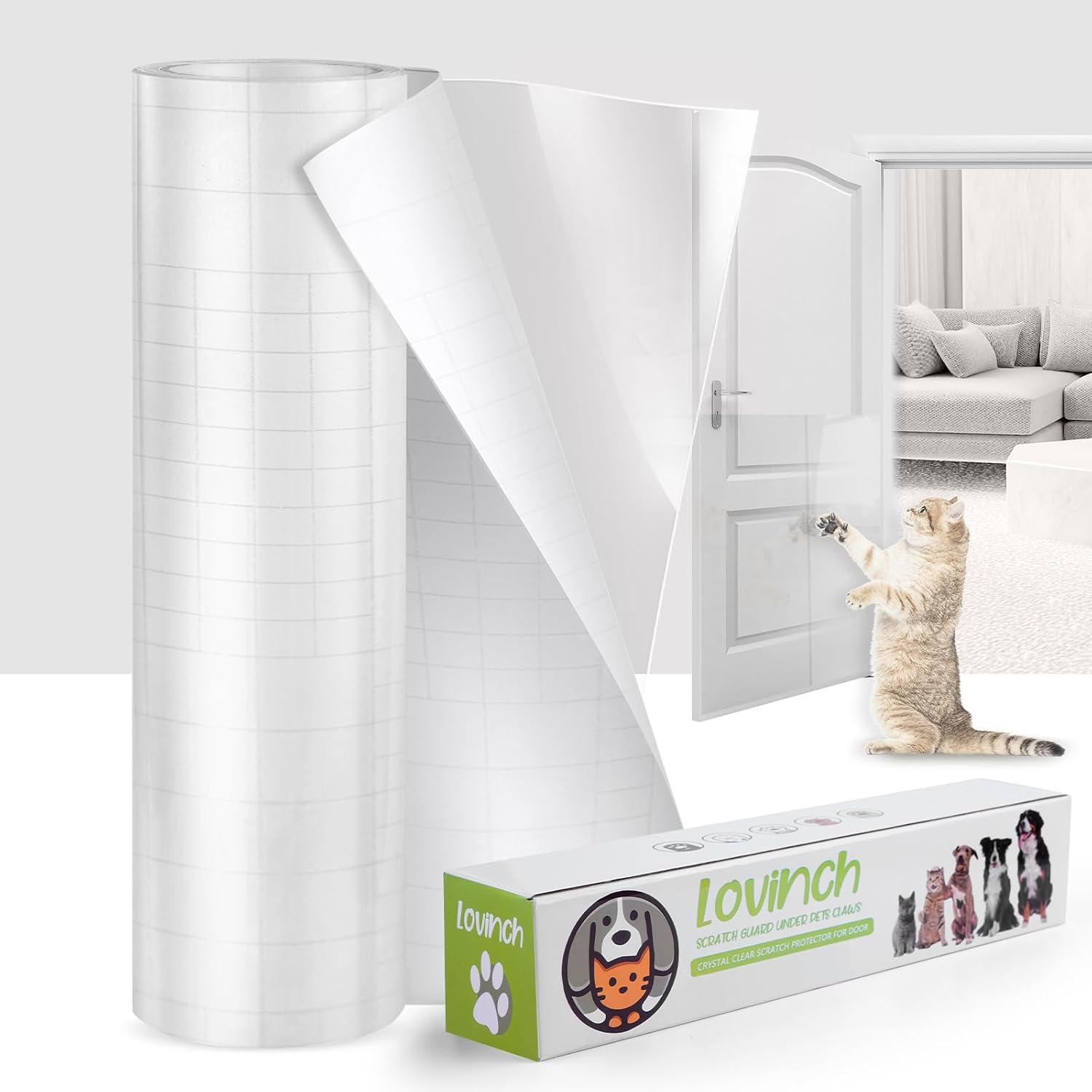
Our pick: [Thicken Vinyl] Anti Cat Scratch Furniture Protector, Single-Sided Sticky Couch Protector for Cats, Flexible Couch Corner Guard Under Cats Claw, Cat Scratch Deterrent Tape-(160" x 12.4")
 Visit on Amazon →
This is the piece I keep in the foster room closet. It is a single sided sticky vinyl sheet that goes on the outside of the couch, not a double sided tape that grabs fur and leaves residue on everything it touches. The roll is long enough that you can cut pieces for the arms, the corners, and the top of the back cushion, and the vinyl is thick enough that claws skate across it instead of digging in.
How to use it well:
- Vacuum the fabric first. Adhesive on a surface full of cat hair and lint will lift in a day.
- Cut a piece larger than the scratch zone. Claws find edges.
- Press it down from the center out, working the air toward the edges so nothing tents up.
- Wrap the corner with a little slack, not a hard fold. Vinyl folds crease, and creases lift.
- Check the edges every week and press them back down.
Flaws but not dealbreakers: It is a shield, not a teacher. If you stick this on the couch and never put a post beside it, your cat will find the one unprotected inch in the house. On very textured fabric, edges lift sooner than on a tight weave, so plan to check it weekly.
Households with one favorite couch and one cat who has decided that couch is hers will get the most out of it.
Step four: fix the box if that is where the claws land
A lot of scratching has nothing to do with the sofa. Cats scratch the carpet next to the litter box, the wall behind it, and the plastic edge of the box itself, usually right after they finish. If that is your house, the fix is a legal scratching surface attached to the thing the cat already uses every day.
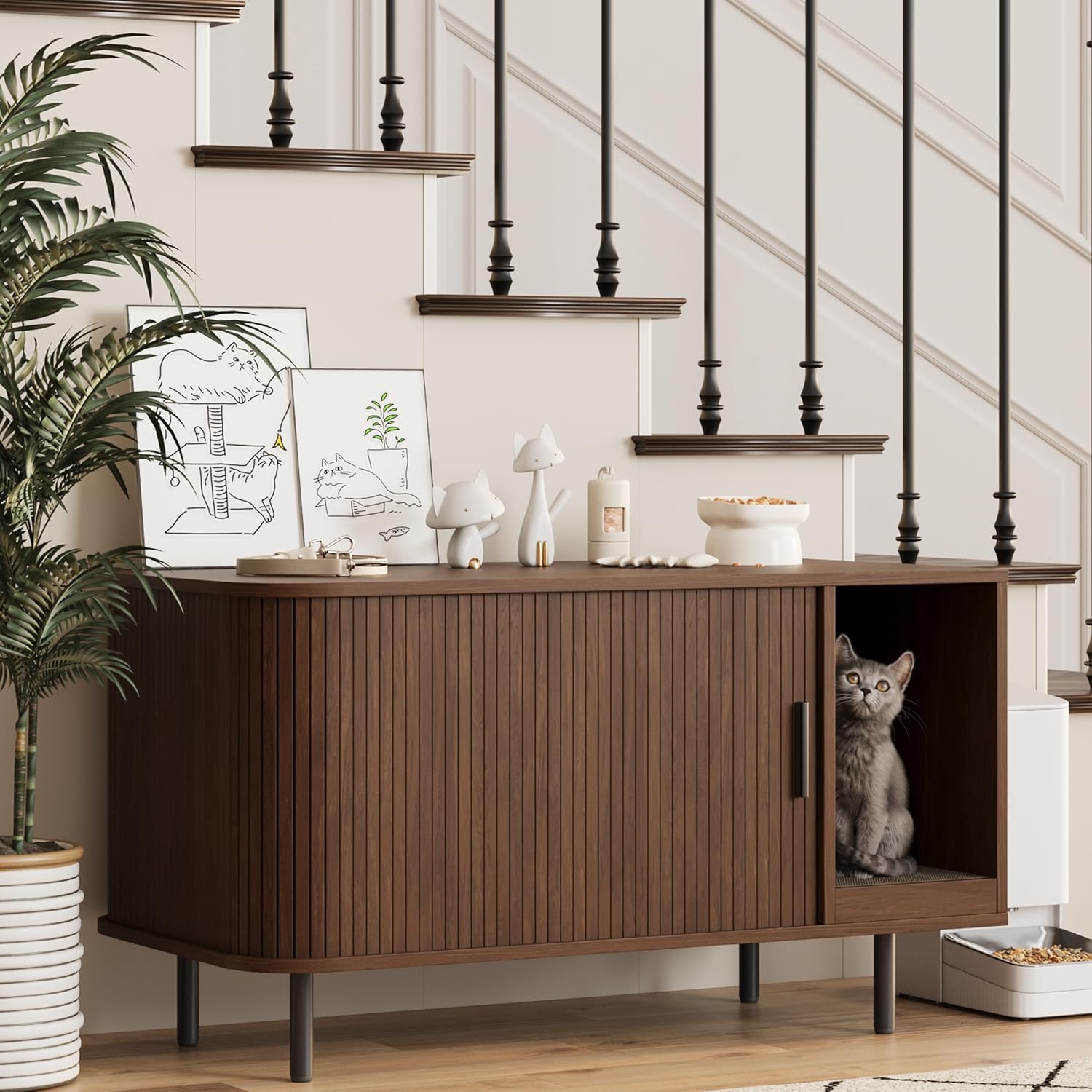
Upgrade pick: Halitaa 37.4" Cat Litter Box Enclosure with Scratch Pad, Sliding Door
 Visit on Amazon →
This is the piece I point people toward when the litter area looks like a demolition site and the living room is fine. It is a wooden enclosure at 37.4 inches wide with a sliding door and a scratch pad built into the unit, so the cat gets a legal surface at the exact spot where the post potty scratch happens. The sliding door matters more than it sounds, because it lets you open the box for scooping without dragging the whole cabinet away from the wall.
Two things to plan for. Give your cat a few days to accept the enclosure before you move the box inside it, and keep the scratch pad where they can reach it on the way out. The exit is where the scratching happens.
Flaws but not dealbreakers: It is furniture, so it takes up floor space, and it needs assembly. Measure the wall you plan to put it against before you order.
Anyone whose cat treats the litter box as a scratching post, or who wants the box out of sight in a small apartment, will get real use out of it.
The actual four week retraining workflow
Now the part that does the work. None of it is complicated. All of it has to be consistent.
Week one, days one through three: audit and shield. Watch, write down the four things above, then cover the hot spots with the protector. Put a tall sisal post directly in front of the worst spot, and do not move it later in the week just because it looks better in the corner.
Week one, days four through seven: redirect every time. Every time you see the cat approach the couch, pick them up gently and set them on the post, then run your fingers down the post like a scratching motion. Cats copy. It feels silly. It works.
Week two: reward the post. Praise quietly when the post gets used. Do not pick the cat up mid scratch on the couch and scold, because that just teaches them to scratch when you are not looking. Redirect, then walk away.
Week three: trim and maintain. Trim the front claws every ten days during retraining. Blunt claws do less damage and make the couch less rewarding. Vacuum the post and the protector, because cat hair kills adhesive.
Week four: test a small opening. Lift one corner of the protector and watch. If the claws go straight back to the fabric, put it back down and give it another two weeks. If the cat chooses the post, remove the film, clean the fabric, and leave the post where it is permanently.
That last step is the one people rush. Four weeks is a minimum, not a finish line, and a cat who has been working the same sofa arm for three years takes longer than a kitten who started last Tuesday.
Where people go wrong
Punishing after the fact. A cat does not connect a squirt bottle at noon with a scratch at nine in the morning. You get a nervous cat and the same couch damage.
Declawing. It is an amputation, not a manicure, and it trades a furniture problem for a lifetime of behavior and joint problems. There is no version of this where I recommend it.
Buying the scratcher first, deciding the location second. The post goes where the scratching happens, not where it looks nice.
Leaving the protector on forever. A shield becomes a crutch. The goal is a couch the cat chooses to leave alone because something better is two feet away.
Skipping the litter box corner. If your cat scratches at the box, no amount of couch protection will fix it. Handle both ends of the behavior.
The competition and why it lost
There are a lot of products in the scratching aisle that are not in this article, and that is on purpose.
Deterrent sprays fade, and cats habituate to them in about a week. Motion activated air cans startle a cat once or twice and then become background noise. Nail caps work for some cats and get chewed off by others, and they still need to be reapplied every few weeks. Cardboard scratchers are cheap and great for kittens, but they shred in weeks and they teach a cat that a flat, low surface is the answer, which does not help when the target is the vertical side of your couch.
Full cat trees belong in their own guide. If you need vertical territory, that is a different purchase with its own rules about sisal, base plates, and perch size, and I have written about it at length. For the specific job of getting a cat off the couch and onto something legal, the two pieces above are the ones that earn their place in the plan.
What this all costs
Both products are on Amazon, and prices move, so check current Amazon price on each listing rather than trusting a number from a blog post, including this one.
The way to think about the math is not the purchase price. It is what you are comparing it to. A single reupholstered sofa arm costs more than both of these items together. A new couch costs more than every scratching post you will ever buy. And a surrendered cat costs the most, in every sense.
The vinyl protector is the smaller line item and the one you can cut back on once the habit changes. The litter box enclosure is the bigger one, and the one that stays in the house permanently, doing two jobs at once.
The short version
Scratching is communication. Answer it with a tall sisal surface at the exact address where the damage happens, shield the couch while the habit rewrites, and give the litter box its own legal scratch pad if that is where the claws land. Watch for four weeks, redirect every time, and do not rush the finish.
Your cat is not destroying your furniture. Your cat is telling you where the post should have gone. Now you know where to put it.