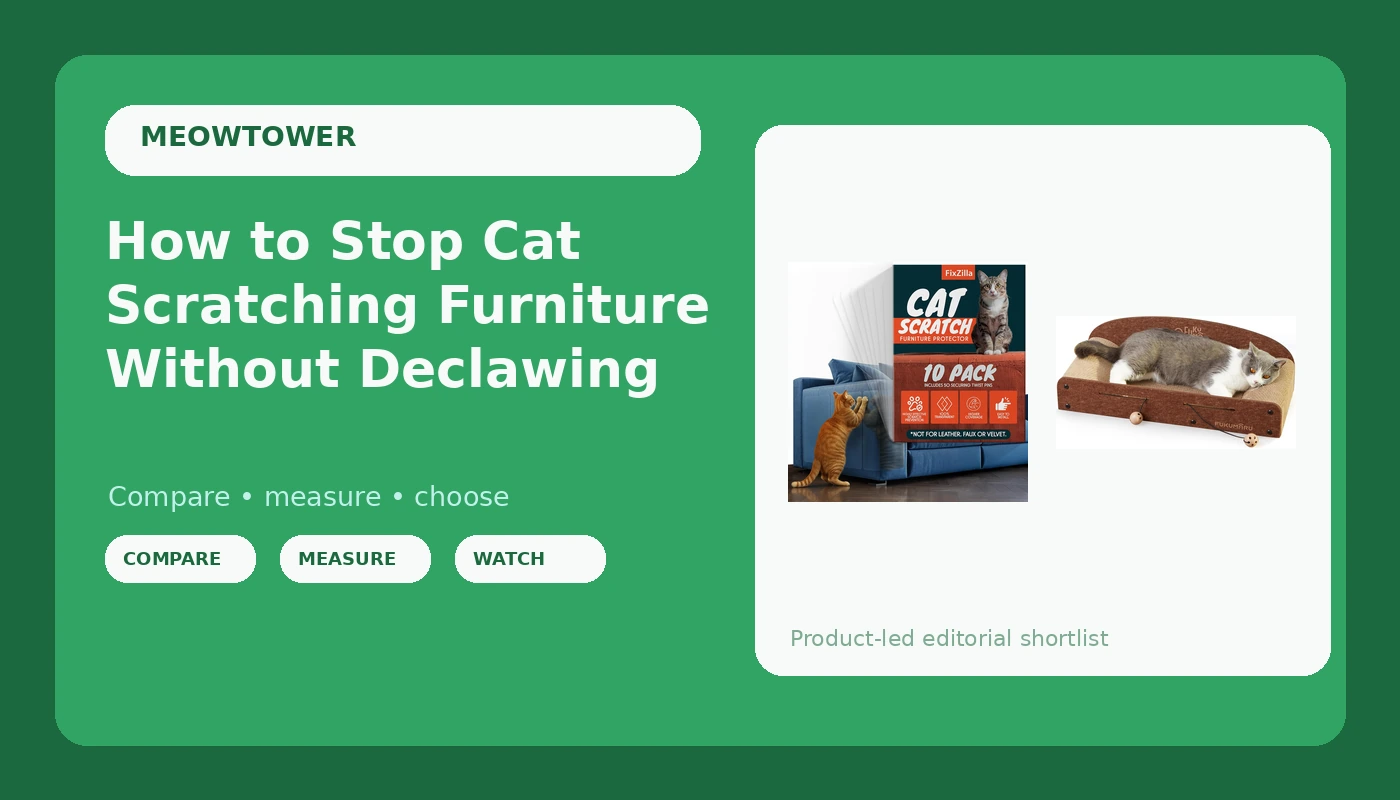
Most cats do not scratch the couch out of spite. They scratch it because the corner of the couch is the best scratching surface in the room. It is vertical, it is heavy enough not to move, it sits right next to where the family hangs out, and it gives a claw exactly the resistance a cat is looking for. If you want to stop cat scratching furniture, you do not start by punishing the cat. You start by changing what is available at that spot.
I am a veterinary technician in Tampa and a foster mom to more than 60 cats. I have assembled, repaired, and watched cats dismantle everything from a cheap carpet-wrapped tree to a solid wood condo. The fix I walk people through has three parts: cover the target, place a better surface within reach of it, and hold both in place long enough for the habit to move.
Why you should trust me
Eight years in a clinic and a rotating foster room means I have seen this problem from both sides. I have watched a cat named Biscuit reject more scratching surfaces than most people will ever buy, and I have watched owners spend $200 on furniture that their cat ignored because it was two feet in the wrong direction.
My bias is simple. Scratching is not destruction, it is communication. A cat scratches to shed the old claw sheath, to stretch the whole spine, to mark territory with the scent glands in the paw pads, and to leave a visual sign for every other cat in the house. When you understand what the behavior is for, the solution stops being "make the cat stop" and becomes "give the cat somewhere better to do it."
What scratching actually is
Four things are happening every time your cat digs into the couch arm.
The first is claw maintenance. The outer sheath of the claw is dead material, and raking it against a rough surface pulls it off. A cat that never gets to do this ends up with thick, layered claws.
The second is a full body stretch. Watch a cat scratch and you will see the front legs extend, the shoulders roll forward, and the back dip. That is a serious stretch, and it is why a scratching surface that is too short gets ignored. The cat cannot complete the movement.
The third is scent marking. Paw pads carry glands, and scratching deposits scent right at nose height on a vertical surface. That is a message to every other cat in the house: this is mine.
The fourth is visual marking. Shredded fabric is a signpost. Your cat can see it from across the room, and so can the other cats.
Now put those four things next to the actual furniture in your living room. Couch arms and corners are vertical, stable, at the social center of the house, and covered in a fabric that grabs a claw and gives slightly. That is a nearly perfect scratching post. A loose, light, carpet-wrapped post in the corner is not.
One more distinction matters before you buy anything. Some cats rake downward on a vertical surface. Others stretch out and scratch horizontally on the floor, a rug, or the side of a bed. Many cats do both, and a plan that only covers one direction will fail for the other half of the day.
How to judge a scratching surface before you spend money
Here is the checklist I use on any surface, whether it is a post, a bed, or a whole tree.
Material. Sisal rope, corrugated cardboard, or a tightly woven, heavy fabric that is not the same as your couch. Loose loop carpet is the worst option, because it teaches the cat that carpet is a scratching surface. Guess what your couch is covered in.
Stability. Push the surface with one hand while you lean into it. If it slides or tips, the cat will not use it. A scratching surface has to feel like it is bolted to the earth.
Reach. The surface needs to be tall enough, or long enough, for the cat to get a full stretch with the front legs extended. A 12-inch post is a toy. It is not a scratching station.
Placement. The single most common mistake is putting the new surface somewhere convenient for you instead of somewhere useful for the cat. Scratching happens near sleeping spots and near the social hub. The new surface goes there.
Replaceability. Whatever you buy will wear out. That is the point. A surface that can be flipped, rotated, or swapped is worth more than a prettier one that has to be thrown away.
The two pieces of gear that do the heavy lifting
A behavior plan needs two things: something that protects the furniture while you work, and something that gives the cat a better option. These two products cover those two jobs.
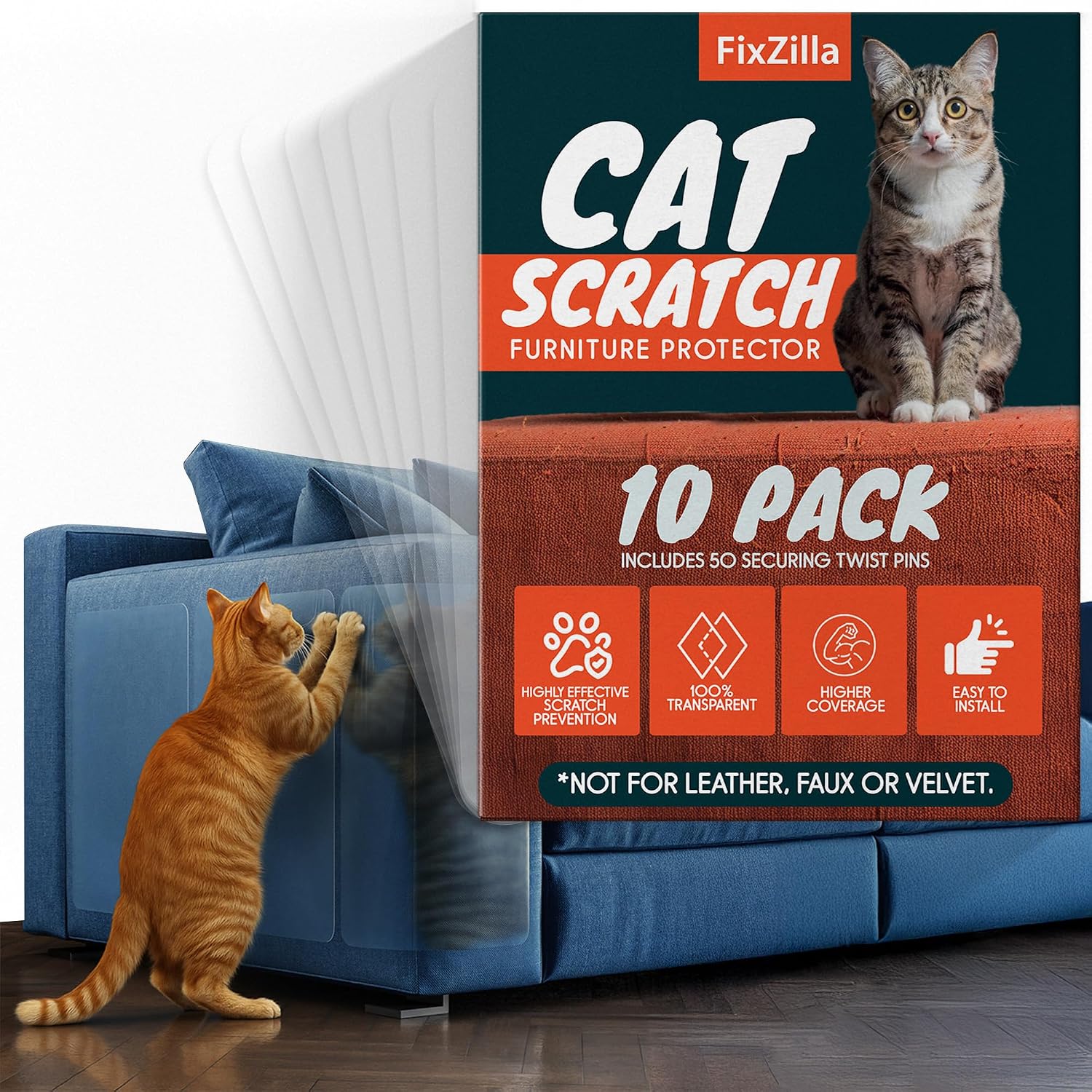
The couch shield: FixZilla Anti Cat Scratch Furniture Protector, 10-Pack Couch Protector from Cat Claws - Heavy-Duty, Easy-to-Apply Scratching Deterrent and Shield for Sofa Corners, Walls, Doors- with 50 Twist Pins
 Visit on Amazon →
This is the management half of the plan, and it is the half people skip because it feels like giving up. It is not. Every time your cat scratches the couch, the habit gets a little stronger and the fabric gets a little weaker. Covering the target stops the reinforcement while you build the replacement behavior.
The pack gives you ten panels and fifty twist pins, which is more coverage than most people need for a single couch. That is useful, because the first spot you cover is never the only spot. Cats work the corner of the arm, the outside edge of the cushion, the door frame next to the couch, and the wall where they launch off. Having extra panels means you can cover all of it in one pass instead of ordering a second pack in a week.
The twist pins are the reason this style works on upholstery. You are anchoring the shield into the fabric so the cat cannot peel it back and so the panel does not slide when a claw hits it. Place the pins where they will be hidden by a cushion or a seam when you eventually take the shield off. Check current Amazon price and compare it to what a reupholstery quote looks like, and the math stops being close.
Flaws but not dealbreakers: This protects furniture, it does not train a cat. On its own it just moves the scratching somewhere else in the house. It only works as part of a plan that includes a real scratching surface. And because the pins go into fabric, think about placement before you push them in.
Anyone with a couch, a set of door frames, or a wall corner already under attack will get the most out of this.
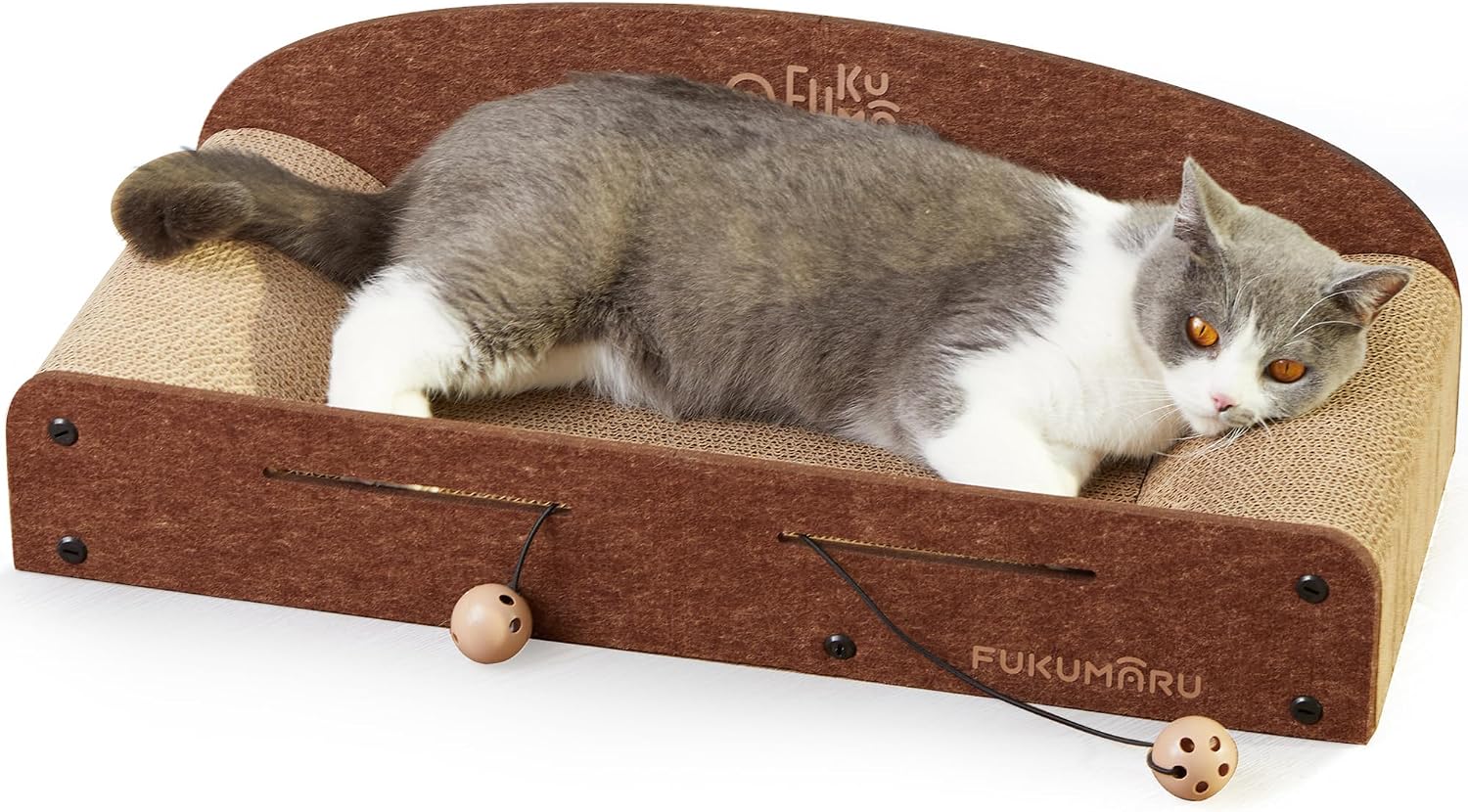
The redirection: FUKUMARU Large Cat Scratcher Bed, 26 Inch Cat Scratching Bed Sofa Indoor
 Visit on Amazon →
This is the other half, and it is the half that actually changes behavior. A scratching bed gives the cat a horizontal scratching surface and a place to sleep on top of it, which sounds like a gimmick until you remember where cats scratch. They scratch where they lounge. They wake up, stretch, scratch, and go back to sleep.
A 26 inch bed is long enough for a big cat to stretch out fully, which matters more than people think. Short surfaces get abandoned because the cat cannot complete the movement. This one is sized for an adult cat, not a kitten, and it reads as furniture rather than as a piece of equipment, which means it can live in the living room where the problem actually is.
The move is to place it directly against or beside the couch, in the spot your cat already uses to launch an attack on the upholstery. Not across the room. Not in the bedroom. Right there, so the cat's first choice is the bed and the couch is the second choice.
Flaws but not dealbreakers: This is a horizontal surface, so it will not satisfy a cat that rakes down a vertical post. If your cat scratches standing up, you still need a tall vertical option. Check the listing for the scratching material before you commit, because surface texture is the whole game. And if it sits on hardwood, put a rug under it, because a bed that slides across the floor will get ignored.
Anyone whose cat scratches flat surfaces, or who wants a scratching surface that does not look like a scratching surface, should start here.
The step by step fix
Step one: find the pattern. For one week, write down every scratching incident. Which cat, what time of day, which surface, and was the cat standing up or stretched out flat. Most people discover the behavior is not random at all. It happens when the house gets busy, or right after meals, or in the ten minutes before the family wakes up.
Step two: cover the target. Apply the shield panels to every spot on the list, plus the spots adjacent to them. Cover more than you think you need. The goal is to make the wrong surface unrewarding for a few weeks.
Step three: put the better surface within one body length of the target. This is the step people get wrong most often. A scratching surface has to be close enough that a cat can reach it without crossing the room. If the couch corner is the problem, the scratcher bed goes against the couch. If the door frame is the problem, the post goes next to the door frame.
Step four: make the new surface the obvious choice. Rub a little catnip or silvervine into the scratching material if your cat responds to either. Drag a wand toy across the surface so the cat puts paws on it while playing. Praise the cat every single time you catch it using the right surface, and do it quietly so you do not startle it off. What you never do is punish. No spray bottle, no loud noise, no yelling. Punishment does not teach a cat where to scratch. It teaches a cat to scratch when you are not in the room.
Step five: hold the line for four to six weeks, then test. Leave the shield on long enough for the new habit to set. Then pull back one panel and watch. If your cat goes straight back to the couch, recover it and give it two more weeks. This is not a failure, it is just a cat with a long memory and a strong preference. Trim nails every two weeks during this period. Blunt claws do less damage, and a fresh trim buys you a little more grace while the behavior shifts.
Where people go wrong
Buying a carpet-wrapped post. Carpet on a post teaches a cat that carpet is a scratching surface. Your couch, your stairs, and your rug are also carpet. This is the single most common mistake in cat furniture, and it is marketed as a feature.
Buying a tree that wobbles. If a tree shifts when a 12 pound cat lands on the top perch, the cat stops using it and goes back to the furniture. Stability is not a nice to have. It is the whole product.
Buying perches that are too small. A perch has to fit a sprawled adult cat, not a curled kitten. Cats want to be up high and comfortable at the same time.
Removing the shield too early. Four to six weeks is a minimum, not a suggestion. Pull it at ten days and you are back to square one.
Assuming one product is the whole answer. A shield without a scratching surface just relocates the damage. A scratching surface without a shield gives the cat two options and lets it pick.
Considering a declaw. A declaw is not a nail trim. It removes the last bone of each toe, and it is an amputation. It also does not reliably fix the behavior, because the cat still has the urge to scratch, and many cats develop biting or litter box problems afterward. Most veterinarians, including every one I have worked with, will not perform one. There is a better path, and it costs a fraction of the surgery.
What this all costs
The structure of the spending here is simple. You need coverage for the surfaces under attack, and you need at least one scratching surface placed where the cat already wants to scratch. The shield pack and the scratching bed in this article cover both jobs, and each one is listed with a link above so you can check current Amazon price on the day you are buying.
Compare that to the alternatives. A professional upholstery repair on one couch arm is expensive. A declaw is surgery, plus recovery, plus the behavior fallout. A cat tree that wobbles gets used for a month and then ignored, which is the most expensive outcome of all because you pay twice.
If you have more than one cat, budget for more than one scratching surface. A multi cat house needs multiple stations, and they need to be spread out so no cat has to guard one spot. In my foster room, the rule is one vertical surface and one horizontal surface per cat, and the room still looks better than the couch did before I started.
The short version
Scratching is communication. Your cat is telling you the couch is the best surface in the house, and it is right. Cover the spots that are already under attack so the habit stops getting rewarded, put a surface the cat can actually stretch out on within one body length of the problem, and give it four to six weeks before you test. No yelling, no water bottle, no surgery.
Do that, and the couch goes back to being a couch. Your cat keeps the behavior it needs. You just stop paying for it.
Check current Amazon price on both items before you order, and start with the spot your cat uses every single day. That is the one that matters.