Most cat trees are built for kittens and sold to people who own adults. You can spot it in the photos: a slim post, a perch the size of a dinner plate, a base plate you could hide under a magazine. Then a 14-pound cat launches onto the top platform, the whole thing leans like a sailboat, and that cat never touches it again. That is the failure I see most often, and it has almost nothing to do with the cat being picky.
I am a veterinary technician in Tampa and I have fostered more than 60 cats, which means I have assembled, patched, and eventually thrown out more cat furniture than most people will see in a lifetime. My current foster crew is five cats, and they are ruthless critics. What I have learned is that a cat tree for large cats is not a scaled-up version of a small one. It is a different piece of furniture with different priorities, and the setup matters as much as the box it came in.
Why you should trust me
Eight years as a vet tech taught me the behavior side first. Scratching is not destruction, it is communication. It is scent marking, nail maintenance, and a stress outlet all at once, and a cat that has no legal place to do it will choose your couch, your stair rail, or the corner of your mattress. A tree is where you give them a legal place.
The foster side taught me the hardware side. I have watched a cat reject a $200 tower because the top perch was too narrow to lie flat on, and I have watched a cat claim a plain tall post because it let her stretch all the way up. I keep a small tool kit next to the foster room because new furniture always needs a re-tighten after week one. Every recommendation I make starts with the same question: would I put this in a room with five cats and leave it there for a year?
What a large cat actually needs from a tree
Four things decide whether a tree gets used or gets ignored. None of them are about how it looks.
Base plate. This is the whole game. The bottom platform needs to be wide and heavy enough that the center of gravity stays low when a cat lands on the highest perch. If the base is narrower than the top platform, physics is against you. Wide and heavy beats tall and pretty, every single time.
Posts. Sisal rope or nothing. Carpet-wrapped posts are marketed as a feature, but carpet teaches a cat that carpet is a scratching surface, and then your rug becomes the next target. Sisal has the texture and resistance cats actually want, and it lasts.
Perch. The top bed needs to fit a sprawled adult, not a curled kitten. Watch your cat when they sleep: if they stretch out to their full length, that is the footprint you are shopping for. A perch that forces a big cat to hang over the edge will not be the nap spot.
Height. Cats need vertical territory. A tree that does not reach above your waist is a rug with legs. Height is the reason to buy a tree at all, so do not trade it away for a smaller footprint.
The two pieces I would start with
You do not need a five-level castle to give a big cat what they want. You need one stable climbing and perching structure, plus one dedicated full-stretch scratching surface. Splitting those two jobs means the tree lasts longer, because the post takes the abuse and the tree takes the napping.
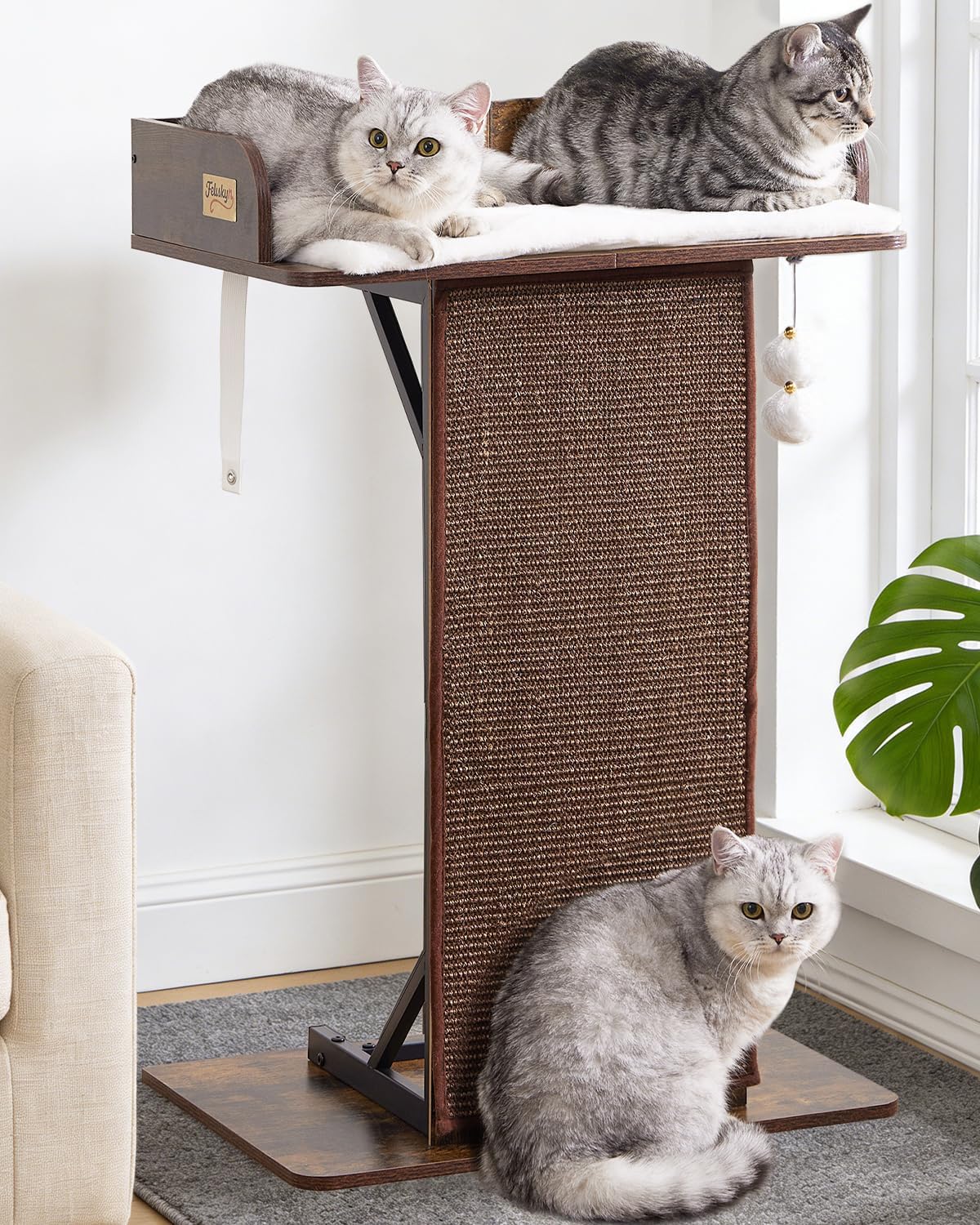
The main tower: Modern Wood Cat Tree Tower for Indoor Large Adult Cats with Big Perch Bed
 Visit on Amazon →
A wood frame is the first thing I look for, because wood does not flex the way particleboard and thin veneer do. Flex is what turns a small wobble into a slow collapse over six months of daily jumping. The perch bed on this tower is sized for an adult, which is the detail most budget trees get wrong, and a big cat can actually lie down on it instead of perching on the rim like a bird.
Before you order, do two things. Measure the wall or corner space you have and compare it to the footprint, and check your floor. On carpet, a wide base still needs help, so plan on a corner placement. If you have a cat who launches from the floor to the top platform in one motion, put this against a wall rather than in the middle of a room.
Flaws but not dealbreakers: Wood furniture in this class is heavier to move and heavier to assemble than the particleboard stuff, and you will want a second person for the first upright. That weight is the point. A heavy tree is a stable tree.
Households with one or two adult cats who need a real napping platform and a view of the room will get the most out of this one.
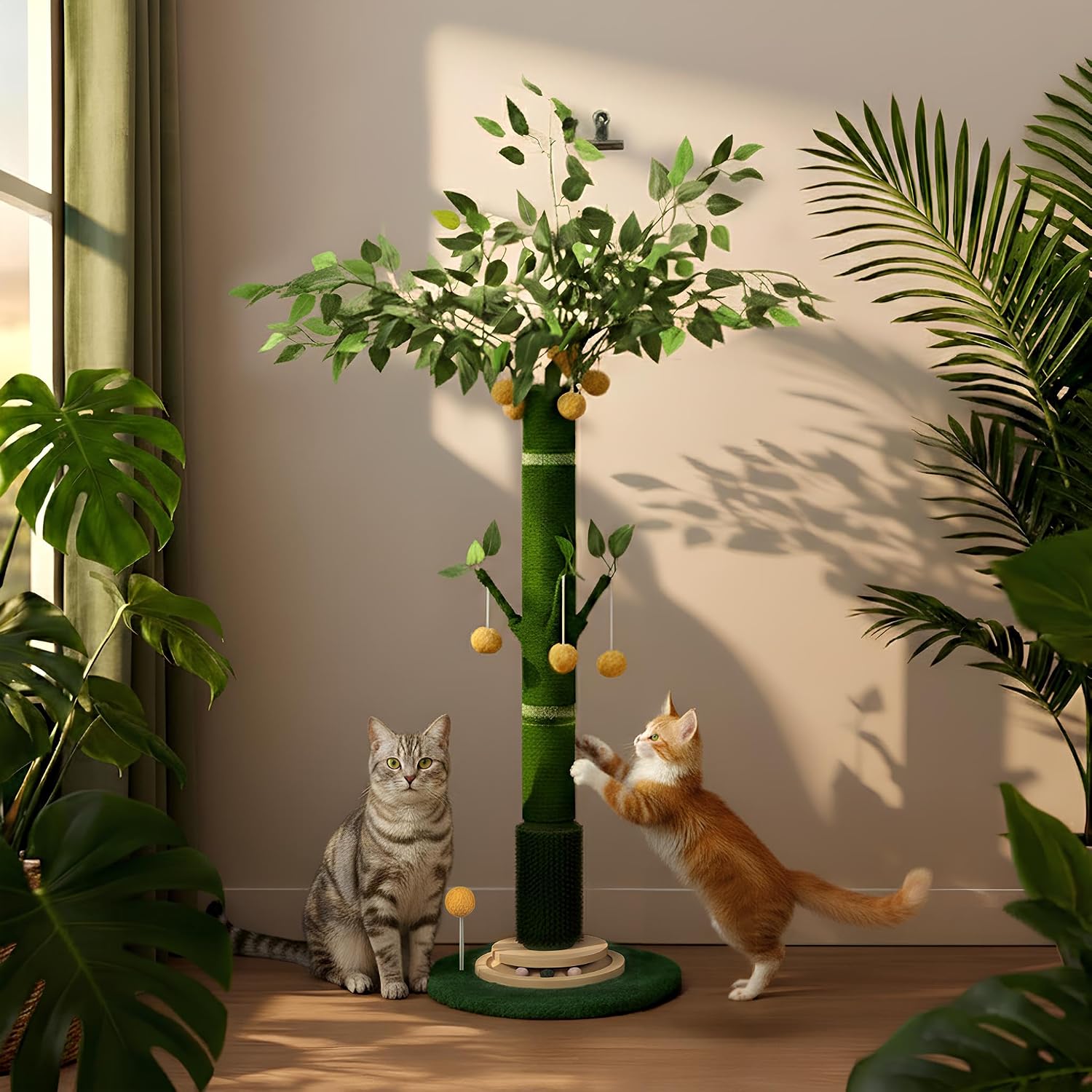
The tall scratching post: 46" Extra Tall Cat Scratching Post for Large Cats, Sisal Rope
 Visit on Amazon →
This is the piece that saves your couch. Forty-six inches is tall enough that most adult cats can plant their back feet and stretch all the way up with their front claws extended, which is the posture that actually maintains their nails and works off the tension. Short posts force cats to scratch at an angle, and some cats simply refuse.
Sisal rope over a tall column is the combination I recommend to every foster family, because it gives the cat a legal surface at the height they already want to scratch. Put it beside the tower rather than across the room. Cats like to scratch near their perch, and a post placed at the base of the climbing structure gets used far more than one tucked behind a bookshelf.
Flaws but not dealbreakers: A tall post with a modest base can be rocked by a determined cat, so it belongs against a wall or beside the tower where it can be braced. If your cat likes to climb the post itself, that is normal. Just make sure it is not the only thing standing free in the middle of the floor.
Anyone with a cat who currently scratches a doorframe or the arm of a sofa should start here.
The setup workflow, step by step
Step one: pick the spot before you assemble anything. Cats want vertical territory with a view and something at their back. A corner, a wall end, or the space beside a bookshelf beats the middle of a living room. You are looking for a spot where the cat can see the doorway and the room without being walked past constantly.
Step two: check the base against the floor. Put the base plate down first and push it. If it slides on hardwood, you need a rug pad or a small non-slip mat underneath. If it sits on thick carpet, the carpet pile is your enemy, because it compresses unevenly and lets the plate rock. Corner placement solves most of this.
Step three: assemble and tighten everything. Build it upside down if the instructions allow, because threading bolts into a base plate on the floor is much easier than reaching up into a finished tower. Tighten every bolt until it stops, then go back and do a second pass. New furniture settles.
Step four: load the base before the top. If your tree came with any weight in the base or a hollow you can fill, use it. A heavy bottom is free stability. Only after the base is settled do you attach the top perch and bed.
Step five: place the tall post next to the tower. Not across the room. Right beside it, close enough that a cat can scratch and then step up. This is the single change that gets the most use out of new scratching furniture.
Step six: check the wobble test. Press on the top perch with one hand the way a landing cat would. If the whole unit moves more than a fraction of an inch, you have three options: push it into the corner, add a non-slip pad, or anchor the top to the wall with a strap. A tree that sways when a 12-pound cat lands on it is a tree that gets abandoned.
Step seven: leave it alone for two days. Do not chase your cat onto it, do not pick them up and place them on the perch. Cats claim new territory on their own schedule. A sprinkle of treats on the perch and a favorite toy on the platform is enough of an invitation.
Step eight: re-tighten after week one. Every bolt you tightened during assembly will loosen slightly after a week of use. This is the step almost everyone skips, and it is the reason so many trees feel shaky by month three. Keep the Allen wrench in a drawer and spend five minutes on it.
Mistakes that make a good tree useless
Putting it where the cat cannot watch the room. A perch with no view is a shelf. Cats want to monitor the space they live in, so a tree facing a blank wall gets ignored no matter how much you paid for it.
Buying short because the ceiling is low. A tree that tops out below your waist does not give a cat anything they cannot get from a chair. If height is limited, go tall and narrow with a stable base rather than short and wide.
Keeping the carpet-wrapped posts because they came with the tree. If your cat scratches carpet posts, they are learning that carpet is fair game. Replace or cover them, and put the sisal post in the spot the carpet post used to occupy.
Skipping the base check on carpet. Carpet is the most common reason a tree feels unstable, and the fix is almost always placement plus a non-slip layer, not a new tree.
What you are actually paying for
There are no prices in this piece on purpose, because listings move and the number you see today is not the number that matters. What matters is what the money buys: a frame that does not flex, a perch wide enough for an adult cat, a base heavy enough to stay put, and posts made of a material your cat will actually scratch. Check current Amazon price on both pieces and compare that against replacing a shredded sofa arm, which is the real alternative.
The other thing you are paying for is replaceability. A tower with a solid frame and a sisal post that can be re-wrapped or swapped will outlast three cheap trees, and you will spend less time rebuilding furniture and more time not thinking about it. That math holds whether you are furnishing one living room or a foster room with five cats rotating through it.
Set the tower in the corner, brace the tall post beside it, tighten everything again in a week, and let the cats decide. They usually do, and when the setup is right, they decide fast.