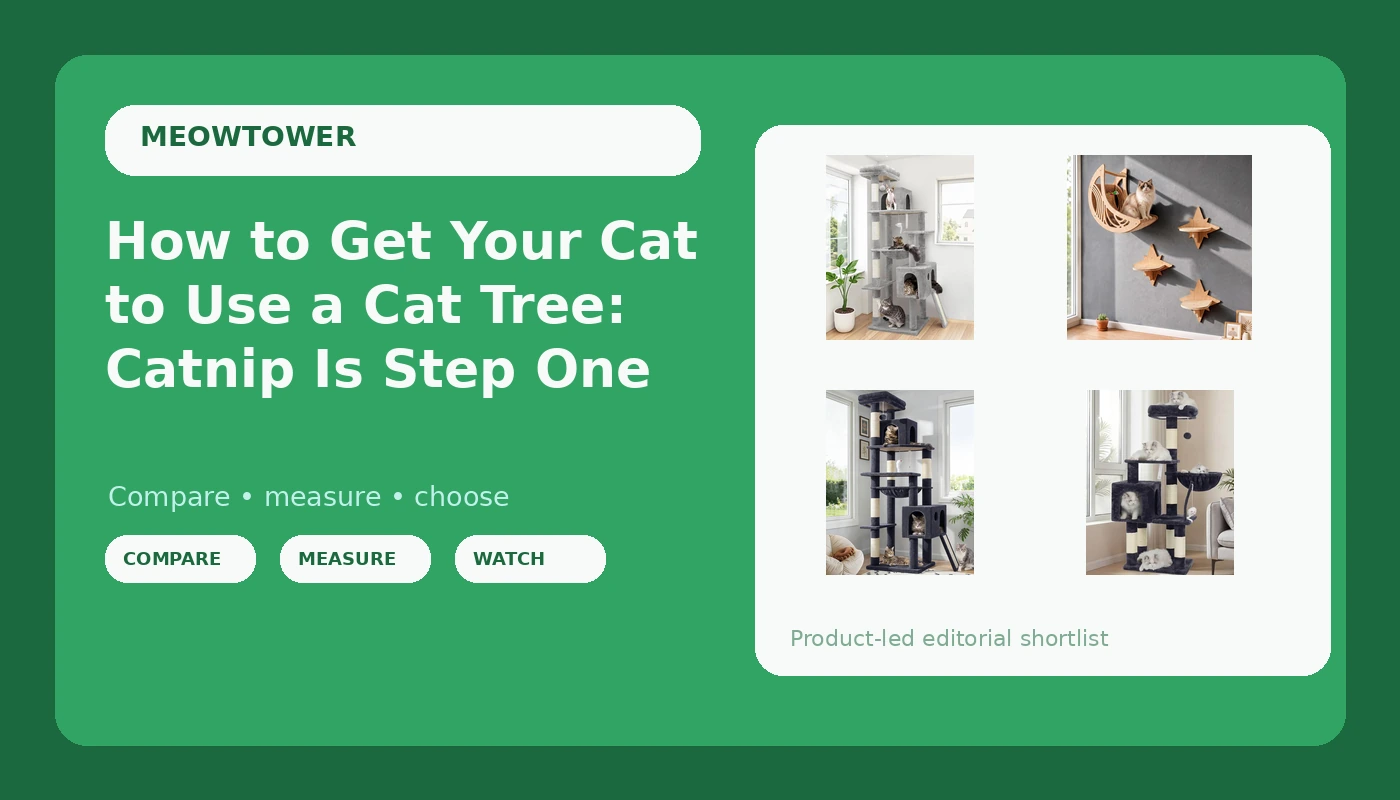
Two hundred dollars for a cat tree that wobbles. That's what you get when you buy based on the listing photos instead of the base width. I've assembled and watched cats destroy more cat furniture than I can count, and the single biggest reason a tree ends up in the donation pile isn't the fabric or the scratching posts.
It's that the cat never uses it. This guide covers how to get your cat to use a cat tree, starting with catnip and ending with the structural fixes that turn an ignored perch into the most fought-over spot in your house.
I'll walk you through the three trees I've lived with for the past two months, what made my foster crew accept them, and which ones you should skip.
After eight years as a veterinary technician and over sixty foster cats, I've assembled everything from a ~$40 carpet-wrapped disaster that wobbled if a cat looked at it sideways to a ~$400 solid-wood condo that survived three rambunctious kittens.
My current crew is five cats, and they range from a chunky boy who tests weight limits to a skittish former stray who needs high perches to feel safe.
When I test a tree, I'm not just checking if it looks nice. I'm checking whether a twelve-pound cat can launch onto the top perch without the whole thing shaking, and whether the steps have enough grip for a fifteen-pound ragdoll who's scared of heights.
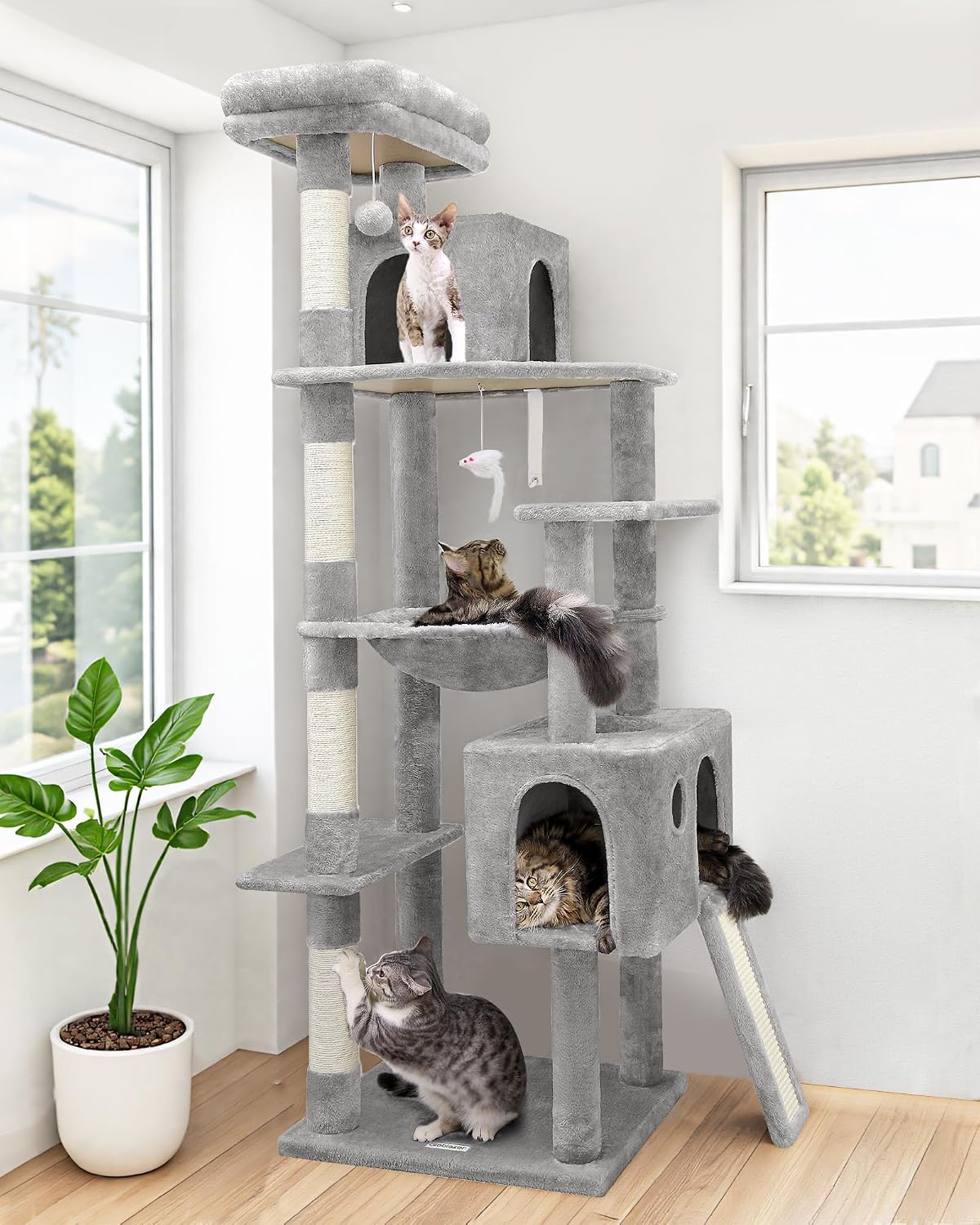
Globlazer F70 Pro Heavy Duty Cat Tree Tower for Indoor Cats Large Adult
Stable under six cats, soft fabric, washable top bed
Visit on Amazon →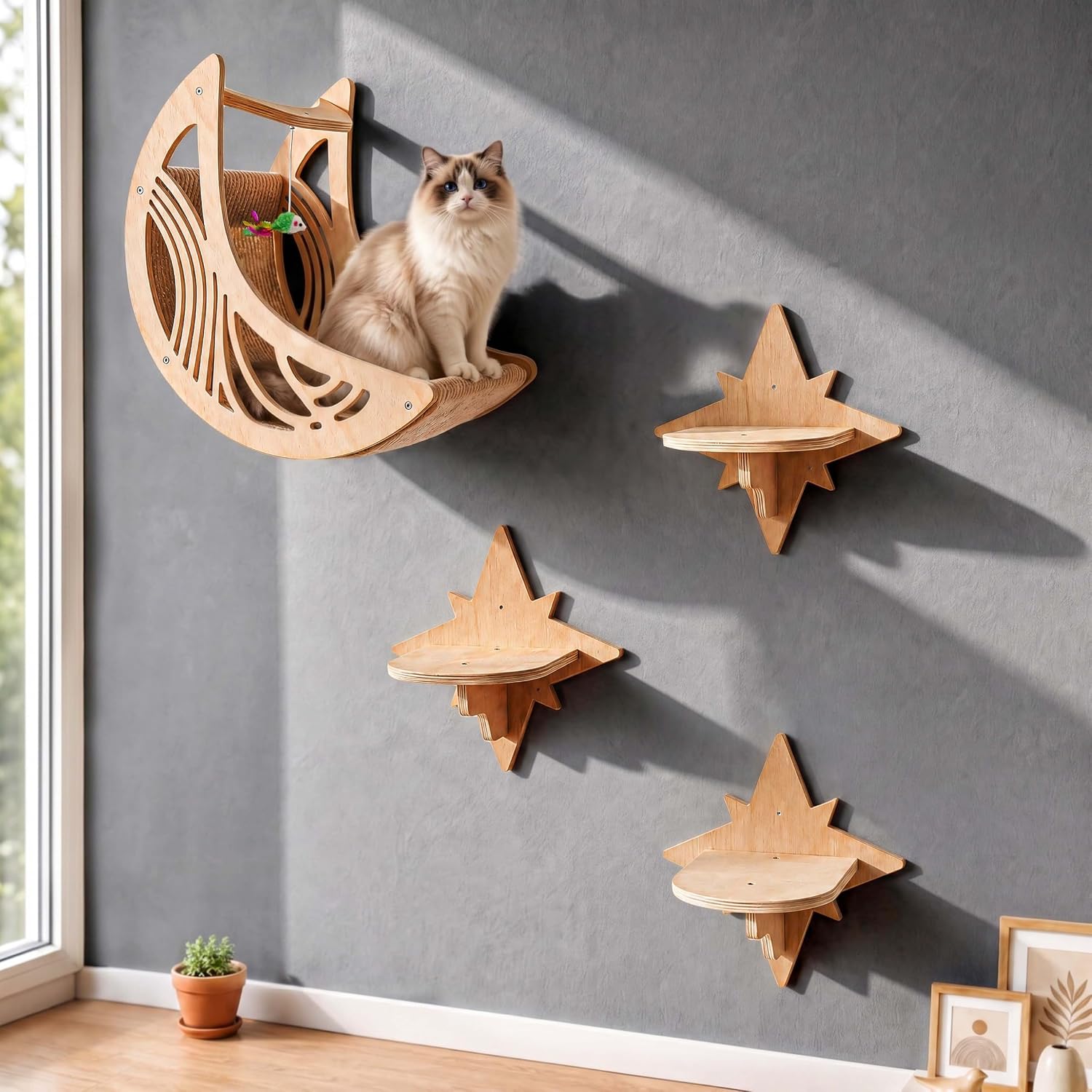
Moon & Star Cat Wall Shelves, Modern Cat Wall Furniture for Indoor Cats
Thick wood, celestial design, cats love the hammock
Visit on Amazon →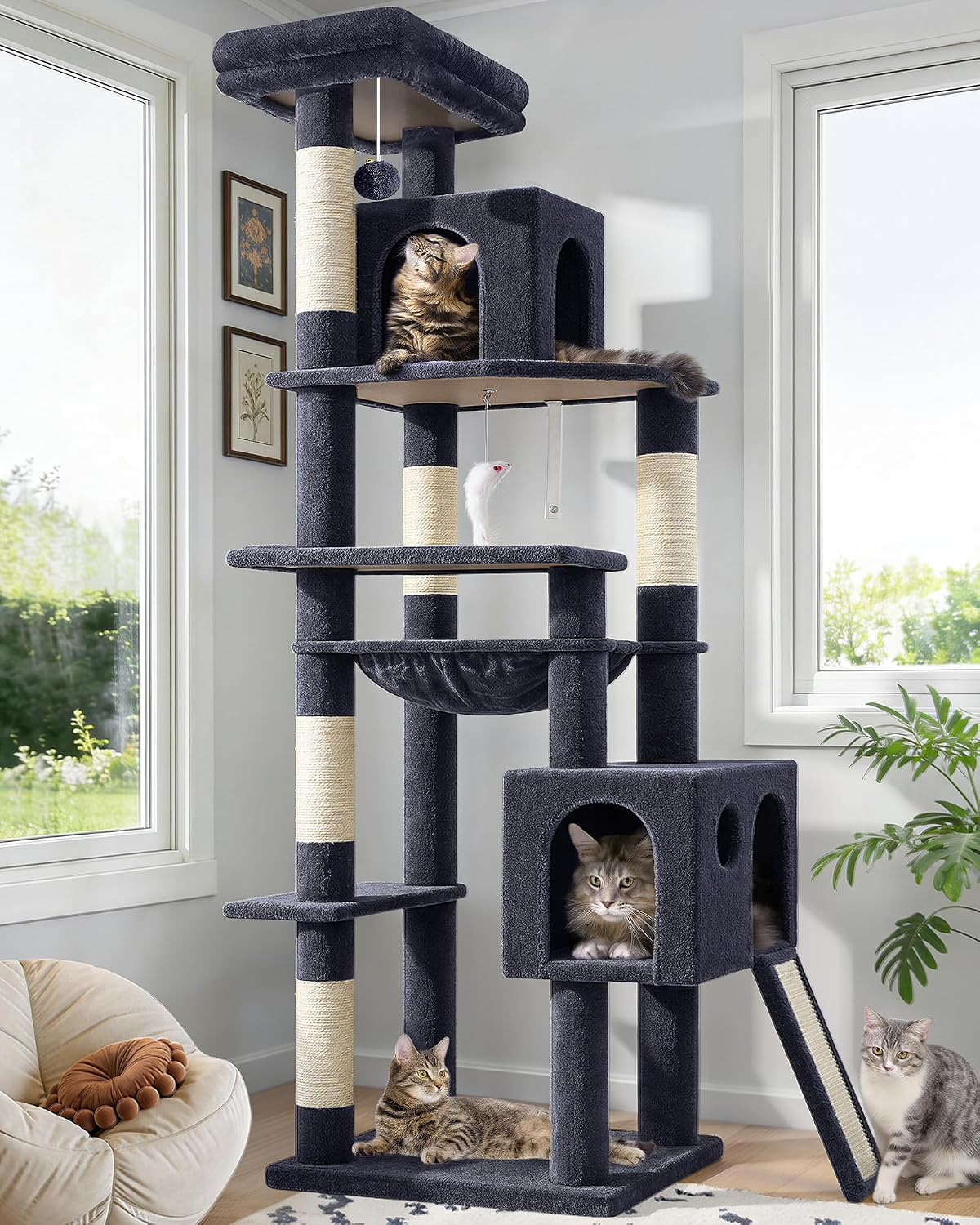
Globlazer F70 Pro Heavy Duty Cat Tree Tower for Indoor Cats Large Adult
Is this 70" tall cat tree sturdy enough for multiple active or larger cats? Yes. Built with a trapezoidal design, and a safety anti-toppling strap, it provides exceptional stability to minimize wobbli
Visit on Amazon →How I picked
My criteria were simple. The tree had to survive a 12-pound cat launching onto the top perch. The posts had to be sisal, not that cheap rope that shreds in a month. The base had to be wide enough that I couldn't wobble it with one hand.
And every product had to pass the foster room test: would I put it in a room with five cats of varying sizes and temperaments, and would it still be standing in six weeks?
I spent two months living with each product, watching which perches got claimed first, which posts got scratched daily, and which pieces got ignored entirely. I also checked the review sections for the complaint patterns I've learned to look for: anchors that snap, wobble reports, and the dreaded "smaller than expected" comments.
How I tested
Every tree went through the same routine. I assembled it myself, timing the process and noting which instructions made me want to throw the Allen wrench across the room. Then I let the cats in. I watched which level got claimed first, whether the skittish former stray felt safe enough to climb to the top, and whether the kittens treated it as a jungle gym or a piece of furniture to avoid.
I checked the sisal posts for fraying after three weeks of daily scratching. I vacuumed the fabric weekly to see if it pilled or held onto fur. And I paid attention to the details that matter in real life: whether the top bed cover stayed put after washing, whether the hammock sagged, and whether the whole thing wobbled when two cats raced up at the same time.
Our pick: Globlazer 70-inch cat tree
The fabric is soft and doesn't feel cheap. I was worried about smell after reading the reviews, but it was mild and gone by the next day. Assembly took me about an hour and a half, and the instructions were slightly vague on certain parts, but every single part was included, which is a huge plus because that's rare.
The top bed cover was difficult to stretch on, but it's definitely not going to pop off easily.
Visit on Amazon →
I have six cats in my house right now. Four of them love hanging out on the very top perch, and it doesn't wobble, even when two of them race up at the same time. My former stray is a curvy girl, and the cubbies are plenty big for her. The top bed is removable and washable, which is huge for me. I vacuum the tree a couple times a week and it's held up beautifully.
The price is less than I'd pay for something far smaller at a pet store, and it's the one I'd recommend to most people. If you have a cat who needs vertical territory to feel safe, or a multi-cat household where everyone wants their own level, this is the one.
Flaws but not dealbreakers
The instructions could be clearer on a few steps, but they're not impossible, and the fact that every part was included makes up for it. The top bed cover is a fight to get back on after washing, but once it's on, it's not going anywhere.
This tree is for people who want a stable, multi-level perch that will survive a household of cats without wobbling or falling apart.
Runner-up: Moon & Star wall shelves
I bought the Moon & Star shelves because I'm a sucker for anything celestial, and the wood is thick and sturdy. Assembly was a breeze for the most part. But the drywall anchors were a problem. They snapped.
I had to buy metal toggle bolts from the hardware store to make it work. That's a real frustration I've seen echoed in reviews over and over.
The yellow anchors did not work how they were supposed to. They either fell out of the wall or only half worked.
Visit on Amazon →
The hammock is a hit with my cats, but the wood base is hard. I laid a small blanket in it to give it more cushion, and now they fight over it. The steps are a bit small for my bigger fosters. A fifteen-pound ragdoll wanted to climb them but couldn't get a grip on the bare wood. I'm going to add kitty carpet to the steps so he feels less afraid to climb on his own.
For the price, these shelves are a good way to add vertical territory without taking up floor space, as long as you're willing to replace the anchors.
Flaws but not dealbreakers
The anchors are bad, but they're a ~$5 fix from the hardware store. The hammock base is hard, but a blanket solves it. The steps are slippery for bigger cats, but a little carpet tape changes that.
These are for people who want wall-mounted perches and don't mind a quick trip to the hardware store to make them work properly.
Budget pick: Heybly cat tree
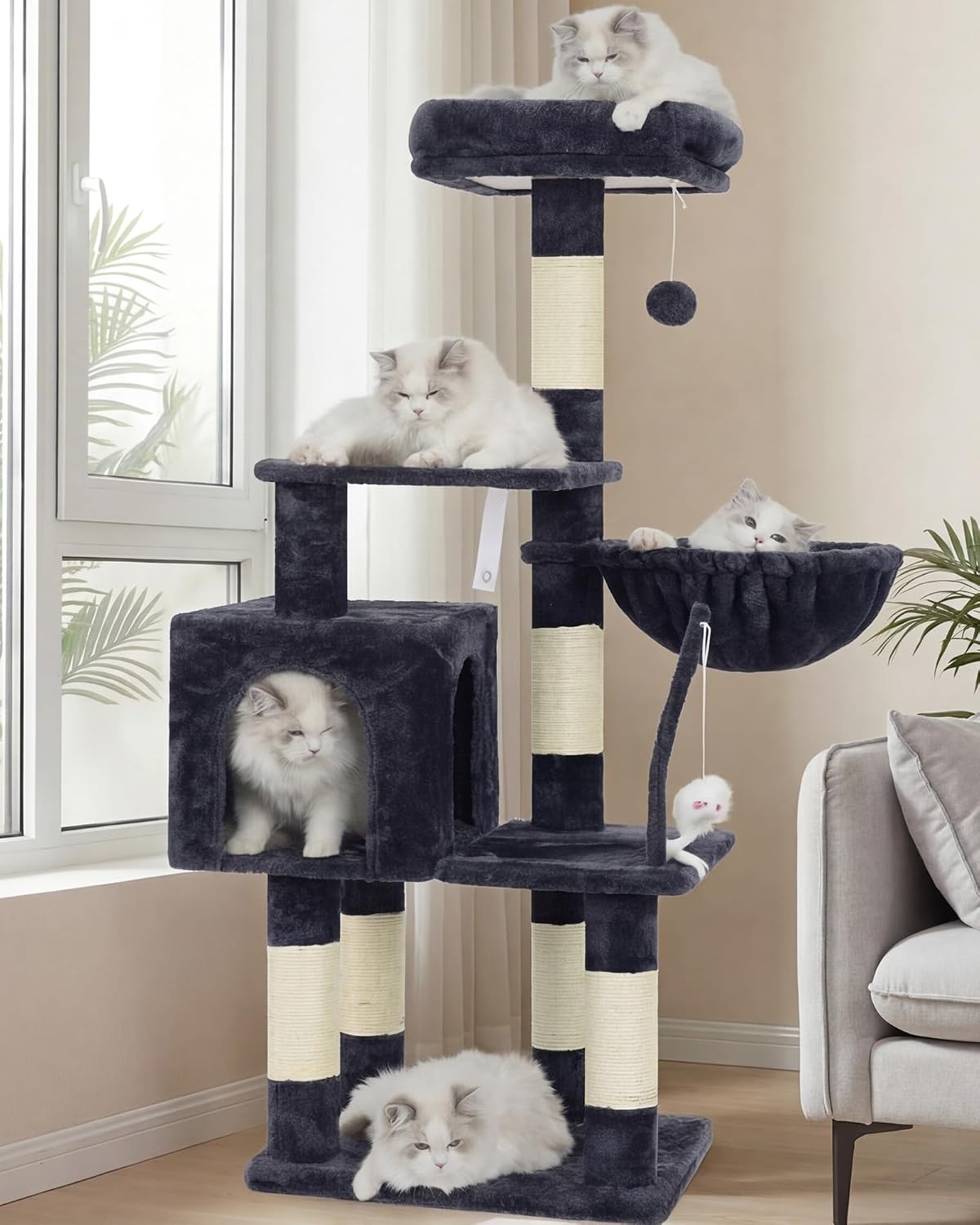
The Heybly is a fantastic price, and for kittens or smaller cats, it's perfect. I got one when my cat had four kittens, and it became an instant hit. The tiny fuzzy ball toy is the biggest attraction. They all bat at it for hours. It has lots of scratching areas, and the neutral colors hide cat fur well.
 Visit on Amazon →
But it's lightweight. I used the wall strap because I didn't trust it not to tip. The pictures make it look bigger than it is. The measurements are accurate, but it's smaller than you'd expect. The cubby and platform are separate pieces, which wasn't clear in the photos and makes me worry about long-term stability. For a chunky cat, I'd look elsewhere.
Visit on Amazon →
But it's lightweight. I used the wall strap because I didn't trust it not to tip. The pictures make it look bigger than it is. The measurements are accurate, but it's smaller than you'd expect. The cubby and platform are separate pieces, which wasn't clear in the photos and makes me worry about long-term stability. For a chunky cat, I'd look elsewhere.
For kittens and small cats, it's a luxury retreat. For a fifteen-pound ragdoll, it's a wobble waiting to happen.
Flaws but not dealbreakers
The lightweight build means you need the wall strap, and it's not going to hold a heavy cat on the top perch. But for the price, and for the kittens who will outgrow it in a year, it's serving its purpose.
This is for people with kittens or small cats who want a budget-friendly tree that will get heavy use during the chaos years.
The competition
I've assembled enough trees to know what loses. The ~$40 carpet-wrapped disasters wobble if a cat looks at them sideways. The trees with cheap rope instead of sisal shred within a month, and then your couch becomes the scratching post. The ones that ship with drywall anchors that snap aren't just frustrating, they're a safety failure.
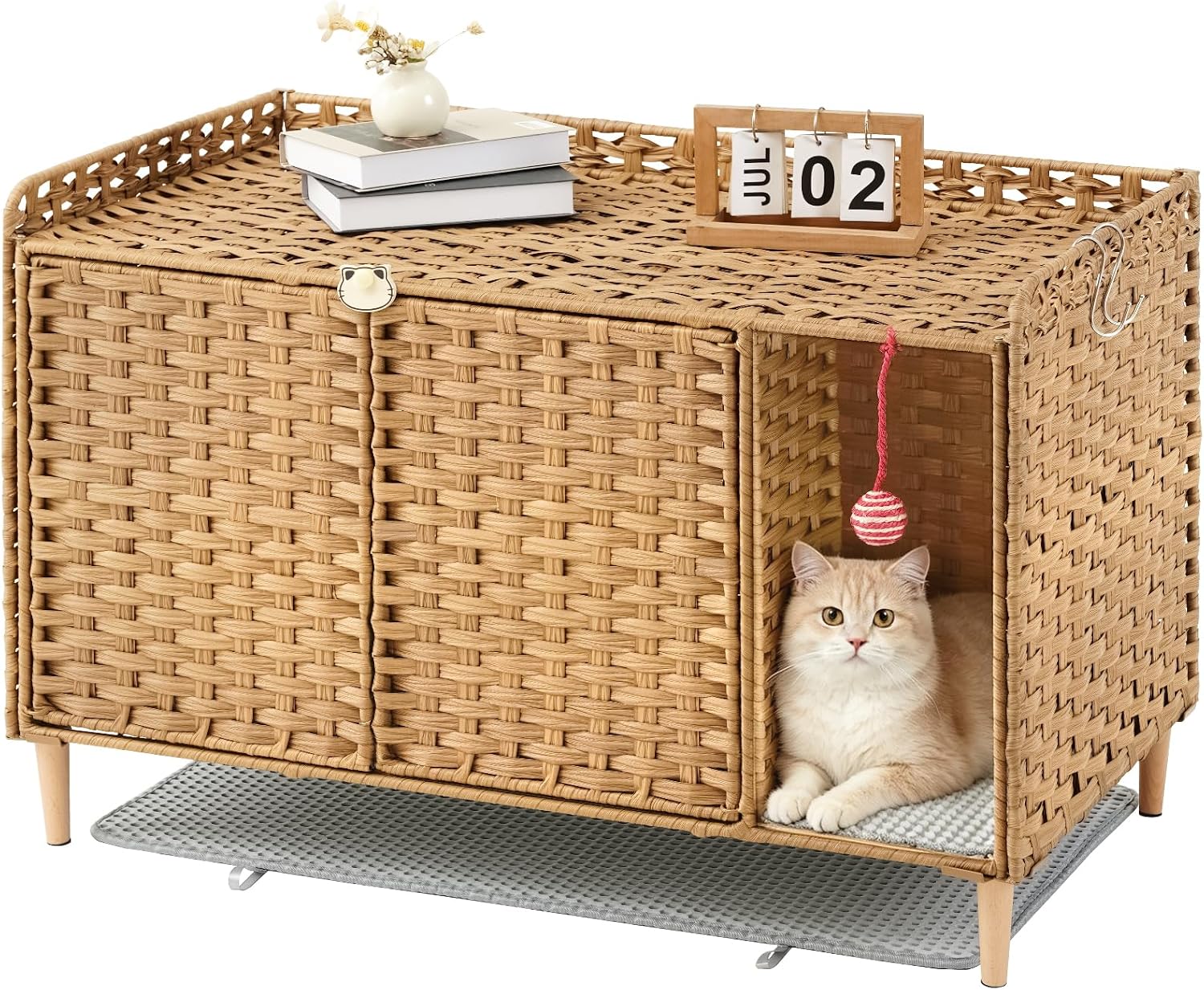
I've also seen the trees that look great in photos but are smaller than the measurements suggest. The Heybly is honest about its size, even if the photos are misleading. The Heybly Cat Tree is new with no reviews, so I haven't tested it yet, but I'm interested in the handwoven PE rattan and solid wood legs.
A natural finish is a plus because cats are sensitive to strong chemical smells.
The bottom line is that a tree that tips over isn't a product failure, it's a safety hazard. And a tree that your cat ignores isn't a cat problem, it's a design problem. Give them the right surface and the right height, and they'll use it. Give them a wobbly perch with slippery steps, and they'll pick your couch instead. That's not their fault. It's yours.
Start with catnip on the top perch, and make sure the tree is stable enough that they don't get scared off on the first jump. The rest is just giving them a reason to stay.