Related: Sisal, Jute, or Carpet? What Cats Actually Scratch
Every cat tree vs wall shelves argument I have with adopters ends the same way: the cat decides. I have been a veterinary technician for eight years and a foster mom to more than 60 cats, and my current foster crew of five includes a gray tabby named Biscuit who has personally rejected more furniture than most people will ever buy. She has two requirements. Height, and a surface she can sink her claws into.
Cats are predators who live in a world of tall things. Vertical territory is the entire reason to buy furniture at all: a cat who can get above the room feels secure, and a cat with a good scratching surface leaves your couch alone. Scratching is communication, not destruction. Give them the right post and the argument is over before it starts.
So here is what I actually recommend, in the order I would buy it. One tower that covers the basics for a fair price. One wall-mounted setup for people with more cats than floor. Two small additions that make a multi-cat room run better. No carpet-wrapped cardboard cores anywhere on this list, because I have watched those turn into confetti in a month.
Best Budget Tower: Amazon Basics Cat Tree Tower
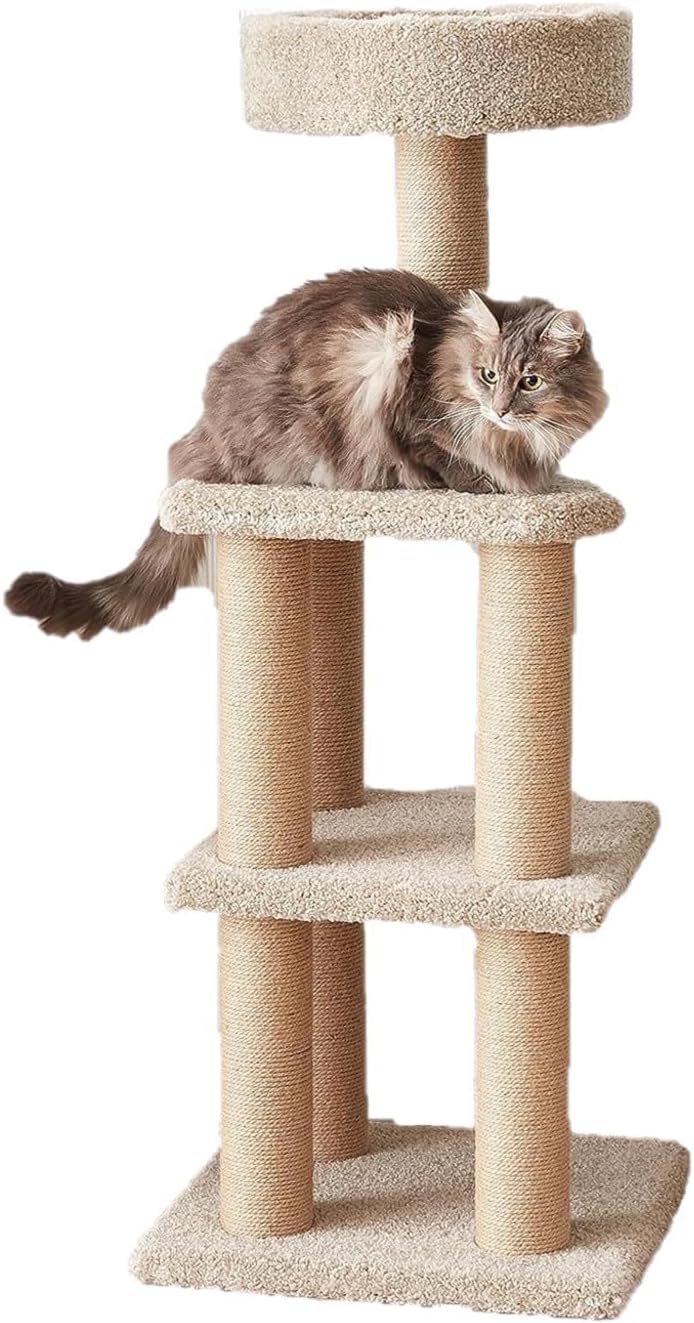
This is the tower I point budget adopters toward, and it is the one I would pick if I had to furnish a room for one or two cats and nothing else. It stands 45.9 inches tall, which clears the waist-height rule I use as an absolute minimum. If a tree does not get above your waist, you have bought a rug with legs, and your cat knows it. This one has multiple levels, a top platform, and jute rope wrapped posts.
Jute is not sisal. I would rather have sisal every single time, because the rope texture is what cats actually dig into and it holds up to repeat use. But jute is a close second, and it is so far ahead of carpet that the comparison is not worth making. Carpet-wrapped posts teach a cat that fabric is the correct thing to scratch, and that lesson transfers directly to your sofa. The couch decides the argument, and it decides against you.
The beige finish is boring in the best way. It disappears into a living room instead of announcing itself, which matters when the tree is going in the room where you actually live. Assembly is the usual bolt-and-hex-key job. Tighten everything again after the first week, because a tower that is loose on day one is a tower that wobbles on day thirty, and a wobble is how a cat decides the top perch is not worth using.
Best for Tight Floor Space: 6-in-1 Cat Wall Shelves for Large Cats
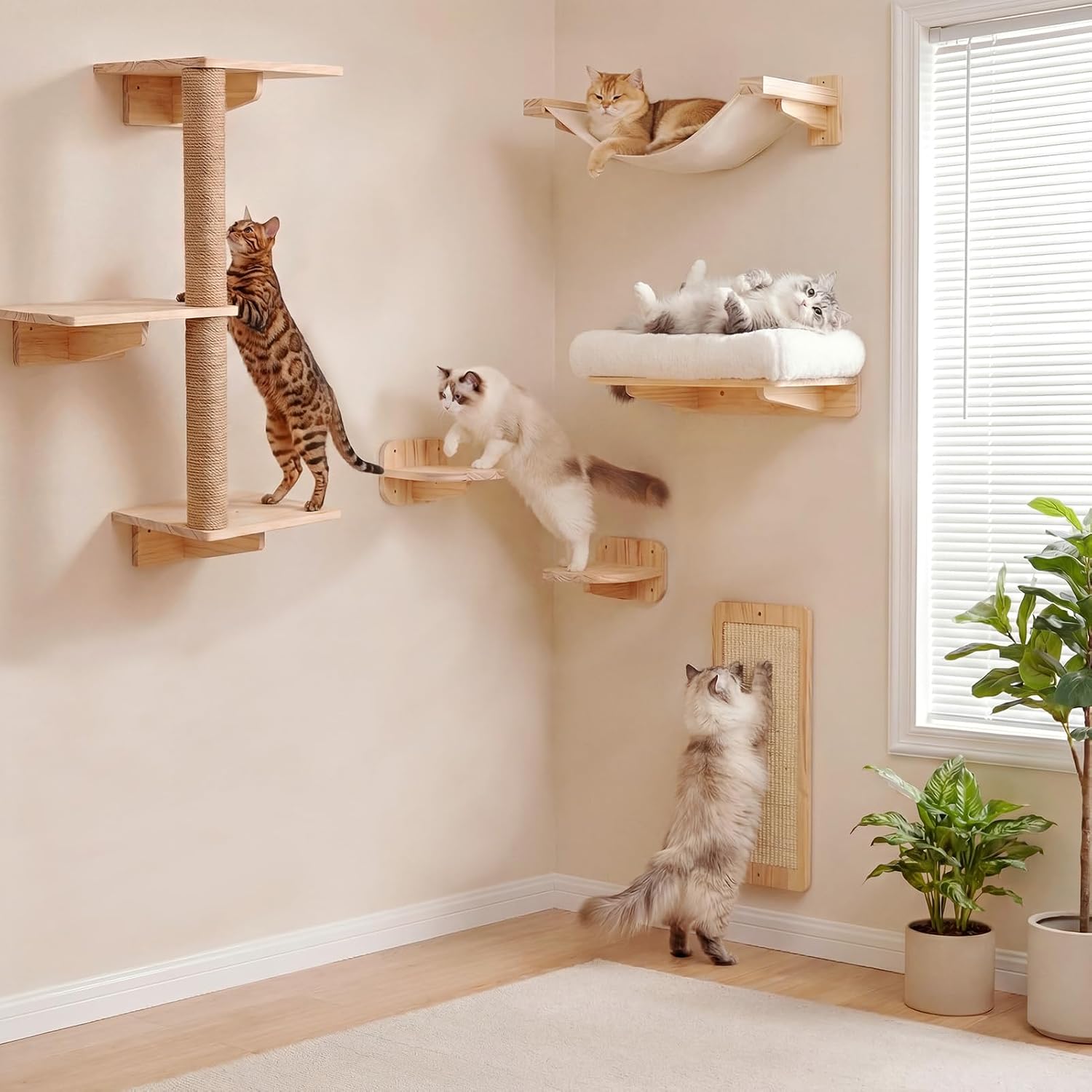
If your cats outnumber your square footage, stop shopping for towers and start looking at the wall. This six-in-one wall-mounted climber is built for large cats, which matters more than most people expect. A perch that fits a kitten is a perch an adult cat will sit next to instead of on, and that is the number one reason people tell me their cat "never uses" a piece of furniture. The kit includes a hammock, and the hammock is usually the piece that wins over the cat who never liked the tower.
Wall mounting is the tradeoff, and I will not pretend otherwise. You need a stud finder, a level, and the willingness to put holes in a wall. Renters should think hard about that before ordering. Everyone should mount into studs or proper anchors rather than drywall alone, because a shelf that pulls out of the wall with a cat on it is a much worse outcome than a wobbly tower.
Do it right and you get something a floor tower can never offer: height with zero footprint. That is the real advantage. A freestanding tower is limited by how much base it needs to stay upright, so every inch of height has to be paid for with width and weight at the bottom. A wall shelf is not limited that way, so you can stack the climbing path higher and higher along a wall until the cat has territory that goes nearly to the ceiling.
How I tested
I do not recommend a piece of cat furniture without living with it first, and living with it means a foster room with five cats in rotation. My current crew runs from a seven-pound kitten to a fifteen-pound adult, which is exactly the range that exposes bad design. A tree that works for a kitten and fails for a big cat is a tree that only works for a few months, and you find that out the hard way when the cat stops using it.
I check the same four things every time.
Height. Does the top perch clear my waist? Does it clear eye level? Cats want the highest point in the room, and a tree that tops out at knee height gets ignored no matter how many levels it claims to have.
Base plate. Wide and heavy beats tall and pretty. I push on the top perch before anything else, and I push it the way a cat lands on it, which is not gently. If the whole thing tips, it is a tipped-tower problem waiting for a 2 a.m. jump.
Post material. Sisal first, jute second, carpet never. This is not a style preference. Carpet posts teach bad scratching habits and then shred, which means you paid for a surface that damages your furniture and then falls apart.
Perch size. Can a fifteen-pound cat sprawl on the top platform, or does she have to perch like a bird? An adult cat needs a platform, not a pedestal. This is the single most common flaw in cheap trees.
Anything that fails two of those four does not go in the room, no matter how good it looks in the listing photos.
Analysis and test results
The tower and the wall setup solve the same problem from opposite directions, and choosing between them comes down to floor space and how many cats you have.
A floor tower is the easier first purchase. It is freestanding, it needs no tools beyond the included hex key, and it can move with you when you move. The tradeoff is the base plate. The Amazon Basics tower stays inside the range where that tradeoff is winnable, which is why it is the budget pick rather than something taller and thinner.
Wall shelves invert the problem. No base plate, no wobble, and you can keep adding height. The cost is commitment: holes in the wall, a stud finder, and a mounting job you cannot rush. For a household with three or more cats, that is usually the better trade, because three cats want three separate high spots and a single tower does not provide them. It provides one good perch and a lot of arguing.
Scratching surfaces decide which one your cat actually uses. Jute rope on the tower posts gets used, and used posts are the entire point of owning a tower. If you already own a carpet-wrapped tree, do not panic, but do put a sisal post next to it and watch which one the cat picks. That test takes about a week and it is more convincing than anything a product page can tell you.
The two extras below are not furniture. They are the things that stop a multi-cat room from turning into a management problem, and they belong in the same conversation because a foster room is a system, not a single purchase.
The vertical territory reference table
This is the same list I keep for adopters, arranged by what each piece actually solves. Every row is a real recommendation, and none of them are the cheapest thing on the shelf.
| Setup | What it solves | Where it goes | Notes |
|---|---|---|---|
 Visit on Amazon → Amazon Basics Cat Tree Tower |
Height plus a scratching surface in one freestanding unit | Any room, no tools beyond the included key | 45.9 inches tall, jute rope posts, clears the waist-height rule |
 Visit on Amazon → 6-in-1 Cat Wall Shelves for Large Cats |
Vertical territory with no floor footprint | A wall with studs you are allowed to drill into | Six pieces including a hammock, sized for large cats |
 Visit on Amazon → Petmate Pet Cafe Feeder |
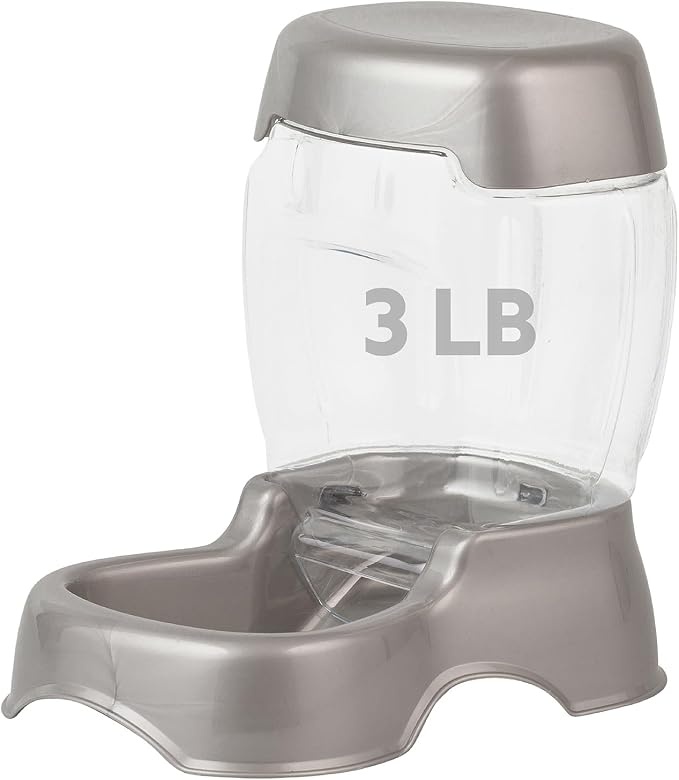
Feeding a multi-cat house without a scrum at the bowl | Kitchen or laundry room floor | Gravity feeder, pearlescent finish |
 Visit on Amazon → Veterinary Formula Clinical Care Ear Therapy Cleaner |
Routine ear cleaning between vet visits | Grooming shelf or foster intake bin | For dogs and cats, 4 oz |
The rule behind the table is simple. Buy height first, buy the right scratching surface second, and buy the maintenance stuff last so it actually gets used. A cat tree without a scratchable post is a cat tree your cat will ignore, and a grooming bottle you never reach for is just clutter on a shelf.
Petmate Pet Cafe Feeder
Feeding five cats out of one bowl is a fight, and a fight at feeding time is how you end up with a cat who eats too fast and a cat who does not eat enough. A gravity feeder keeps a reservoir of dry food available so the shy cat can eat after the pushy one walks away. It sounds like a small thing. It is the difference between a foster room that runs on its own and a foster room that needs a human standing watch at every meal.
A few cautions from someone who washes these every week. Wash the base regularly, do not let kibble sit in it for weeks on end, and if you have a cat on a prescription diet, a free feeder is not for you. Portion control beats convenience when a veterinarian has put a cat on a specific food, and that is not a trade I would make for a tidier feeding routine. The pearlescent finish also looks nicer in person than it sounds on paper.
Veterinary Formula Clinical Care Ear Therapy Cleaner
Ear cleaning is the least glamorous part of cat ownership and the part people skip until there is a problem. So let me be clear about the line. If your cat is scratching at an ear constantly, shaking her head, or if the ear smells, that is a vet visit, not a bottle of cleaner. Cleaner is for maintenance and for the cat who just came out of a shelter or a foster transport with dirty ears.
What I like about this one is that it is formulated for both dogs and cats, so a multi-pet house only needs one bottle on the shelf instead of two. You squeeze it into the ear canal, massage the base of the ear, and then let the cat shake it out. Do not go digging around in there with a cotton swab. You will push debris further in and you can hurt the ear drum. Warm the bottle in your hand first if your cat is dramatic about cold liquid, and have treats within reach before you start, not after.
Should you buy the Amazon Basics Cat Tree Tower?
Yes, if you have one or two cats and you want a freestanding setup that hits the two things that matter: height and a scratchable post. It clears the waist-height minimum, the jute rope gets used, and the whole thing is stable enough that a jumping cat does not send it across the room. It is not the last cat tree you will ever buy, and it is not priced like it is trying to be.
If you have three or more cats, or a fifteen-pound cat who needs a real platform, buy the wall setup instead and skip the tower entirely. One tower, one high perch, one cat. That is the math, and no amount of extra levels changes it.
Should you buy the 6-in-1 Cat Wall Shelves?
Yes, if you have the wall for it and you are willing to mount it properly. Six pieces, a hammock, and enough height to give every cat in the house their own spot above the floor. For a small apartment with big cats, it is a better use of the space a tower would eat, and it keeps the floor clear for the things cats need on the ground.
The catch is the installation. If you cannot drill into the wall, or you do not want to hunt for studs, this is not the product for you, and no amount of clever design changes that. For everyone else, it is the setup that turns a blank wall into territory, and territory is the thing your cat has been asking for since the day you brought her home.