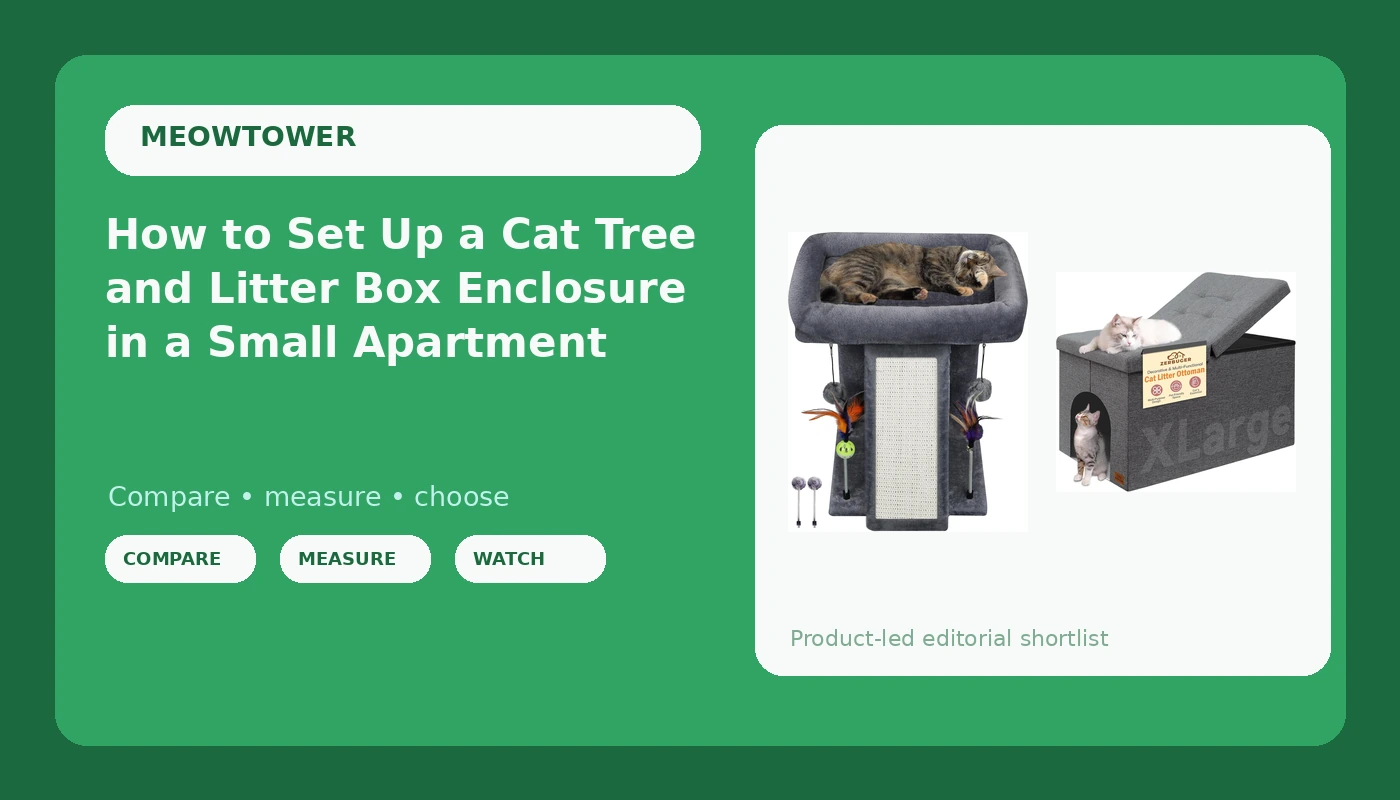
Most cat tree and litter box setups fail for boring reasons. The tree goes in a corner where nobody sits, so the cat never claims it. The litter box gets shoved into a closet, so odor concentrates and the cat stops using it. The base rocks on carpet, so the cat launches off the top perch once and never goes back.
I am a veterinary technician in Tampa and I have fostered more than 60 cats. I have assembled, repaired, and watched cats destroy more cat trees than I can count, from carpet-wrapped disasters to heavy solid-wood condos. The pattern never changes: cats use furniture that gives them height, a stable platform, and a scratching surface that actually works.
This is the order I set up a two-piece cat corner in a small apartment: vertical territory your cat can own, and a litter station that does not announce itself to the whole building. Two pieces, one afternoon.
Why you should trust me
Eight years as a vet tech, and the questions I get in the clinic are almost never about furniture. They are about the behavior furniture causes: scratching the sofa, spraying, hiding under the bed, refusing the box. Scratching is communication, not destruction. Give a cat the right surface at the right height and the couch stops being part of the conversation.
I also foster, which means I do not get to keep a tree that works for exactly one cat. Five cats at a time is a stress test whether I call it that or not. My rules are blunt. If it wobbles when a 12-pound cat lands on the top perch, it is a tipped-tower problem waiting to happen. If the base plate is narrow, nothing above it matters. If the posts are wrapped in something cats will not scratch, the tree is a shelf with carpet on it.
How I picked the pieces for this setup
Two pieces do two different jobs, and buying both for the same reason is the mistake I see most.
The first job is vertical territory. Cats need height to feel secure. That is the entire reason to buy a tree instead of a scratching post. A tree that does not reach above your waist is a rug with legs, and your cat will treat it that way.
The second job is a litter station that does not take over the room. In a small apartment the box usually ends up in one of two bad places: out in the open, where it dominates the bathroom, or inside a closed closet, where odor concentrates and the cat eventually refuses it. An enclosure fixes both problems, but only if you set it up with airflow in mind.
Order matters. Place the tree first, then the litter station, because the two zones need to be far enough apart that your cat never has to choose between resting and using the box.
The two pieces in this setup
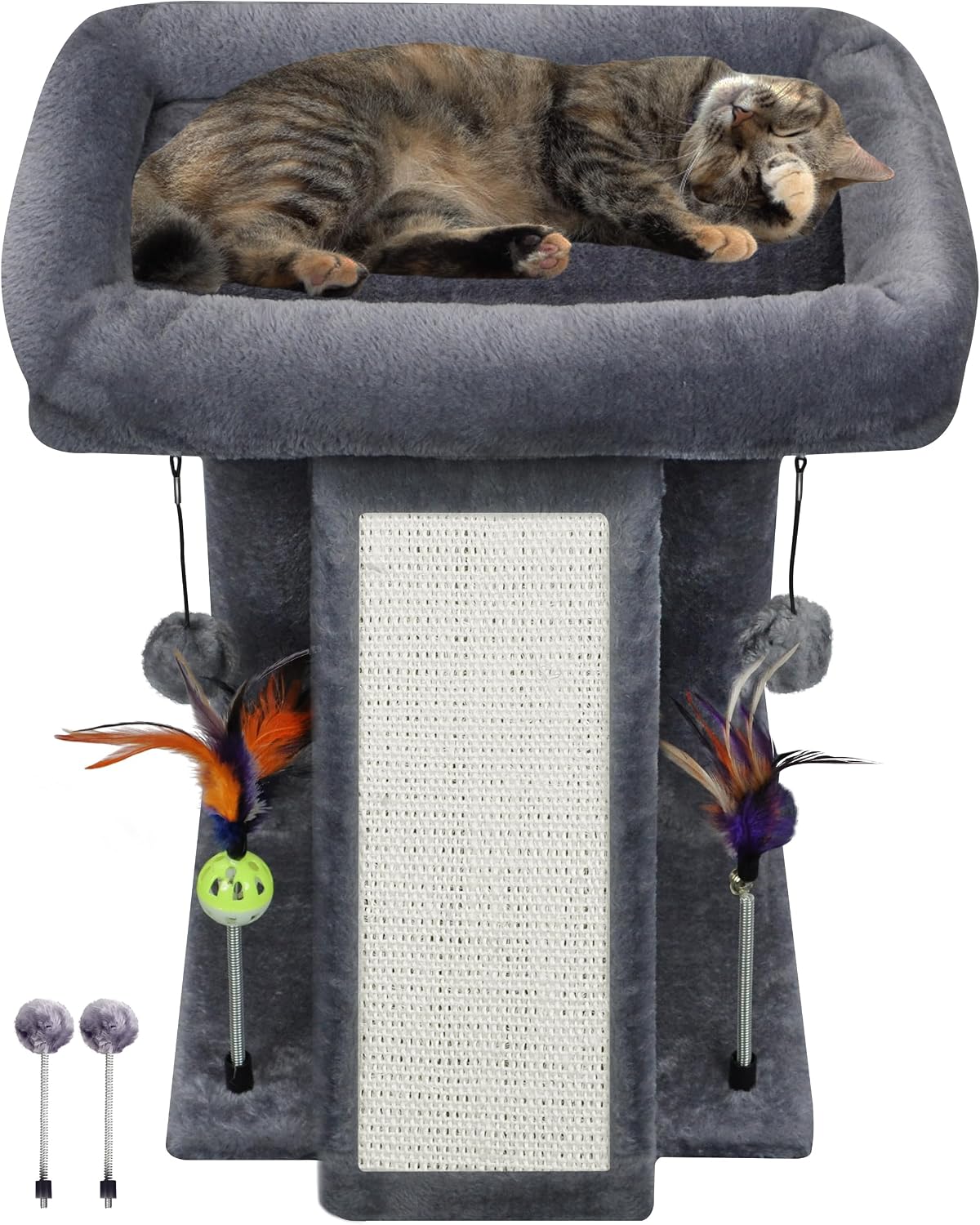
Vertical territory: TWDEPART Cat Tree Tower with Cat Scratching Post for Indoor Cats, Activity Centre Climbing Tree with Scratching Board and Playful Toy Balls, Grey
 Visit on Amazon →
This is the climbing half of the setup. It is a tower with a scratching post, a scratching board, and toy balls built into the levels, finished in grey. Check current Amazon price.
What makes a tower like this work in a small apartment is that it stacks the two things cats need into one footprint: a surface to scratch and a place to be up off the floor. The scratching board matters more than people expect. Some cats prefer an angled or horizontal surface to a vertical post, and a tree that offers both gets used by more cats in the house. The toy balls are the detail that gets a hesitant cat to walk over and investigate, which is the first step toward actually using the thing.
Flaws but not dealbreakers: The base is the part you have to check yourself. Set it on your actual floor, on carpet if that is what you have, and push it. Any rock or flex means you anchor it to the wall or you return it. A tall tower with a thin base is the number one reason cats stop using trees.
Anyone in a studio or a one-bedroom who wants vertical territory without giving up half the living room floor should start here.
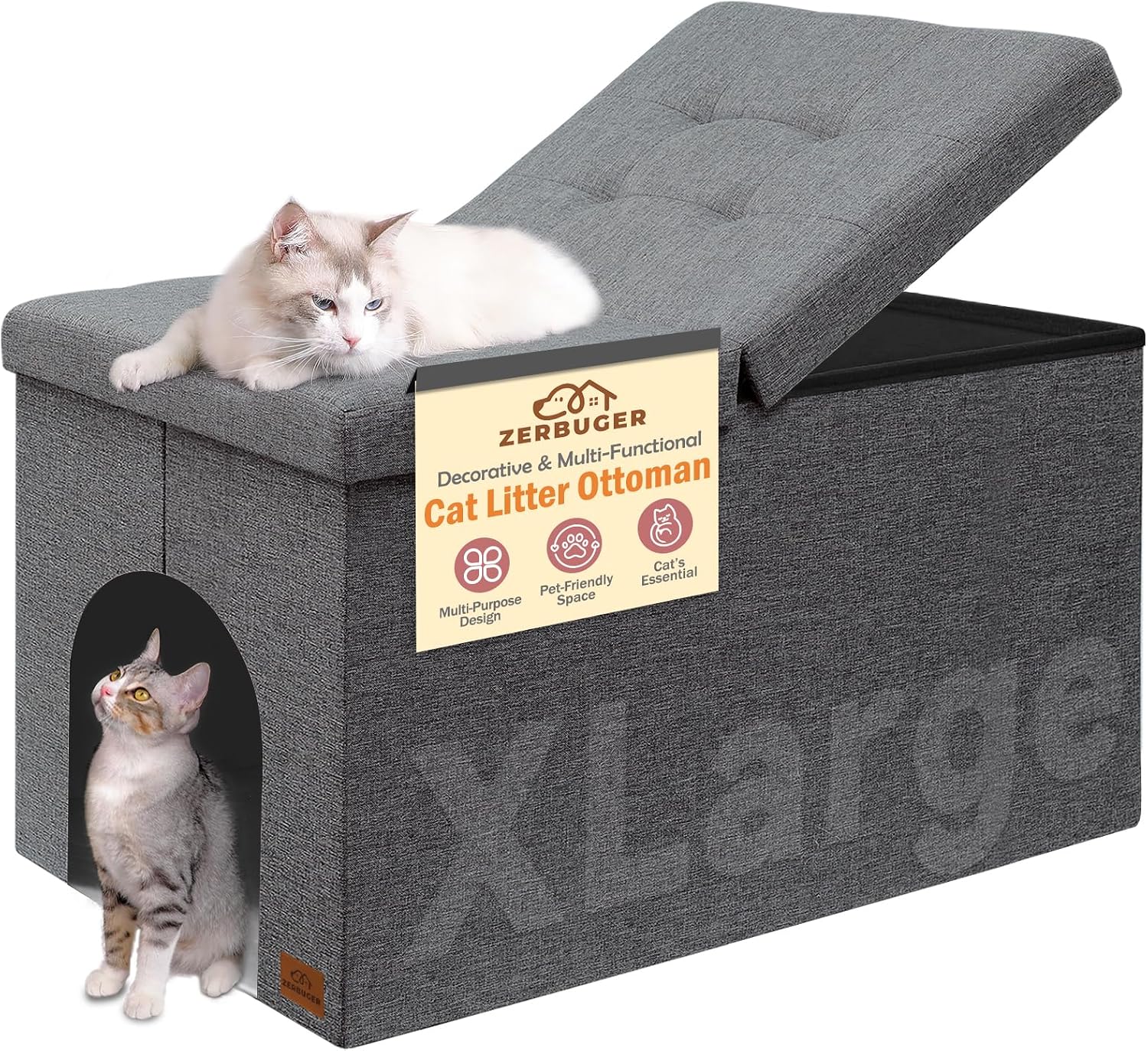
Odor control: Zerbuger Cat Litter Box Enclosure Furniture for Odor Control
 Visit on Amazon →
This is the second half: an enclosure that hides the box inside a piece of furniture, so the litter station reads as a cabinet instead of a litter box. Check current Amazon price.
In a small apartment this is the difference between a bathroom that smells like a bathroom and a bathroom that smells like a litter box. It also gives the box a defined place, which matters for cats. A box that gets moved around, or that sits in the middle of a traffic path, is a box that gets avoided.
The part people get wrong is thinking an enclosure filters odor on its own. It does not. It contains odor. If you skip scooping, you have built a cabinet full of ammonia, and your cat will tell you about it by going on the rug. Daily scooping plus a full litter change on a schedule is what makes the enclosure work.
Flaws but not dealbreakers: An enclosure takes up floor space that a bare box would not, so measure the spot before you commit. It also needs a little clearance so air can move, which means not shoving it flush into a corner with no gap.
Anyone whose bathroom or hallway is currently dominated by a litter box should look at this before they look at another air freshener.
The actual setup workflow
Now the part you came for. This works in any apartment, with any tree and any enclosure, and it takes one afternoon.
Step one: Pick the room, not the corner. Put the tree in a room where you actually spend time. Cats want to be where the people are, and a tree in a guest room nobody enters is a tree nobody uses. The corner does not matter nearly as much as the room does.
Step two: Place it against a wall. Freestanding in the middle of a room is how trees tip. Push the tree against a wall, ideally near a corner, so two sides are supported. Leave a small gap so the wall does not rattle every time the cat lands.
Step three: Build the base first and test it before you add height. Assemble the base plate and the lowest level, then push. If it rocks on your carpet, fix that now with a furniture strap into a stud or a wider plywood backer under the base. Do not stack three levels on a base you already know wobbles.
Step four: Anchor anything above waist height. If the top perch is higher than your waist and you have a cat over 10 pounds, anchor it. A 12-pound cat launching onto a top perch puts a surprising amount of force into a narrow base, and a tipped tower is how cats end up afraid of furniture for years.
Step five: Place the litter enclosure on the flattest floor you have. Enclosures wobble too, and a wobbling box is a box cats avoid. Keep it out of the main walking path but not inside a closed closet. Airflow is the whole point of the enclosure, so give it a gap on at least one side.
Step six: Separate the two zones. Do not put the litter station right next to the tree. Cats generally do not want to rest where they eliminate, and a tree beside a box is a tree that gets ignored. Different rooms is ideal. Opposite ends of the same room is the minimum.
Step seven: Lure the cat up, but not to the top. Put a treat or a favorite toy on the second level, not the highest perch. Cats build confidence in stages. A cat that gets rewarded on level two will climb to level three on its own within a few days.
Step eight: Maintain it monthly. Tighten every bolt once a month for the first three months, then quarterly after that. Check the wrapping on the scratching surfaces and replace or rewrap when it shreds. Scoop daily and change the litter on a schedule. Furniture that falls apart teaches your cat that the floor is more reliable.
Setups that lose and why
The setups that fail in small apartments fail in predictable ways, and none of them are about brand.
A tree that is too short loses. If the top perch sits below your waist, your cat gets no vertical territory out of it and treats the whole thing as a scratching post with extra steps.
A tree with a narrow base loses. Tall and pretty with a small footprint is the worst combination in cat furniture, because the cat gets up there once, feels the whole thing shift, and never trusts it again.
A litter box in a closed closet loses. The smell concentrates, the cat refuses the box, and you spend the next month cleaning carpet.
A tree next to the litter box loses. Two zones that should be separate get merged, and the cat picks a third spot you like even less.
None of that gets fixed by spending more money. It gets fixed by placement, anchoring, and maintenance.
What this setup costs
Two pieces, and the math is genuinely simple. Check current Amazon price on the tower, check current Amazon price on the enclosure, and add them together. Then divide by the number of years you plan to keep both.
That last number is the one people underestimate. A cheap tree that wobbles and gets abandoned costs more per year of actual use than a stable one you keep for five years, because you end up buying it twice. A litter enclosure that keeps you from replacing a rug is not a luxury purchase.
The rest of the cost is maintenance: litter, a scoop, and a wrench you already own. There is no calibration, no subscription, and no professional installation. The 90 minutes you spend getting the base flat and the two zones separated is the whole job.
That is the setup. Height for the cat, a hidden box for you, and a floor plan that keeps the two from fighting each other. Do it once, tighten the bolts, and your apartment stops smelling like a decision you regret.