I have assembled more cat furniture than I have assembled people furniture, and I have the stripped hex keys and the scarred thumbs to prove it. Eight years as a veterinary technician in Tampa, plus a foster room that has cycled through more than 60 cats, means I have watched a carpet-wrapped tower fold sideways under a 12-pound cat and watched a well-chosen budget cat tree survive five fosters at once. When someone asks me which tree to buy, the honest answer is that it depends on what your cat is missing right now: height, a perch wide enough to sprawl on, or a scratching post that actually gets used. This comparison covers four budget cat trees that solve those problems in very different ways, and I will tell you which one I would buy for which cat.
Related: Sisal Vs Carpet Scratching Posts: What Cats Actually Use
The best budget cat tree for most households is the Hey-brother Cat Tree, because it is the only one of the four that pairs real multi-level height with sisal-covered scratching posts and a footprint a normal apartment can absorb. That is the short answer. The longer answer involves perch dimensions, base plates, and why the tallest option is not automatically the right option.
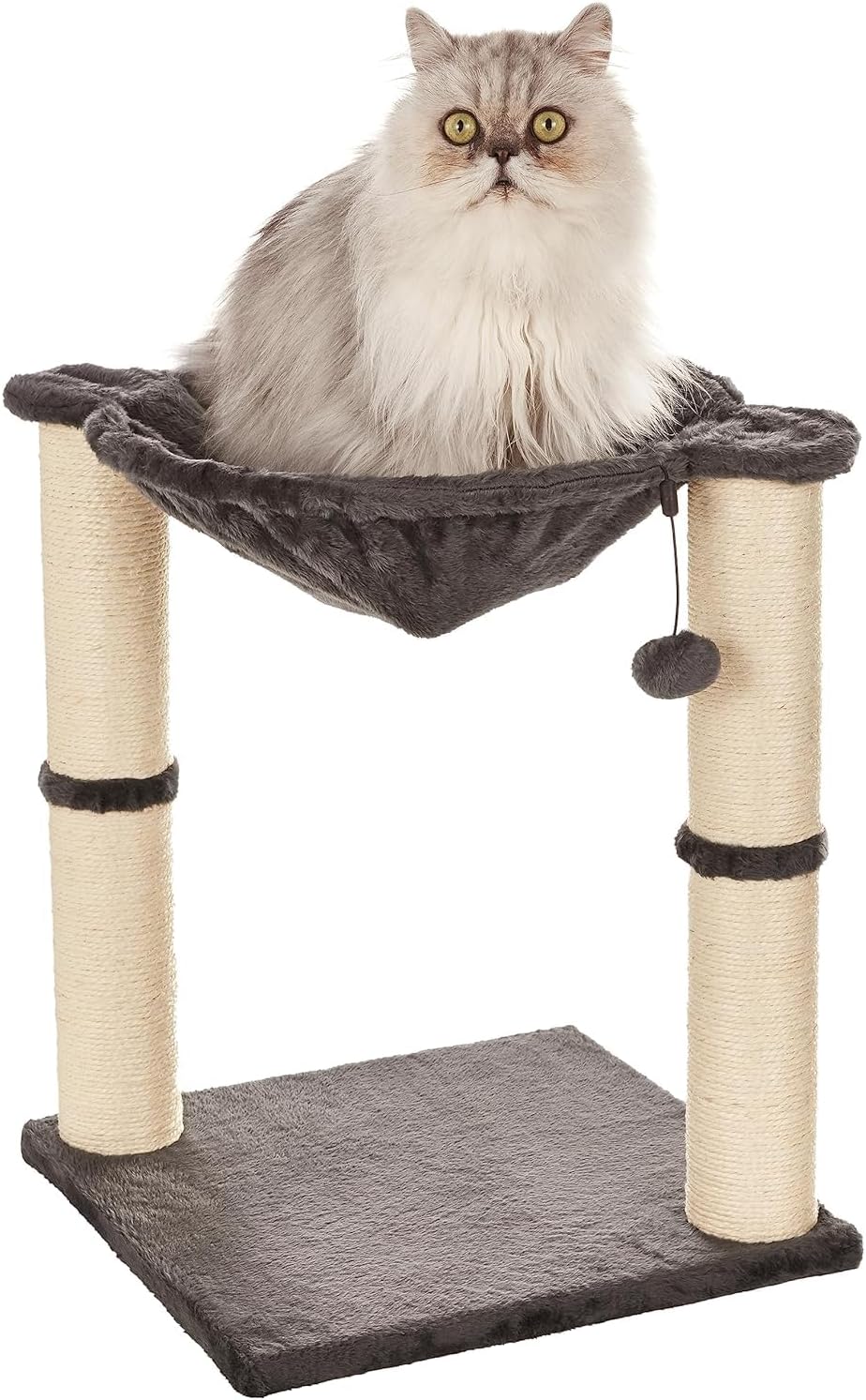
Amazon Basics Sturdy Cat Condo Tower
Condo, hammock, posts, and a hanging ball in one compact box, which is a lot of kitten entertainment for the money
At 19.7 inches tall it is a rug with a roof, and a cat hunting for a high perch will ignore it
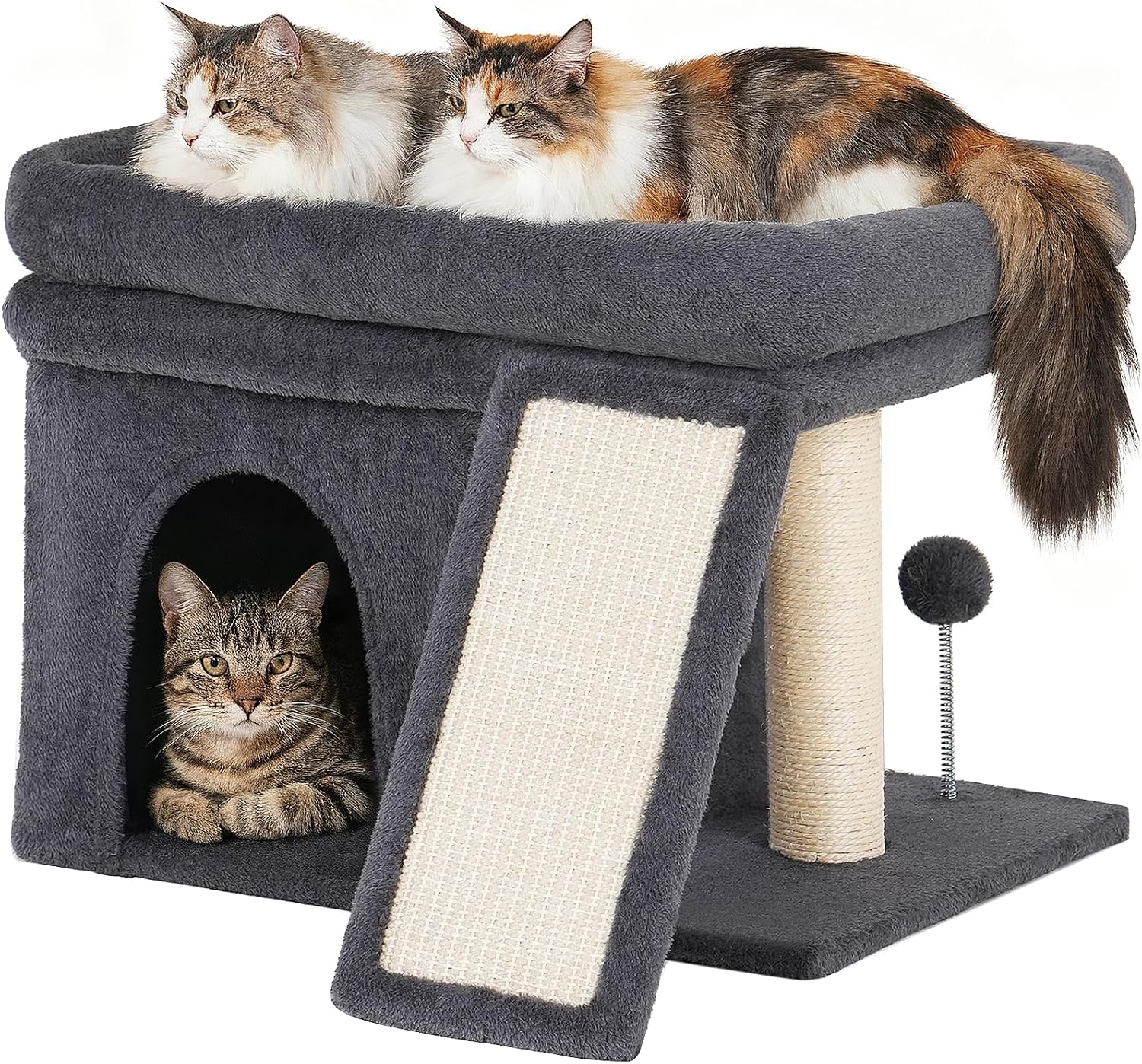
Aechonow Cat Tree for Large Cats
A 20 by 16.5 inch perch bed is sized for an adult or senior cat that wants to stretch out, not curl into a ball
One perch and not much else, so a two-cat house will have a scheduling problem
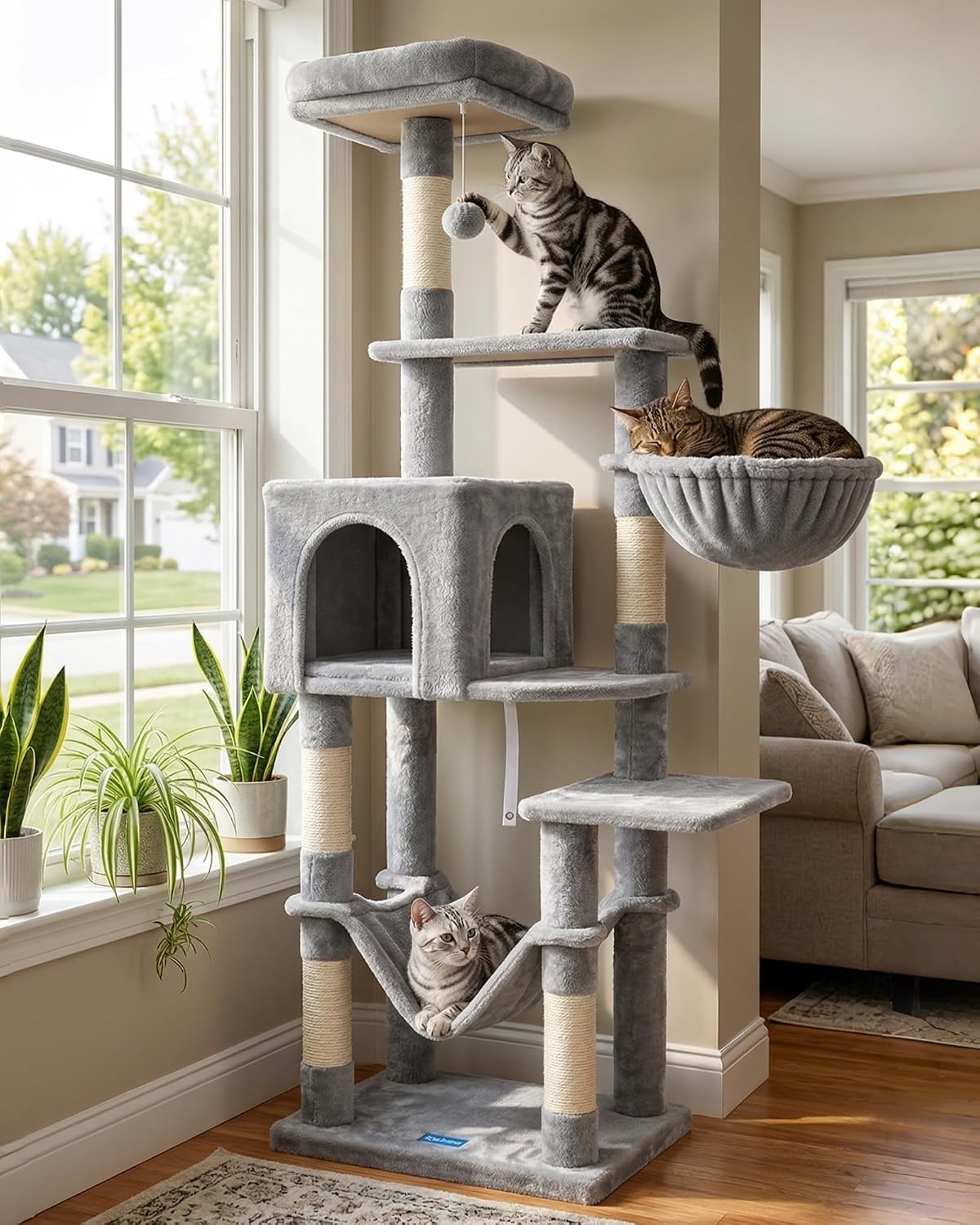
Hey-brother Cat Tree
Multi-level climb with sisal-covered posts, which is the combination that keeps claws off your sofa
More assembly and a larger footprint than a simple condo, and it is more tree than one kitten needs
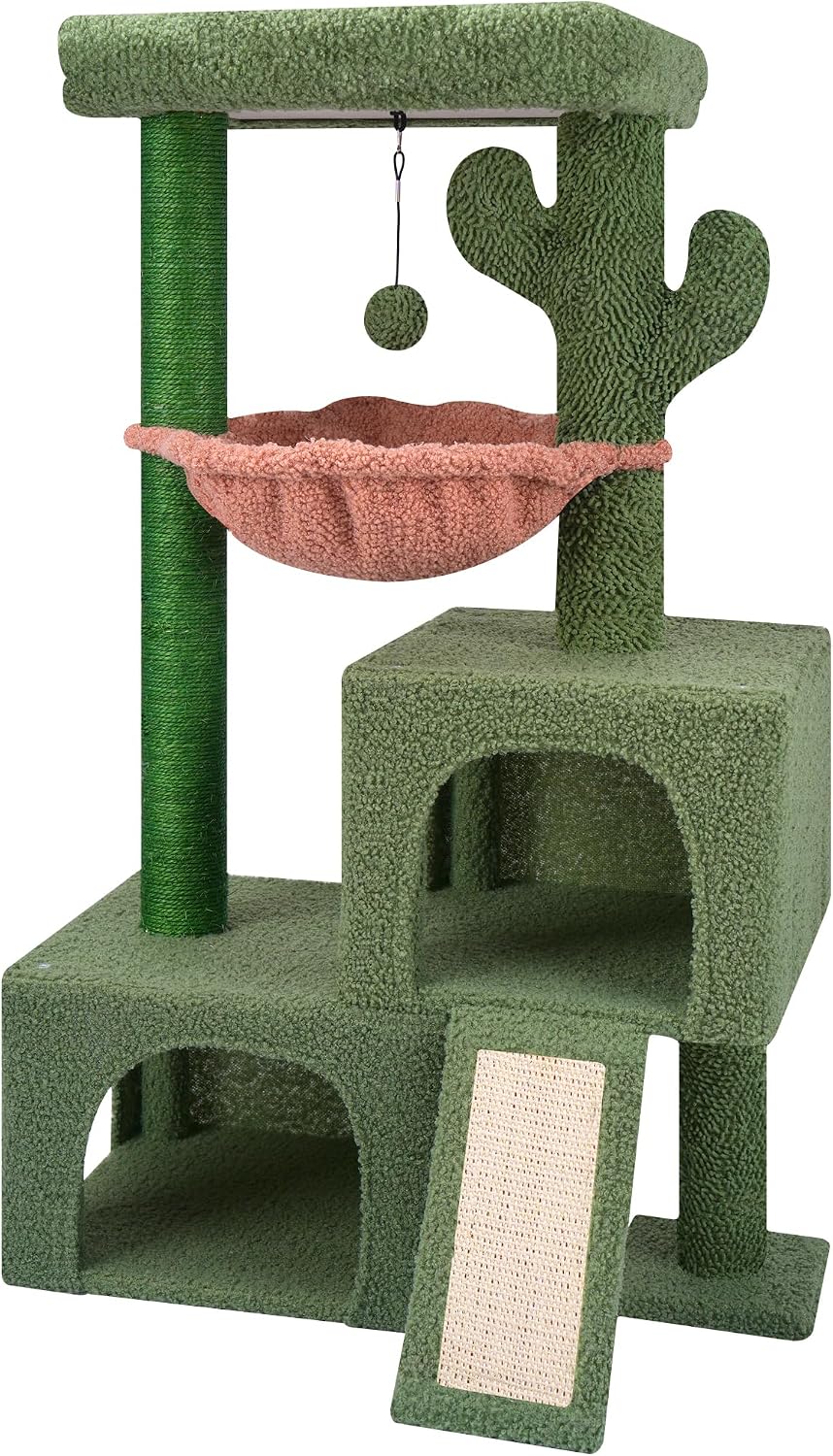
AIWIKIDE Cactus Cat Tree Tower
At 37.4 inches it is the tallest of the four, with twin condos, a hammock, a perch, and toy balls
The cactus silhouette is a design decision, and if your cat ignores the condos you paid for volume nobody uses
Prices and availability were captured from Amazon Creators API and may change.
How I judge a cat tree
Scratching is communication. A vet I worked with in my first year on the floor said that to me and it changed how I recommend furniture. A cat scratches to mark territory, to stretch, and to shed the dead outer shell of its claws. Give it a surface that gives back, meaning sisal rope with some resistance, and it leaves the couch alone. Give it a carpet-wrapped post that shreds into fuzz, and it learns that the sofa is the better surface. That is not a cat problem. That is a furniture problem.
So before I will hand a tree to a foster, I check four things.
- The base plate. A wide, heavy base is the whole game. A tall tower on a narrow base is a physics problem waiting for a cat to solve it at 3 a.m.
- The perch. The top platform has to fit a sprawled adult cat. A perch that only fits a kitten is a perch you replace with a cat bed in six months.
- The post material. Sisal rope or nothing. Carpet is a marketing decision, not a scratching surface.
- The height. A tree that tops out below your waist is a rug with legs. Cats want to look down on the room. That is the entire reason to buy a tree at all.
I cannot launch a 12-pound cat onto a tree I have never touched, so when I compare listings I look for the specs that predict whether that test would pass: base dimensions, overall height, post material, and perch size. All four trees here sit in the budget tier, and each one makes a different compromise to get there.
Amazon Basics Sturdy Cat Condo Tower: the starter tree
This is the tree I would hand to someone bringing home their first kitten. It measures 15.8 by 15.8 by 19.7 inches, so it fits in a corner, against a couch, or in the gap between a desk and a wall. You get a condo, a hammock bed, scratching posts, and a hanging ball toy, all in gray, all in one box. For a kitten that is learning what furniture is for, that is a useful bundle.
The hammock is the part I like most, because a kitten that has been wrestling a ball for 20 minutes needs a place to collapse, and a low hammock is exactly that. The hanging ball also does quiet work: it teaches a kitten to play on the tree instead of on your curtains.
The honest limitation is the 19.7 inch height. That is roughly knee height on an adult. It will satisfy a kitten and a low-energy adult cat, but a cat that wants vertical territory, the kind of cat that sleeps on top of the refrigerator, will treat this as a stepping stone and nothing more. Buy it as a starter, not as a forever tree.
Aechonow Cat Tree for Large Cats: the perch-first pick
Most budget trees are built around the tree. This one is built around the perch. The Aechonow lists a 20 by 16.5 inch perch bed, and that number is the entire pitch: it is sized for an adult or senior cat that wants to stretch out flat instead of folding itself into a bowl.
If you have ever watched a 14-pound cat try to sleep on a perch designed for a six-pound kitten, you know why this matters. Cats do not adapt to small furniture. They abandon it. A perch that fits the cat you actually own gets used every single day.
This is also the tree I would point a senior cat owner toward. Older cats still want height, but they want a short, forgiving jump to get there, and a broad landing surface at the top. A dedicated perch bed does both.
The trade-off is scope. There is one perch and not much else, so a two-cat household will end up mediating. If you have a single large cat, or a pair that already shares well, this is a clean, focused buy.
Hey-brother Cat Tree: the sisal workhorse
This is the one I would put in a foster room. It is multi-level, and the scratching posts are covered in sisal, which is the surface cats actually prefer. Sisal has a rough, ropey texture that catches claws and rewards a good stretch, and it holds up to repeated use far better than a carpet wrap that pills and shreds.
Multi-level matters for a second reason. Cats in a shared space do not want to share a single platform, and they definitely do not want to be cornered on one. Levels create traffic lanes: one cat goes up, another goes sideways, nobody has to have a conversation about it.
What you pay for that is assembly time and floor space. A multi-level tree takes longer to put together than a condo, and it needs a real footprint. The other trade-off is that a single kitten does not need this much tree. If your household is one small cat, you are buying capacity you will not use for a year.
AIWIKIDE Cactus Cat Tree Tower: the activity center
At 37.4 inches tall, this is the tallest of the four, and height is the thing I care about most. A cat that can sit above human eye level has claimed the room. That is vertical territory doing its job, and it is the single biggest behavioral win you can buy for an indoor cat that gets pushy, bored, or loud at 4 a.m.
The AIWIKIDE also packs in twin condos, a cozy sleeping perch, a hammock, scratching posts, and toy balls, in green with a cactus shape. The twin condos are the detail that makes it a genuinely multi-cat tree. Two caves means two cats can be close without being in each other's space, which is how cats prefer to co-exist.
The caveat is the same one I apply to any novelty-shaped tree. If your cat ignores the condos, you paid for enclosed volume that becomes a dust trap. And the cactus shape is a real commitment in a small living room. Measure your corner before you buy it, because this is not a tree you hide.
The trade-offs nobody puts in the listing
Every budget tree trades something. Here is what actually gets cut, and which cuts matter.
Height gets cut before stability does, or it should. The cheapest way to make a tree look impressive is to make it tall. The cheapest way to make it safe is to make the base wide. When a manufacturer has to pick, a short tree with a wide base is the better buy. A tall tree that flexes when a cat lands is a tipped tower waiting to happen.
Carpet posts are a feature in the copy and a liability in the room. Carpet-wrapped posts shred, teach cats that soft fabric is a scratching surface, and send them straight to your sofa when the wrap gives out. If a listing does not tell you what the posts are made of, assume the worst and look at the photos closely.
Perch size gets fudged. A perch is only as big as its usable flat area. If the listing gives you a perch dimension, compare it to your cat stretched out, not curled. My current fosters are 9 to 13 pounds, and I would not put any of them on a perch smaller than about 16 inches wide.
Multi-cat trees need two ways up and two ways down. A single vertical ladder means the top cat controls the whole structure. Two routes up, whether that is a second post or a staggered level layout, prevents the ambush standoffs that make a tree useless in a multi-cat home.
Replaceable parts are the difference between a tree and a purchase. Posts wear out first, always. A tree where the posts can be re-wrapped or replaced lasts years. A tree with glued, non-replaceable posts is a disposable item, and you should price it that way.
Should you buy the cheapest tree first?
For a kitten, yes. Kittens grow, their preferences shift, and a low starter tree like the Amazon Basics condo is a reasonable first purchase that teaches them to scratch and sleep on furniture instead of your drapes. You will upgrade it, and that is fine.
For an adult cat, no. Buy the perch and the height your cat needs right now. An adult cat does not grow into a tree, and a too-small tree does not get a second chance. If your cat is 12 pounds or more, or a senior with stiff hips, the perch is the spec that matters, and that is the Aechonow argument. If your cat needs to be the highest thing in the room, that is the AIWIKIDE argument. If you want one tree that does the most jobs for the most cats, that is the Hey-brother.
The one rule I will not bend on: skip any tree that wobbles on carpet. A cat that feels the tower shift under it stops using the top perch, and a tree nobody climbs is just expensive clutter.
What I am watching next
The foster room currently runs five cats and a rotating set of furniture, and the question I keep coming back to is whether budget trees are getting better bases or just taller boxes. Height is easy to advertise. A base plate you can trust is harder to photograph and it is the thing that decides whether a cat uses the top perch at all. I will keep logging which trees the fosters actually climb and which ones become expensive shelves.
One more note from Biscuit, a foster who has personally rejected more furniture than most cats will ever see: she has never once cared how a tree looks. She cares whether the perch holds her, whether the post bites back, and whether she can get to the top before the other four do. Buy for that cat. She is the one who lives there.